
UK using Russian assets to help Ukraine is not precedent to use Libyan assets for IRA victims, says Government


The government has once again refused to use frozen Libyan assets in the UK to compensate victims of semtex - despite recently using frozen Russian assets to help Ukraine.
During a debate in the House of Lords this week, a series of peers suggested that successive Tory and Labour governments are still protecting secret arrangements made with Libya rather than trying to secure compensation from Libya for victims.
The government also refused to use any of the £5m in tax it takes from Libyan assets each year to help victims – while claiming that the “Gaddafi regime” must instead foot the bill.
Former Libyan leader Muammar Gaddafi's regime supplied large amounts of weapons to the IRA during the Troubles including the explosive Semtex.
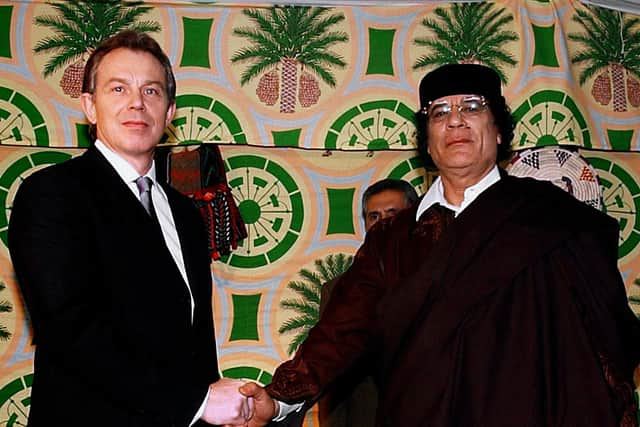
The explosive was used in numerous atrocities, such as the Enniskillen Remembrance Day bombing in 1987 and the 1996 attack in London's Docklands.
Around 150 IRA-Semtex victims are seeking £353m damages from the oil-rich country in line with that already paid to French, German and American victims of its terrorism - around $5m per victim.
On Thursday Baroness Hoey said the change in UK law which allows the UK to seize Russian frozen assets to assist Ukraine sets a legal precedent to enable Libyan frozen assets to be harnessed for the victims of Libyan Semtex.
The peer noted that the UK has committed to providing a £2.26 billion loan to bolster Ukrainian defence capabilities, with ministers confirming that it “will be paid back using … profits generated on sanctioned Russian sovereign assets”.

She told the Lords: “What is good for the Russian goose’s assets is good for the Libyan ganders assets”.
The peer also urged the publication of the Sir William Shawcross report on the matter which was commissioned by the government - but which has remained secret because it is "a security risk".
Lords Bew, Empey and Caine also spoke at length in support of her case.
However, Parliamentary Under-Secretary of State for Foreign Office, Lord Collins of Highbury, rebuffed her on all points.
He said victims of Libyan Semtex supplied to the IRA were not the same as victims of terrorism "directly carried out by Libya".
And he said that UN resolutions demanded that frozen UN assets "are specifically for the future benefit of the Libyan people".
Additionally, seizing frozen assets would hinder international efforts led by the UN to achieve that objective of a united Libya, he said
Lord Collins said the government also refuses to use the £5m plus it takes each year in tax from Libyan assets in the UK.
"The UK tax collected on frozen assets goes into the Government’s consolidated fund, which is used for essential public services," he said. "The real issue is that diverting these vital public funds would not hold the Gaddafi regime accountable for supporting the IRA."
Finally, he said that the Shawcross report "draws on private and confidential conversations" and added that "its release would have damaging implications for the UK’s national security and international relations".
But Kenny Donaldson, director of victims group SEFF said that within the debate there was “a level of disingenuity” around other forms of compensation and reparation available to Semtex victims – many of which his members are not eligible for.