
Unionist parties want Conor Murphy's new employment legislation brought before Executive - as businesses express 'grave concerns'
The DUP says it will ensure that proposed changes to Northern Ireland’s employment laws by Sinn Fein’s economy minister are “fit for purpose” – as both Gavin Robinson’s party and the UUP confirm they want approval from the Executive as a whole.
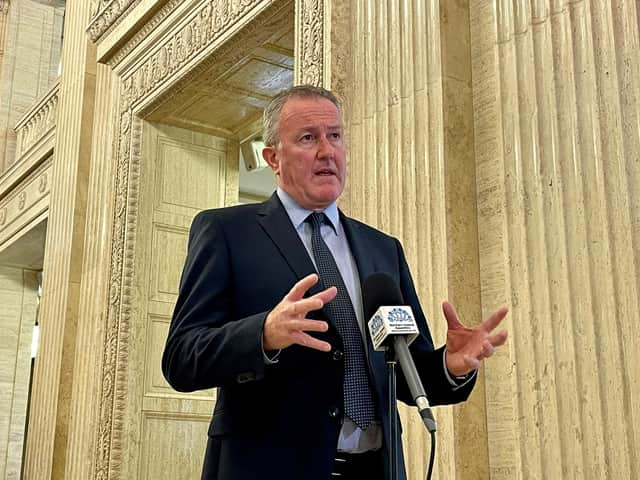
New employment legislation proposals being brought forward by the economy minister Conor Murphy could see amendments to the recognition of trade unions in small businesses – as well as changes which could have major implications for Stormont’s budget. A public consultation closed on Monday.

The Ulster Unionist Party has also called for the Good Jobs Bill to be brought before the Executive for approval – but the Alliance Party have stopped short of requesting that. However, the party said it wants to see a “more comprehensive overview of the potential associated implications, costs and benefits”.
The Federation of Small Businesses in Northern Ireland (FSB) have told the department they have “grave concerns about the Assembly making such extensive, far-reaching changes” in such a short timescale – as the minister aims to have legislated by 2027.
Phillip Brett, the chair of Stormont’s economy committee, says the bill “will require Executive approval and as such, the party will ensure that it is fit for purpose”.
Proposed changes include amending how zero hours contracts operate, introducing carers leave paid for by businesses and a reduction in the number of workers required in a company before unions are officially recognised – from 21 employees to 10.
The carer’s leave entitlements may go further than what is available in Great Britain. Workers across the water are entitled to one week unpaid leave to care for relatives, but it is understood Sinn Fein want that leave to be paid, and/or extended to two weeks.
Even if the final proposal is one week in line with the rest of the UK, businesses have raised concerns about additional costs for those already struggling with inflation. There will also be a financial impact on the public sector.
In their consultation response, the FSB said “we see it as unreasonable for employers also to be required to ‘foot the bill’ for carer’s leave and do not believe that the employer should be required to provide paid leave in these circumstances”.
They say this leaves the Executive with a choice to make on two fronts. Firstly, the FSB argue that without Barnett consequentials from GB, the Executive has to decide whether the potential disruption arising from facilitating the leave should be further compounded by making the employer pay for it.
And they warn that it would create a cost for the public sector “for which there seems to be no budget”.
Mr Murphy’s department is also seeking views on extending the holiday pay reference period for employees with variable hours from 12 weeks to 52 weeks. That would bring Northern Ireland in line with the rest of the UK, and the department argues it is a fairer approach – an approach which businesses are broadly supportive of.
North Belfast DUP MLA Phillip Brett, who chairs the Assembly Economy Committee, said: “The DUP has, and will continue to engage with businesses, Representative Bodies and Trade Unions regarding the proposed Bill.
“Such a Bill will require Executive approval and as such, the party will ensure that it is fit for purpose.
“There are a number of gaps within our employment legislation which the DUP will continue to champion for legislative change; including legal rights for parents of children requiring neonatal care and protections for victims of domestic violence.
“As the consultation on the proposed Bill remains open, it is important that all interested parties make their views known and respond to the consultation.”
Ulster Unionist finance spokesperson Steve Aiken said while bringing NI in to line with the rest of the UK in many aspects of employment law is to be welcomed, “many of the provisions will have significant cost implications for both the public & private sectors”.
He added: “As such, and as a cross-cutting issue, this should be tabled across the whole executive. Especially as the costs will impact the already taut public finances”.
Alliance MLA Kate Nicholl said her party “looks forward to seeing more concrete proposals and options coming forward from the Department, as well as a more comprehensive overview of the potential associated implications, costs and benefits.
“This will be important for both private and public sector organisations, including Executive Departments and arms-length bodies. It is vital the potential impact of any changes that come forward as part of the Good Jobs Bill are fully understood before proceeding.”
A department of economy spokesperson said: “The ‘Good Jobs’ Employment Rights Bill consultation closed today and responses will now be fully considered. Before any Bill is introduced to the Assembly, Executive approval is required. The final content of any Bill is for the Assembly to consider and agree upon”.