
Victims' group says Bobby Singleton should apologise for saying Pride parade was most difficult issue of his police career
A victims’ group says the PSNI’s deputy chief constable should “apologise for the hurt caused” when he claimed that the decision to withdraw officers from a Pride was the most difficult issue he was involved with in his career.
Bobby Singleton faced a social media backlash and criticism from some political quarters over the remarks at a Belfast Pride event a the weekend.
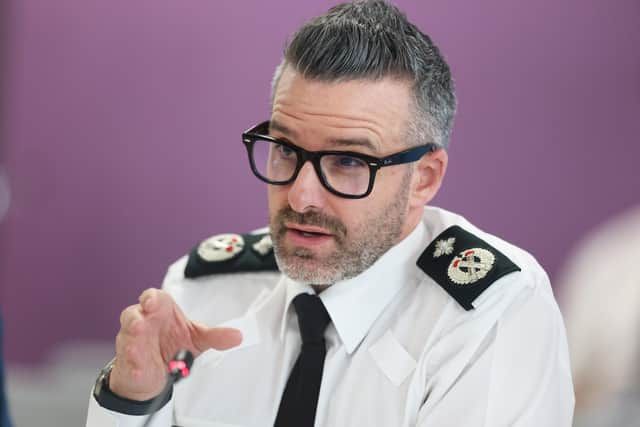

In 2023, he led a move by the Police Service of Northern Ireland to withdraw from the annual protest on impartiality grounds, a UK-first which sparked an angry backlash from trans rights campaigners.
Kenny Donaldson, Director of SEFF, said its relationship with DCC Singleton “has always been constructive” and he “has many strong qualities”.
“However the reported comments attributed to DCC Singleton have caused genuine hurt and concern amongst many within the community, including victims and survivors of terrorism and we have received countless representations in this regard.
“The language when referring to the gay pride decision being the ‘hardest and most difficult thing that I have been involved with in 25 years in policing’ is deeply regrettable and signifies to some that the public relations side of the PSNI and being seen to be turbo-charge inclusive at all costs may be blurring or compromising the lines of policing”
He encouraged DCC Singleton “to qualify the remarks attributed to him and to apologise for the hurt caused, however unintentional this may well have been”.
The News Letter asked the PSNI on Monday if DCC Singleton wished to clarify or retract the remarks, but the service declined to comment.
Bobby Singleton supported the PSNI withdrawing from marching in Pride parades in 2023, a decision which was the first of its kind in the UK – and was taken in advance of a subsequent High Court ruling in England which ruled that Northumbria Police’s attendance at a parade breached impartiality rules.
It is understood Mr Singleton had faced questions from other panellists at a Pride event on Saturday about having taken the easy way out in withdrawing from the parade.
DCC Singleton said the decision was the “hardest and most difficult thing that I have been involved with in 25 years in policing”, the BBC reported.
“Precisely because we understood acutely what the impact of this was going to be in terms of the community, but importantly as well, our own officers and staff for whom it had been absolutely huge,” he said.
He had been addressing an audience at an event organised by the Pride movement at the weekend, which had faced criticism from hard-line activists for allowing police involvement.
His comments prompted widespread criticism on social media, including from former officers.
Roy McComb, a former deputy director of the National Crime Agency and who had also headed the PSNI’s organised crime branch said: “I am sure Bobby will reflect on those words and realise they were poorly phrased”.
Fair Cop, a group which campaigns against the politicisation of policing by LGBTQ+ groups, posted on social media: “If that is remotely true, you should not be anywhere near any police force”.
Former officers from across the UK reacted with anger at the comments, highlighting the harrowing incidents they had dealt with while serving on the frontline.
Ulster Unionist Party leader Jon Burrows, a former senior PSNI officer, told the News Letter: ““I have a lot of respect for DCC Bobby Singleton. That said, it’s understandable that some eyebrows have been raised about this comment, given the life and death decisions police officers make and the trauma they encounter.
“Ultimately, policing needs to be impartial. Trust comes from treating people fairly, investigating crimes without bias, and maintaining open communication with all our communities”.
The PSNI’s second in command had also said the organisation still participated in other aspects of Pride “because this is all about us providing the best possible service that we can”.
“You don't get that through not talking to people, not engaging - not having those difficult conversations,” he said.
The following day, speaking to the BBC, Mr Singleton added that the 2023 decision “was taken so as not to compromise our impartiality including on the day itself where we have a duty to balance everyone's rights in what can be challenging circumstances”.
In an excerpt of that conversation, provided to the News Letter by the PSNI, Deputy Chief Constable Bobby Singleton said: “Pride has always been about protest and we absolutely recognise and respect that. [Saturday’s] event was all about expressing views and holding police to account.
“Ironically far from being ‘oppressors’ as was claimed by the protestors who shouted over members of the Pride Committee yesterday PSNI continue to play a vital role in protecting and balancing everyone’s right to protest including at Pride.
“Claims that this was a public relations stunt or ‘Pink Washing’ are nonsense. Our participation in this and other pride events is as I said yesterday for three reasons out of respect for and to engage with the community, as a service that is representative of that community to demonstrate the pride we feel in our amazing LGBTQIA colleagues and as a service that prides itself on policing with the community to be held to account on the policing issues that matter most to our LGBTQIA community.
“Our 2023 decision was to no longer allow officers and staff in uniform to participate in the pride parade. It was difficult not because it was the wrong decision to the contrary it has actually since been proven to have been the right decision by the High Court.
“It was taken so as not to compromise our impartiality including on the day itself where we have a duty to balance everyone’s rights in what can be challenging circumstances.
“The Human Rights act, statute and police regulations have long prohibited officers from participating in politics, protest and demonstrations in uniform. What made it difficult was knowing and appreciating the impact the decision would have on the community and those officers and staff who wanted to walk. Policing regularly involves difficult decisions.
“It isn’t a popularity contest. It’s about doing what is right for the entire community.”