
“We came up against a huge number of barriers; it was very, very intensive in the last year" - Minister brands red tape main enemy of decades-delayed £60m Bangor seafront revamp
Cutting through red tape proved to be the biggest obstacle to a revamp of Bangor seafront that’s finally under way, after being on the cards for roughly four decades.
That’s according to Communities Minister Gordon Lyons, who exclusively told the News Letter he’d had to be “relentless” in getting the overhaul of Queen’s Parade moving.
“It took ministerial intervention to get it done, but I’m glad we were able to do it,” he said. “We needed to keep the pressure on.”
The long-awaited project finally began in earnest last month, six years after developers Bangor Marine were formally appointed to build it and decades since a massive regeneration scheme was first mooted for the area.
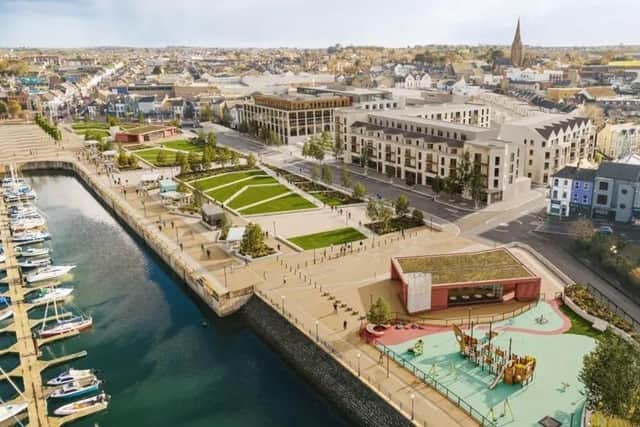

Many in Bangor couldn’t believe their eyes when diggers finally moved in, as since the turn of the century one idea after another for the seafront location came and went with little in the way of movement.
The Queen’s Parade site is owned by the Department for Communities.
Speaking to the News Letter ahead of a visit to the site yesterday afternoon, and with builders reportedly making good progress on the scheme, Mr Lyons admitted he’d had to “push and push and push” to get the project and up and running.
“We came up against a huge number of barriers along the way; it was very, very intensive in the engine last year, but we were determined to get it over the line,” he said.

Among the red tape that held up the Queen’s Parade revamp in recent years were lengthy negotiations with Crown Estates, who own parts of the coastline the project will be built on, as well as a protracted wrangling with another wing of Stormont.
The Department for Infrastructure’s Rivers section refused to sign off the project for more than a year, citing fears that if a reservoir around three miles away from Queen’s Parade catastrophically burst its banks, then part of the seafront development’s underground car park could be hit by the resulting flood. Eventually the DfI decided it didn’t have to make a decision on the revamp, and withdrew the roadblock.
Mr Lyons pointed out that talks over the project were complex, involving the area’s council on top of two Stormont departments and Crown Estates; adding he was “determined to get over any hurdles”, he conceded the system too often moves with “caution to the extent of holding things up”.
“[In government] I find there are many reasons presented why you can’t or shouldn’t do something, rather than try to find innovative ways around problems,” he said.
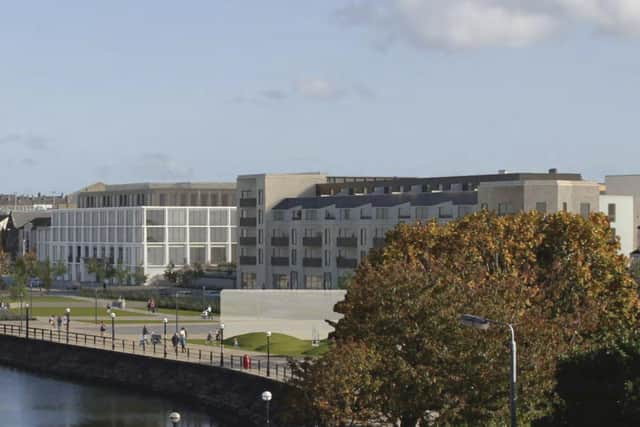
“But that’s how I approach everything in this department; if we don’t have the resources or ability to do something, how else can we achieve that objective? That’s what you really need to have, to push through and cut through.
“We have to do things properly, when we’re talking about government investment every pound matters, but it’s our responsibility to make it as easy as possible to get things done.”
Asked what he hopes to see on a daytrip to Bangor’s seafront in five to 10 years, he replied: “More than everything in the plans completed, I believe it will be a catalyst for further regeneration. We’re already seeing that, we’re seeing more interest; people can see [Bangor’s] becoming more of a destination.”