
Researchers at Queen's in antibiotics discovery
A new skin patch could save lives and tackle the antibiotic resistance crisis, researchers in Belfast have said.
The patch administers drugs painlessly through thousands of individual ‘microneedles’, something the researchers say could help reduce antibiotic resistance.
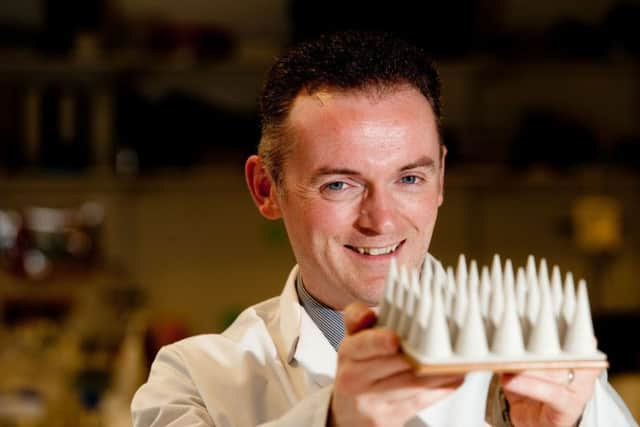

By injecting antibiotics rather than using tablets, the resistance developed by gut bacteria is significantly reduced.
Queen’s University Belfast Professor Ryan Donnelly explained: “We hope to show that this unique antibiotic patch prevents resistance development.
“If we are successful, this approach will significantly extend the lifespan of existing antibiotics, allowing time for development of the next generation of antibiotics. In doing so, this work has the potential to save many lives.”
Resistance to antibiotics is one of the major challenges to 21st century medicine.
Among the biggest problems is that the huge majority of the drugs are taken orally, the pharmaceutical technology professor said.