
Roamer: What the second world war censors spiked in our local press
As the 80th anniversary of VE Day approaches, local historian, journalist and former editor of the Coleraine Chronicle, Hugh McGrattan, peruses some old documents from the archives of the Northern Constitution relating to newspaper censorship during WWII.
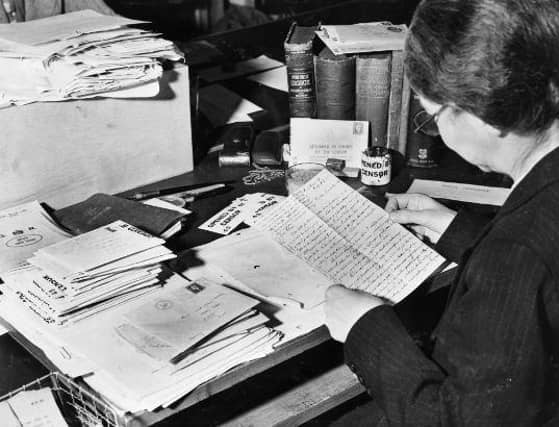

Hugh headlines his account - ‘Making sure the local press didn’t help Hitler!’.
The Constitution’s editor regularly posted bundles of news stories and articles, which he felt might contain information useful to the enemy, to the Ministry of Information’s press censor at 5 Lombard Street, Belfast.
Royal Mail was so reliable in those days that anything posted before 6pm was sure to be on the censor’s desk first thing next morning!
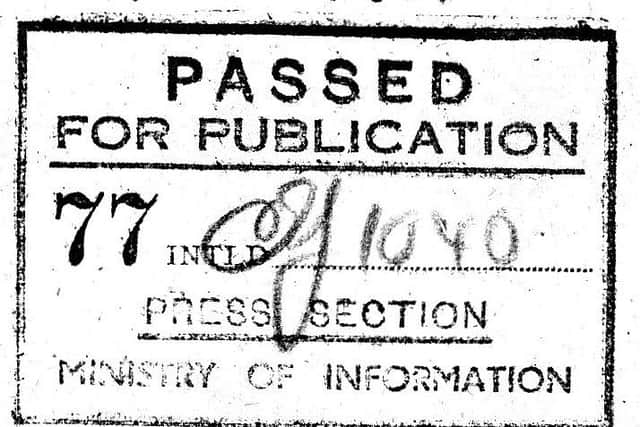
On average, a mere 10 minutes after being tackled by the censor, shorter items could be ready for an overnight return to Coleraine.
Clearly rubberstamped, signed and certified on each story were the times when the censorship process started and ended.
Most of the submitted items would therefore be back with the editor early next day, an official stamp confirming or rejecting its suitability for the next edition, blue pencil marks highlighting any changes deemed necessary.
Some items took longer than 10 minutes to inspect. A lengthy article headlined ‘ARP in North Antrim’ about civil defence exercises in Ballymoney was received by the Press and Censorship Bureau at 9.29 on July 9, 1941. Censor No. 77 cleared it for publication at 12.50, nearly two-and-a half hours later.
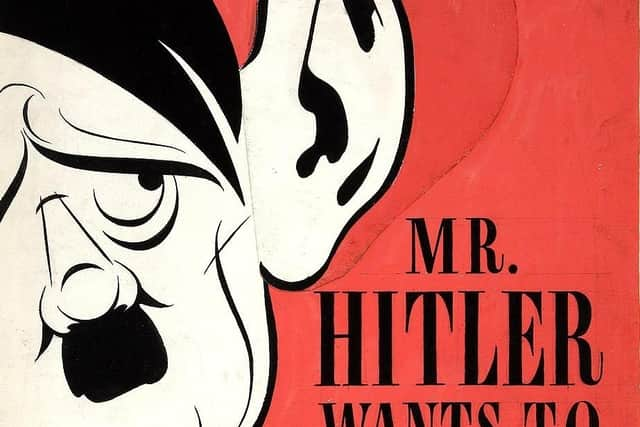
Well, it was a long article and maybe No. 77 took a break for tea in the middle!
Some material was dealt with extremely quickly.
A Letter to the Editor from ‘Co Derry Farmer’, submitted on June 12, 1941, accused ‘the military’ of leaving farm gates open! It was passed without alteration in four minutes.
Some of these stories seem innocent to the peacetime eye, but in wartime were considered by the authorities as possible breaches of security. For example, a death notice was published on May 30, 1942 regarding a soldier married to a Portrush girl - he’d been killed in action in the Middle East on May 2, 1942.
Referencing Defence Notice Miscellaneous (3) it was made absolutely clear that obituary notices of persons killed in action should not give any information on the locality or the exact date.
In the same issue, a paragraph concerning the larceny of eight ounces of Navy cigarette tobacco, the property of the naval stores officer at Dromana, had been printed contrary to Defence Notice Naval and Shipping (1) which forbade the publication of information regarding naval establishments on shore.
It appears that the previously mentioned soldier’s obituary wasn’t the first time the Constitution had offended!
A few weeks previously the paper published a death notice of a Garvagh man using the words ‘killed during air operations’. The censor reminded the editor that the manner of death should not have been revealed.
However, when one considers that the young man who had given his life for his country was a Sergeant Wireless Operator/Air Gunner, there could really be little doubt as to the nature of his tragic passing.
A reference to the 6th Light Anti-Aircraft Battery on May 16, 1942 brought a swift broadside from the censors as it was then contrary to rules to identify a military unit or formation.
The Senior Regional Press Censor explained: “It is believed that the Germans scrutinise our papers very carefully, and if this rule were generally disregarded, valuable information as to the composition of HM Army could be collected from a careful compilation of individual items...”
The thought comes to mind - how did the Nazis get their weekly copy of the Coleraine Constitution? Hardly by subscription, or from a corner newspaper shop in Berlin!
An admonishment was delivered on August 14, 1941 noting that in the July 19 issue of the paper there’d been several references to current weather conditions - in particular a thunderstorm.
“Ask your staff to watch this matter more closely,” said the censor. “Such references are likely to appear in descriptions of sporting events, etc.”
Considering that the Constitution was a weekly newspaper, coming out on Fridays, one is left wondering how the fact that it rained at half-time during a match between Portstewart and Garvagh six days previously was going to help the Luftwaffe plan that night’s bombing raids!