
Traffic & Travel: Temperatures are forecast to fall below freezing and there is a risk of snow and ice on roads
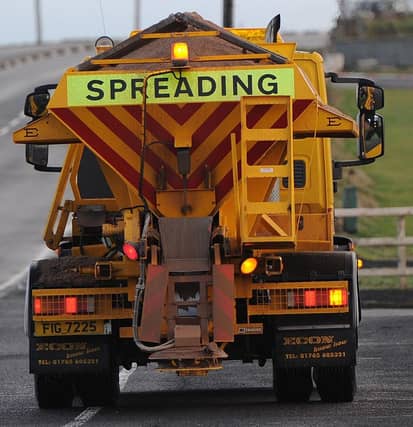

Winter Service has advised that temperatures are forecast to fall below freezing and there is a risk of snow and ice on roads.
Latest news from TrafficwatchNI adds: “The Salting of roads on the scheduled network considered to be at risk is planned for this evening.
"Road users are advised to exercise caution when travelling, particularly when driving on untreated roads.
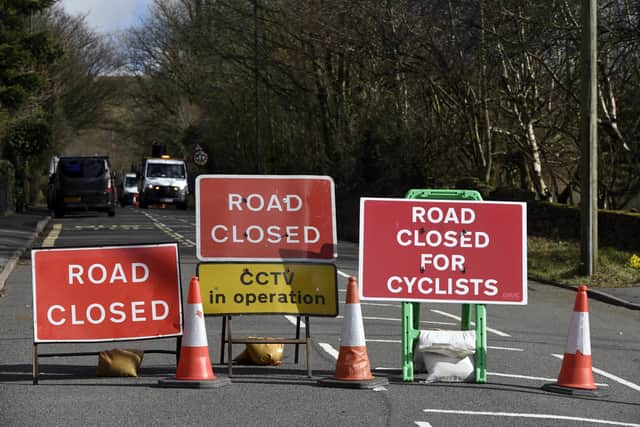
"The department continues to work to reopen roads that have been closed due to the recent flooding.
"With forecasted low temperatures gritting may take place however due to road closures it may not be possible to treat all the scheduled routes and motorists are asked to take extra care, particularly while driving on untreated roads.
The information service adds that: “A schedule of salting routes has been drawn up covering the main through routes carrying more than 1,500 vehicles per day.
"Other roads carrying more than 1,000 vehicles per day may also be included if they are in hilly areas or there are other difficult circumstances.
"Special allowance is made for school and other buses by a weighting factor. For example, a 40-seater bus is counted as 40 vehicles
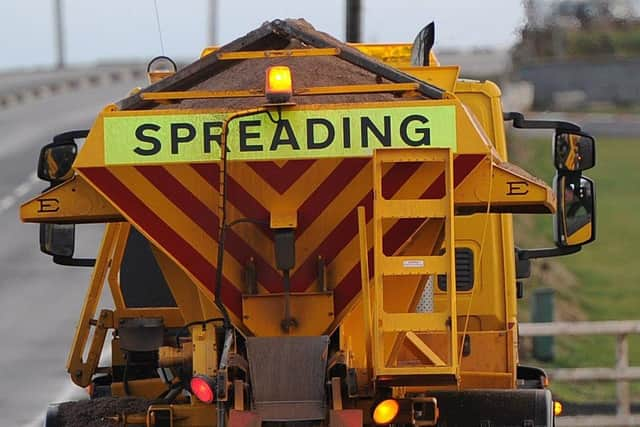
"Almost 7,000 km (4,300 miles) of roads are salted which is 28% of the length of the road network and salting it costs £4.5M in an average winter.
"This caters for 80% of all traffic. To cover 90% of traffic the length of roads salted would be doubled, at twice the cost".
When does salting take place?
According to TrafficwatchNI: “DfI duty controllers are on call 24 hours a day in each of our 4 divisions.
" Based on all of the forecast data and local knowledge, they will make the appropriate decision for their local area.
"The season usually lasts from early November to late March but winter service will be provided outside this period if necessary”.
"Salt is not normally spread during heavy rain, as the salt will simply be washed away.
"In the middle of the night, because there is not enough traffic to turn the salt and ice into solution and make it effective.