
Weather warning as commuters return to work: Christmas break ends with 7cm of snow falling, while Met Office and PSNI urge caution as sub-zero temperatures overnight to cause Monday morning ice
A yellow weather warning is in place as many return to work tomorrow, the Christmas break ending with sub-zero temperatures as well as frost and ice blanketing Northern Ireland.
The Met Office said 7cm of snow had fallen over Castlederg in Co Tyrone by Sunday lunchtime, the largest amount recorded during current conditions, and warned that rural areas in particular would see temperatures drop to around -6C overnight.
Speaking to the News Letter today, a spokesman said commuters would need to allow plenty of extra time on Monday morning, both for scraping ice and snow from their cars and for their journeys to work over roads that will likely have been impacted by wintry conditions.
More snow could be expected on high ground, he added, in particular in the Sperrins, though Ulster should warm up over the course of next week.
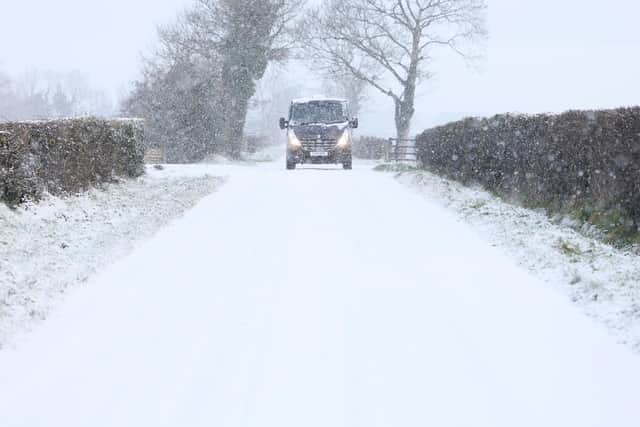

Schools are also due to return tomorrow morning amid the weather warning. Covering the whole of Northern Ireland, the yellow warning level came into effect at noon on Saturday, and states the weekend’s snow showers will gradually ease on Monday with the most frequent of them in the north of the province.
Says the Met Office: “Whilst not all locations in the warning area will see snow, around 1cm to 3cm is expected to have fallen in many places by Monday morning, with the potential for 5cm to 10cm to build up in a few locations, especially over higher routes such as the Glenshane Pass. Ice will be an additional hazard for many.”
The Department for Infrastructure said a second salting of roads would take place today, though this would be “on the scheduled network” and with a staggered start, including snow ploughs deployed on routes through high ground.
Said a spokesperson: “Road users are advised to exercise caution when travelling, particularly when driving on untreated roads.”
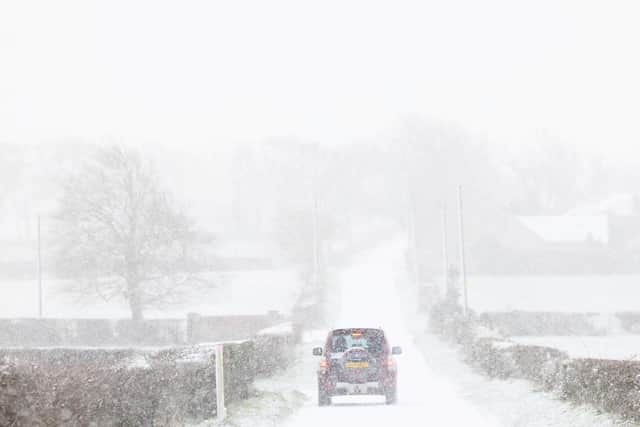
The PSNI also urged motorists to “take extra care on the roads”, issuing advice that “even the most experienced drivers can find themselves getting into difficulties when the roads are icy”.
The force stated that motorists need to make sure their vehicles are roadworthy for winter conditions, including that tyres meet legal requirements for tread – something that can affect traction.
Brakes and lights need to be tested and in full working order, they added, while drivers should carry de-icer and water in the car with them, as well as weatherproof clothing and strong boots in case they have to get out and walk, or push a car.
States the police: “Slow down and leave plenty of room to stop. You should allow at least three times more space than usual between you and the car in front.
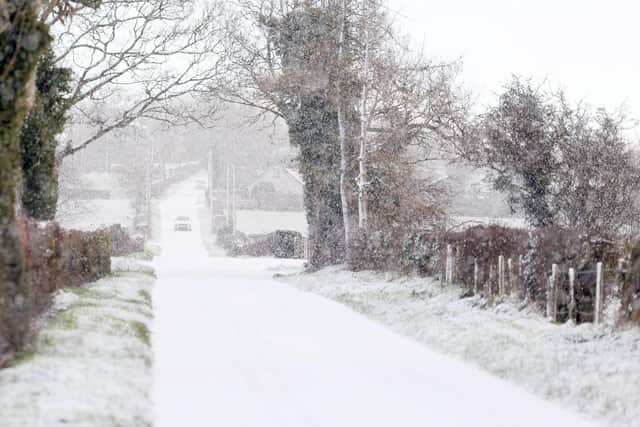
“Turn on your lights to increase your visibility to other motorists and always clear all ice and snow off the car windows before setting out.”
They also advised to “drive slowly on snow in the highest gear possible” and never attempt to overtake snow ploughs or gritting lorries, which have limited visibility.
Added officers: “Do not assume your vehicle can handle all conditions. Even four-wheel drive vehicles can encounter trouble on winter roads.”
Separate yellow warnings for snow and ice are in place for Wales, Greater Manchester and south-west England, while much of the east coast of England is covered by a yellow warning for ice.
A yellow warning for snow and ice covers much of Scotland north of Glasgow, and expires at midnight on Monday. An amber warning for heavy snow has been laid over much of the Scottish highlands and Aberdeenshire, which could mean flights and mobile phone coverage are disrupted, and rural communities cut off.