
Gerard Lawlor feels 'benefits are worth exploring' of Irish League calendar change as NIFL commission further report

Northern Ireland Football League (NIFL) CEO Gerard Lawlor has confirmed the organisation has commissioned a deeper report which will give further answers over the potential of an Irish League calendar change.
Included in NIFL’s ‘A Bold & Brighter Future for Professional Football’ strategy launched by Lawlor in September 2023 was a plan to "lead and implement a change to the professional game playing calendar” in Northern Ireland.
NIFL have since commissioned an initial review looking at the potential positives of a switch and Lawlor has revealed they’ll now delve further in search of answers with the hope of bringing a proposal to members by early-2026.
"We did a review that we commissioned which gave us a real appetite for further review,” said Lawlor. “Some on the board felt we needed more and I can tell you that we have commissioned a deeper dive and deeper report into that which will give us a lot of the answers one way or another.
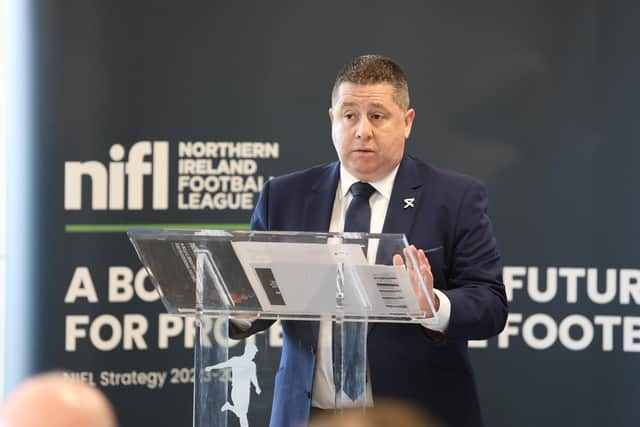

"We hope in early-2026 that we can bring it to members to make a decision on the way forward. It's progressive at this moment in time."
Lawlor was speaking alongside NIFL’s Chair, Chris Brindley MBE, who was re-elected to his position for the next three years at their AGM held on Wednesday evening, which included a modernisation of the Board.
Brindley has extensive experience in rugby league, a sport which changed their professional playing calendar from the winter to summer in 1996, mainly due to weather and commercial reasons, while the amateur game followed around 2012.
One major benefit for Premiership clubs would be preparation for European football – reigning champions Linfield meet League of Ireland kings Shelbourne next month in their first competitive match of the season while Damien Duff’s men will have played 25 league matches.
"I find it incredible that teams from Northern Ireland qualify for Europe and their first competitive game is in a tournament against teams that have played 26 or 27 games,” said Brindley. “Is it a match of skill or match fitness?
"One of the things we're committed to looking at is our season calendar the best we could possibly have to allow our clubs to be successful?
"I was on the rugby league board for six years and we went from playing in the winter to playing in the summer.
"The fan experience is awful in the pouring rain in November so people who are transient fans look out the window and don't want to go. That's what the experience in rugby league was.
"I understand the passion, people tell me about Boxing Day here. In rugby league, the first fixture was on Boxing Day between the biggest rivals. You're also playing on pitches which need less maintenance.
"The biggest failure would be to do nothing."
Lawlor feels the potential benefits extend far beyond just those for the four clubs who qualify for European football each season with a change in calendar meaning NIFL wouldn’t be going up against the likes of the Premier League or Scottish Premiership in certain months.
"Any change in the season is not solely about helping European clubs,” said Lawlor. “The money that comes from Europe comes down the table so this is about is there new opportunities around Premier League football, broadcasting deals - football is such a saturated market in broadcasting at this moment in time.
"The benefits are worth exploring and we'll see what the report tells us and members will make the decision on what to do."