
Gerard Lawlor 'remember they’re human' message after Irish League goal 'howler' which could open up technology discussion

NIFL CEO Gerard Lawlor has labelled the decision to award Linfield a controversial second goal during their Premiership win over Portadown as a “howler” and confirmed the organisation will look to discuss with the Irish FA – but also sent a “remember they’re human” message.
The Blues went ahead through Sam Taylor’s first goal for the club and doubled their advantage when it was deemed Matthew Fitzpatrick’s close range strike had crossed the line despite Aaron McCarey appearing to save the shot.
Portadown players and officials were furious with the decision and replays have shown the goalkeeper had denied the Linfield striker.
David Healy’s side went on to win 3-0 and extend their perfect start to the new Premiership season, putting together three consecutive victories while not conceding a goal in the process.
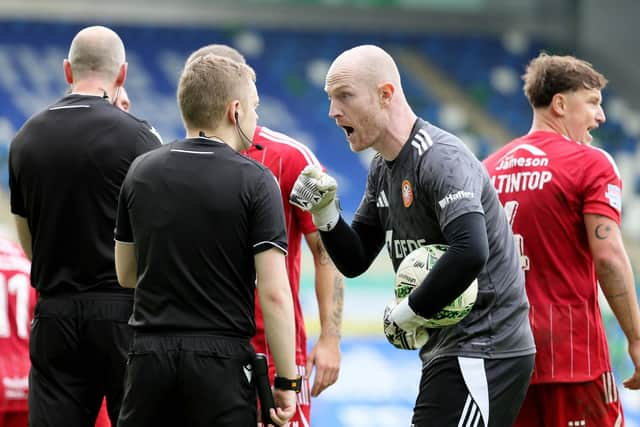

After the match, Ports boss Niall Currie told BBC Sportsound: “How the linesman has seen what he's seen is beyond me. I'm still baffled about it. We felt we were really, really still in the game, but that moment was the pin in the balloon moment."
Lawlor has posted about the incident on social media, and while acknowledging it’s a huge error which shouldn’t happen in the Premiership, he also feels it’s important to learn from it.
“No doubt the incident with the second goal at Windsor yesterday was a howler,” he said. “Frustrating, and it shouldn’t happen, but it did.
“Before jumping on those involved, let’s remember they’re human. They’ve got feelings, families, and it’s easy for faceless accounts to pile in, criticise and of course be abusing.
"Credit to Niall Currie too for how professional he was in his post match interviews.
“Honestly, I’ve seen more good performances from refs this season than bad ones, but yes, mistakes have happened.
"We all love giving our opinions and that’s part of football! But as authorities we have a responsibility to make sure lessons are learned, improvements are made, and referees get the support they need.
“Mistakes can actually open the door for change. As a league, we’ll try to sit down with the Irish FA to talk this through.
"Personally, I think it’s time for a fresh structure for our senior refs, proper investment, and while not always popular, maybe technology must now be seriously considered.”
The Irish League doesn’t have access to goal-line technology – reports have suggested it costs English Premier League clubs around £250,000 to install – while expensive VAR wouldn’t be feasible, or perhaps even wanted.
Before leaving his role as Irish FA Head of Refereeing, Mike Riley revealed in November there’s “a possibility” that a streamlined version of VAR could be introduced in the future.
VAR Light continues to be developed for smaller leagues – it uses four to eight cameras compared to 42 in the Premier League, has a reduced technical arrangement and fewer operational requirements in the video operation room and systems are portable and can be set up on-site in minutes.
"That will probably take another while to develop and come into full implementation,” he said. “At that point, smaller countries could look at VAR and see if it’s something for them.
"We would still need to invest in more technology – you’d need a minimum of four cameras to allow it at every game. It’s a possibility but I don’t think full VAR is where we’ll end up in the short-term.”