
Seasonality 'major topic' discussed as Gerard Lawlor meets with Irish League clubs

Northern Ireland Football League (NIFL) Chief Executive Gerard Lawlor insists he wants to ensure “clubs have the information they need to reach an informed position” on any potential switch to the Irish League playing calendar after meeting with members this week.
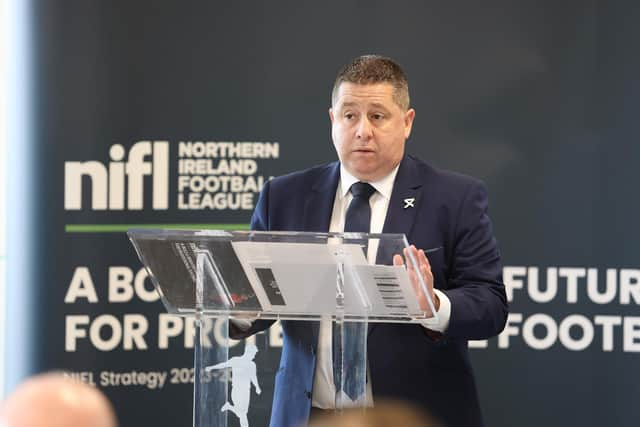
Included in NIFL’s 2023-2028 strategy document – which is titled ‘A bold and brighter future for professional football’ – is an ambition to “lead and implement a change to the professional game playing calendar”.
NIFL have commissioned two reports to provide further information about a potential change with Lawlor confirming findings have been shared with member clubs.
Lawlor and NIFL Chair Chris Brindley met with Irish League clubs earlier this year following an event at Stormont and the organisation engaged with their members once again this week with Championship developments and seasonality amongst key talking points.

With Northern Ireland now on the verge of losing one of its four European spots, many believe switching to a summer calendar would allow Irish League clubs to better prepare for positive continental results.
Lawlor has now encouraged clubs to consult stakeholders and is looking to work with them to move football in Northern Ireland forward.
“This week we met with our clubs and had positive and constructive discussions across a wide range of issues affecting our competitions and the future development of the League,” said Lawlor. “The Championship was an important part of that conversation.
"We want to understand how we can support the league and its clubs better, but equally we need to understand what each individual club needs to develop.
“No two clubs are the same. Their ambitions, facilities, resources and challenges are different, so part of this process is about getting underneath that and asking what each club needs to progress.
“We also want to explore how we can better prepare clubs for the step into the Premiership.
"Promotion should be an ambition, but clubs also need to understand and prepare for the sporting, operational and organisational demands that come with competing at that level,” he added.
“Seasonality was another major topic.
"There are understandably different opinions and different considerations for individual clubs, which is why we believe it is important that this discussion is properly facilitated rather than beginning with a predetermined outcome.
“Our role as a League is to help create that process. We want to provide the evidence, ask the difficult questions and ensure clubs have the information they need to reach an informed position.
“We have commissioned two pieces of work already and have now shared those reports with clubs.
"However, we recognise that there are questions which are particular to football in Northern Ireland, so we are asking clubs to tell us what else they need to know.
“We have also encouraged clubs to consult their own stakeholders. Players, staff and supporters all have an important voice in this discussion and clubs have a responsibility to ensure those views are heard.
“Ultimately, these conversations are about how we continue to strengthen our competitions and our clubs.
"NIFL is committed to driving and supporting that progress, but it has to be a collaborative process with clubs playing their part in shaping and delivering the future of our League.”