
Rory McIlroy highlights why 'blocking out the noise' could help improve sporting longevity

Rory McIlroy believes “blocking out the noise” could help increase longevity and advised his fellow athletes to avoid social media for the benefit of their mental health.
McIlroy is one of the most recognisable names in the world of sport, bursting onto the golfing scene as a teenager before becoming only the sixth male player to complete a career Grand Slam earlier this year.
The 36-year-old is the driving force behind his sport, amassing an eye-watering fortune – he has joined Tiger Woods in an exclusive club to earn more than $100million in PGA Tour prize money – and is the star attraction at every tournament he plays in around the world.
That attention and profile brings its own challenges – McIlroy was the target of vile abuse from American fans at the Ryder Cup in New York last month while also being trolled on social media throughout his career.
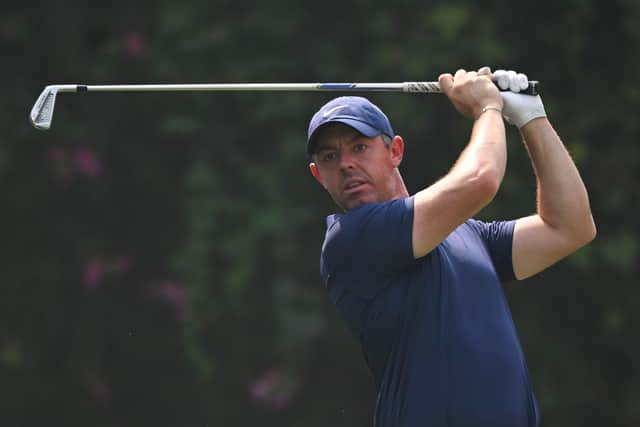

McIlroy’s rise has tracked alongside the emergence of social media platforms, and while he admits the sporting landscape has changed because of it, the Holywood native has highlighted the importance of staying away for performance-related reasons.
"I would say that deep down at its core, the essence of watching sport, it's the realist reality show that we have,” said McIlroy, who sits tied-17th on six-under par through two rounds of the DP World India Championship. “We don't know the outcome.
"We don't know what's going to happen, and that's amazing. There's very little content on TV nowadays that can actually do that.
“So my sport will always be what it is, and I think the majority of sports fans watch it because of that.
"Look, it's a big business, and big business and money comes from having opinions on things…the more eyeballs on things are ultimately a good thing, if it can be harnessed the right way.
“But yeah, it's definitely changed. When it's people watching sport for the gambling aspect and they put money on games, that is something that, especially in America, is a changing landscape.
“But I think at its core, watching sport is still very pure and it's still pure competition...I think that's an amazing thing.
“But yeah, as an athlete and knowing that you're going to get criticised for your performances, good or bad or whatever it is, I think at this point in time and in this modern world, that's – I wouldn't say it's a price to pay but yeah, it is what it is.
“I think athletes nowadays have to do a better job of blocking out the noise, so not going on social media, trying not to read anything about yourself.
"It’s easier said than done, but I think the more athletes in this day and age, if they can do that, I think it's better.
"I think it's better for their performance, I think it's better for their mental health, and I think it's better for their longevity as well.”