
Monday TV Choice: Love and Loss - The Pandemic 5 Years On (BBC1, 8.30pm)
On March 23, 2020, then prime minister Boris Johnson announced that Britain was going into lockdown to try to halt the spread of Covid.
Five years on, have we fully reckoned with the impact of the pandemic?
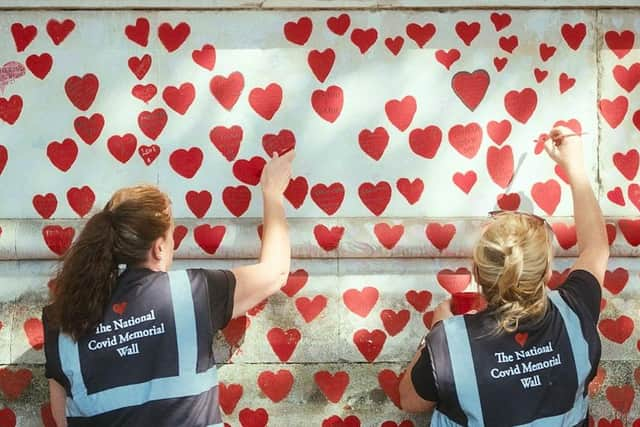

Award-winning director Catey Sexton, whose mother died in a care home, says: “It feels like we are in a rush to forget and move on.”
So, in the documentary ‘Love and Loss: The Pandemic 5 Years On’ she’s reminding us of the scale of the tragedy, and the lingering questions about whether more could have been done to prevent it. She does this by sharing her experiences while also hearing from 12 other families from across the UK about their own tragedies.
Each story captures a moment in time in the story of the pandemic, and serves as a tribute to a life.
Catey begins her journey in Liverpool, where she meets the family of Richie. An avid Liverpool fan, he was there when his team hosted a Champions League match against Atletico Madrid. The game took place on March 11 2020 – the same day the World Health Organisation declared Covid-19 a global pandemic.
The film also hears the story of 21-year-old Chloe who, just a few days before the national lockdown, became the youngest person to die without any underlying health conditions.
When the lockdown was announced, not everyone could stay home. Catey meets the families of some of the millions of key workers who kept the country going, such as Rodrick, whose dad, Rudy, was a London bus driver for 30 years, and Kazeema, a healthcare worker in Walsall, whose 36-year-old sister Areema became one of the first nurses to die.
When the country then began to slowly open up again, many people were desperate to return to everyday life.
Amanda recalls how she and her husband Bob, whom she describes as a ‘bon viveur’, took advantage of Eat Out to Help Out, a government scheme designed to support restaurants, but the family would pay a heavy price for their taste of normalcy.
As a second wave hit, Britain would experience more lockdowns, although there was hope on the horizon in the form of the vaccine. However, that would come too late for some families.
As Catey hears more stories, she explores how some people are still looking for answers and justice, while others just want to come to terms with what happened. They are all united by a desire to make sure their loved ones are remembered.
The director says: “It’s important that we document the stories of those we have lost to the pandemic. To ensure their deaths are not in vain or forgotten, and to make sense of what happened, in the hope future lives can be saved.
“For those who no longer have a voice it’s the least they deserve.”