
Belfast City Region’s £5bn pipeline puts construction delivery in spotlight
Belfast City Region’s £5bn development pipeline has put construction delivery firmly in the spotlight, as housing, regeneration and mixed-use schemes move from ambition towards implementation.
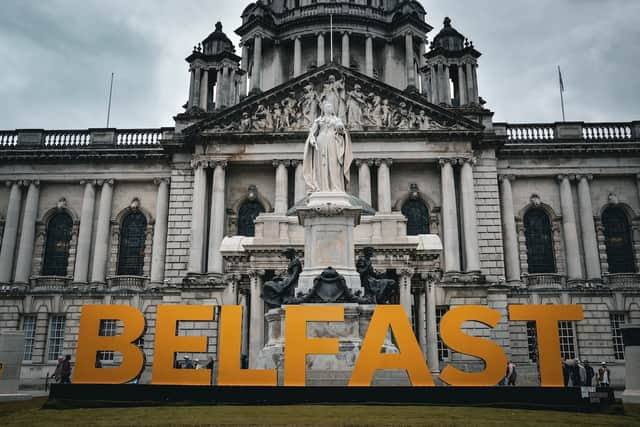

The region used UKREiiF 2026 to promote a major pipeline of investment opportunities, with projects focused on housing growth, town and city centre regeneration, mixed-use development and infrastructure. For Northern Ireland’s construction sector, the scale of the opportunity is significant, but so is the challenge of delivering schemes on time, on budget and in a way that benefits local communities.
A £5bn pipeline is not just a headline figure. It represents years of planning, procurement, design, site preparation, construction work and long-term management. It also raises questions about skills, materials, supply chains, funding, planning capacity and coordination between public and private partners.
For Belfast and the wider city region, successful delivery could support new homes, modern workspaces, improved public areas and stronger links between communities and employment centres. Regeneration can help bring vacant or underused sites back into productive use, while mixed-use development can create places where people live, work, shop and spend leisure time.
That matters because the construction sector sits at the centre of economic growth. New buildings and infrastructure can support jobs during the build phase, but they also shape long-term investment, business confidence and quality of life. A well-delivered scheme can unlock further private investment. A poorly coordinated one can create delays, disruption and public frustration.
The challenge is especially clear in urban regeneration. Building in established areas is rarely straightforward. Contractors may need to work around existing roads, businesses, residents, utilities, heritage assets and public transport routes. Sites may require remediation, demolition, temporary access arrangements or complex phasing before construction can even begin.
That is why strong systems and project visibility matter. Construction industry solutions focus on helping construction teams manage complex workflows, track project information and improve coordination across jobs, sites and stakeholders. For a pipeline as large as Belfast City Region’s, the ability to keep projects aligned, risks visible and teams informed can be as important as the physical work on site.
Large regeneration programmes also depend on collaboration. Councils, developers, contractors, housing providers, consultants, investors and communities all have different responsibilities. If communication breaks down, small issues can become expensive delays. If teams share reliable information, decisions can be made earlier and delivery can be more predictable.
Housing will be one of the key tests. Northern Ireland continues to face pressure around housing supply, affordability and quality. New homes are needed across different tenures, including private sale, rental and social housing. But delivering homes at scale requires land, infrastructure, planning certainty and construction capacity.
Mixed-use schemes can also play an important role. Developments that combine homes, offices, leisure, retail and public space can create more active neighbourhoods. However, they are also more complex to deliver. Different building uses have different requirements, from servicing and fire safety to noise control, access and long-term management.
Public realm is another important part of regeneration. Streets, parks, squares and walking routes can determine whether a development feels connected or isolated. The success of a scheme is not only measured by the number of units built, but by whether people want to live, work and spend time there.
Construction disruption will need careful management. Major schemes can affect roads, parking, deliveries, pedestrian routes and nearby businesses. Clear communication with residents and traders can help reduce frustration, particularly when works last for months or years.
People are more likely to support regeneration if they understand what is happening, why it matters and when disruption will ease.
Skills are another major issue. A £5bn pipeline will require a strong workforce across trades, engineering, planning, surveying, project management, design, logistics, health and safety, and site supervision. Northern Ireland will need to ensure that local workers, apprentices and training providers are connected to the opportunities created by new development.
This could be one of the biggest long-term benefits. If the pipeline supports apprenticeships, upskilling and local supply chains, the impact could extend far beyond individual construction sites. Young people could gain routes into skilled work, local firms could secure contracts and communities could see more direct benefits from investment.
But delivery must be realistic. Construction inflation, labour shortages, planning delays and funding pressures can all affect major schemes. Developers and public bodies will need to manage expectations and avoid treating pipeline announcements as guaranteed outcomes. A pipeline becomes meaningful only when projects move through planning, funding, procurement and delivery.
Sustainability will also be central. New developments will be judged not only on appearance and economic value, but on energy performance, carbon impact, resilience and how they support public transport, walking and cycling. Regeneration should help create places that are fit for future needs, not just current demand.
For Belfast City Region, the £5bn pipeline is a major opportunity to shape growth across the coming years. It could support homes, jobs, infrastructure and renewed confidence in town and city centres. But the spotlight will now be on delivery.
The construction sector has a chance to show how large-scale regeneration can be managed well: with clear planning, strong coordination, skilled workers and visible community benefits. If Belfast City Region can turn its investment pipeline into well-delivered projects, the result could be more than new buildings. It could be stronger places, better-connected communities and a construction legacy that supports Northern Ireland’s economy for years to come.