
'I am committed to doing all I can to turn this around': Northern Ireland small businesses urged to help tackle economic inactivity as new report highlights untapped workforce
FSB NI research finds SMEs are willing to create opportunities for people outside the labour market but need clearer support to overcome recruitment barriers
Northern Ireland’s small businesses could play a key role in tackling stubbornly high levels of economic inactivity, but employers need better support to help bring more people into the workforce, a new report has found.
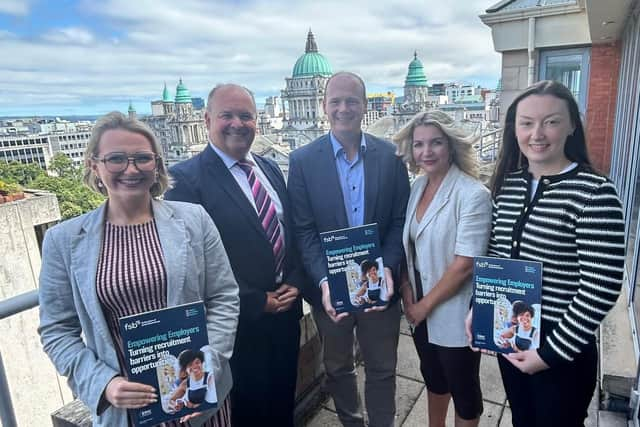

Research by the Federation of Small Businesses Northern Ireland (FSB NI), in partnership with Ulster University through EPIC Futures NI, has identified a range of measures that could help SMEs recruit people currently outside the labour market while also easing ongoing skills and staffing pressures.
The report, ‘Empowering Employers – Turning Recruitment Barriers into Opportunities’, found that while many small businesses are open to widening their recruitment approach, practical barriers including cost pressures, limited resources and uncertainty around available support are preventing more employers from doing so.
The findings come as economic inactivity remains a major challenge in Northern Ireland, where more than a quarter of working-age people are currently outside employment.
Communities Minister Gordon Lyons welcomed the report, saying it provided valuable insight into the challenges facing employers and the support needed to respond to changing workforce demands.
He said: “Economic inactivity is one of the biggest challenges we face in Northern Ireland. We have the highest rates in the UK with over a quarter of working-age people, around 319,000, not in a job.
“I am committed to doing all I can to turn this around. I welcome this in-depth report from FSB which provides invaluable insight into the issues that employers face and the supports required to respond to changing workforce needs.
“Our shared ambition must be to see more people in good work and thriving, supporting both individuals and employers to deliver upon their potential.”
The report found that almost half (48%) of businesses surveyed had never recruited someone from an economically inactive group, despite many employers recognising the benefits of widening participation.
FSB NI is calling for a number of changes, including the creation of a single “one-stop shop” for employers seeking information on relevant schemes and support, a more coordinated approach across government departments, and the integration of HR, training and advisory services into economic inactivity programmes.
Alan Lowry, chair of FSB Northern Ireland, said small firms wanted to be part of the solution but needed greater support: "This Report offers a timely and detailed picture of the barriers and opportunities surrounding the recruitment of economically inactive individuals. While small firms recognise the value of widening participation, too many face obstacles that prevent them from doing so.
“Costs, capacity and confidence are major factors, compounded by fragmented support systems and wider structural challenges such as childcare, transport and health.
"The encouraging message from this report is that employers want to be part of the solution. With the right incentives, better information and stronger coordination across government, Northern Ireland's SMEs can help unlock this untapped talent pool, grow their businesses and support more people to re-enter and thrive in work."
Professor Kristel Miller, director of EPIC Futures NI at Ulster University, said the research highlighted the need for evidence-based policies that reflected the experiences of both employers and communities.
He added: “While the Northern Ireland economy is growing, persistently high levels of economic inactivity remain a significant challenge, and the recruitment and skills pressures experienced by businesses can often be under-recognised.
“By funding this research and working collaboratively with FSB, EPIC Futures NI has helped bring employers’ voices to the fore. The findings show that many SMEs want to create opportunities for people facing barriers to entering or returning to the labour market but need clearer, more accessible support to do so.
“This research reflects the core purpose of our Local Policy Innovation Partnership. Robust, locally grounded evidence is essential to inform more coordinated and effective policies and support that respond to the needs of employers, individuals and communities.”