
Mind the gap: Half of Northern Ireland businesses report skills shortages, but few are investing in young talent or future training says report
New report highlights that while nearly half of organisations in Northern Ireland are facing a skills shortage, only 23% currently have initiatives in place to recruit, retain or train under-25s
A new report from The Open University has revealed a growing mismatch between employers in Northern Ireland and the next generation of workers - a gap that could be hindering efforts to tackle the region’s persistent skills shortages.
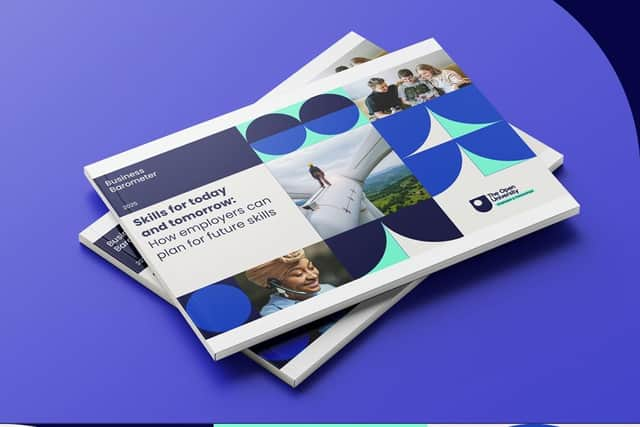

The report, titled “Business Barometer: Skills for today and tomorrow: how employers can plan for future skills”, is based on a survey of over 2,000 UK business leaders and 1,000 Gen Z adults (born between 1997 and 2012).
It highlights that while nearly half of organisations in Northern Ireland are facing a skills shortage, only 23% currently have initiatives in place to recruit, retain or train under-25s.
At the same time, Gen Z in Northern Ireland appear eager to meet these workforce demands. Sixty-two percent are actively considering careers in sectors with the greatest skills needs, and 79% say they would remain longer with employers that invest in their training. Despite this willingness, 65% of young adults report never having been told they lack specific skills, even as 39% of employers cite “work readiness” as a major barrier to hiring.
This disconnect becomes even more pressing in light of growing demand for skills in areas such as artificial intelligence and sustainability. While more than half of Gen Z (51%) are already working in or interested in AI, 34% of employers admit they lack confidence in delivering their AI strategies.
Baroness Martha Lane Fox CBE, Chancellor at The Open University, commented on the findings: “Employers have an incredible opportunity — and responsibility — to shape the future workforce. The talent is out there. Young people are motivated, they’re digitally savvy, and they want to contribute.
"But they need clear training pathways, practical support, and employers willing to invest. While there are economic challenges at this moment for employers, the smartest organisations won’t just wait for skills to arrive — they’ll build them, inclusively and proactively, to fuel growth and resilience.”
The report also explored attitudes towards equality, diversity and inclusion (ED&I). While 83% of employers in Northern Ireland say ED&I is important to their organisation and nearly half expect it to become more important in the next five years, 31% currently have no initiatives in place to support underrepresented groups, such as returners, career changers, and people with disabilities or neurodiversities. According to the report, this represents a missed opportunity to widen the talent pipeline and address economic inactivity.
Michael Bower, assistant director for Ireland at The Open University, added: “There’s a clear mismatch between employer intentions and practical action. But there’s also a real opportunity. By building structured skills plans, partnering with education providers and investing in flexible training, employers can unlock diverse talent and future-proof their workforce.”
The Business Barometer has been tracking the UK’s skills shortage for nearly a decade. Although the percentage of affected employers has stabilised, the problem remains widespread. Over a third of Northern Ireland employers expect the skills gap to worsen in the next five years. Many cite challenges such as rising national insurance contributions, minimum wage increases, broader economic uncertainty, and heavier workloads on existing staff. Despite these issues, fewer than half of employers have a formal skills plan in place, and 31% worry that employees they invest in may leave.