
'Northern Ireland's housing market continued to perform robustly': House prices rise by almost £9,000 in a year as demand continues to outstrip supply
PropertyPal’s latest market update shows average property price has reached £239,234, representing annual growth of 3.8%
Northern Ireland’s housing market has continued to show resilience, with the average house price increasing by almost £9,000 over the past year as strong demand continues to outpace supply.
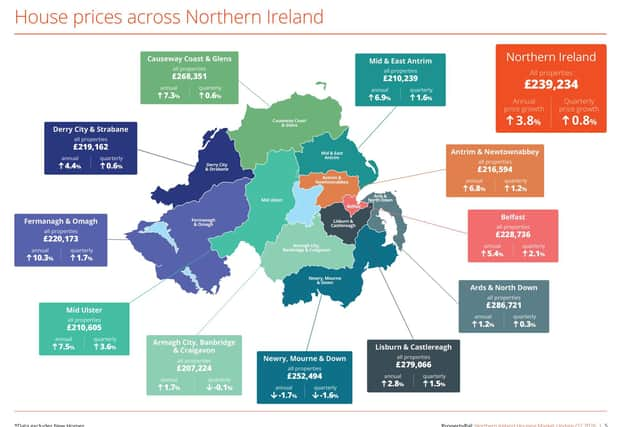
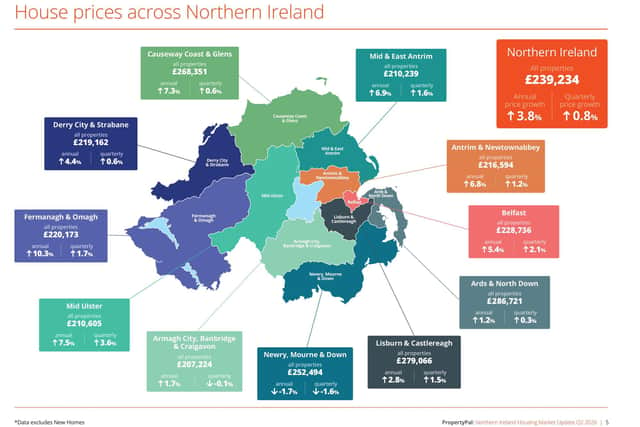
The latest PropertyPal Northern Ireland Housing Market Update for Q2 2026 shows the average property price has reached £239,234, representing annual growth of 3.8%.
Fermanagh and Omagh recorded the strongest increase in property values over the past 12 months, with average prices rising by 10.3%.

Demand from buyers remained strong during the second quarter, with enquiries to estate agents per advertised property up 7% compared with the same period last year. Homes are also continuing to sell quickly, with properties typically reaching “sale agreed” status within 36 days — around two weeks faster than the long-term average.

However, supply remains one of the biggest challenges facing the market. Around 6,500 new second-hand properties came onto the market during the quarter, fewer than the number of sales agreed, resulting in continued pressure on available homes for buyers.
PropertyPal chief executive officer Jordan Buchanan said the market had maintained a strong performance despite a slight easing in the pace of growth.

“Northern Ireland's housing market continued to perform robustly across the second quarter of the year, with average prices now sitting at around £240,000, up 3.8% annually,” he said.
“In practical terms, that annual growth has added almost £9,000 to the value of the average local home over the past 12 months.”
Mr Buchanan said around 6,700 transactions were agreed during the quarter, broadly in line with long-term averages, while increased enquiries suggested continued buyer interest heading into the summer months.
“Supply pressures remain a defining feature of the market,” he added. “Around 6,500 new second-hand listings were added to the market in the quarter, fewer than the number of transactions agreed, meaning stock available to buyers has continued to tighten.”
He said improving economic conditions, including gradual reductions in mortgage rates, a strong labour market and real wage growth, could help support the market through the remainder of 2026.
The rental sector also continued to experience rising costs, with the average monthly rent in Northern Ireland now standing at £1,013 — an increase of 3.8% over the past year.
Tenant demand remained significantly above historic levels, with an average of 63 enquiries per advertised rental property, up 11% year-on-year.
Mr Buchanan said rental supply remained constrained, with available inventory now down 5% compared with last year.
“Against this backdrop, we expect rental growth to continue at a moderate pace through the remainder of 2026, as structural supply constraints continue to persist,” he said.