
Parties 'are in massive denial' over need for water charges says member of NI Fiscal Council
Parties in Northern Ireland are in “massive denial” over the need for water charges says an economist, after the Sinn Fein infrastructure minister flatly ruled them out.
Esmond Birnie was reacting to Liz Kimmins’ declaration to MLAs that she is not going to implement such charges in “any form", just one day after the NI Fiscal Council published a scathing report which suggested that they need to be on the table.
Meanwhile, the DUP yesterday set out its opposition to water charges too.
On Wednesday, spending watchdog the NI Fiscal Council sharply-criticised Stormont’s reliance on the London government to "bail out" its budget-busting departments, year after year.

Its chairman Sir Robert Chote told the press that such bailouts mean "the Executive is under less pressure to deal with some of the big choices that confront it" – including the question: "Do we feel the need to raise more revenue, the old favourite, of course, of domestic water charging?"
Dr Birnie, a member of the NI Fiscal Council, told the News Letter: “Especially in current circumstances of repeat overspends, the tendency of all or most of the Stormont parties to rule out any action on revenue raising displays massive denial.
"There is this specific issue of the lack of adequate water/sewerage infrastructure across much of NI.
"We know this is now acting as a constraint, limiting house building and business expansion.
"This is a very real and present danger to the economy.
"The obvious thing to do – and after all, it happens in GB and in many other parts of the world – would be to introduce domestic water charges.”
In 2023, Paul Johnson, a former chair of the Independent Fiscal Commission for Northern Ireland, had told MPs in Westminster that water charges could bring in £350m per year.
Stormont's current projected overspend for this year is close to £460m.
Dr Birnie said “the oft-made claim that we already pay such charges through a proportion of our rates is a myth – total rates paid per household in NI is much less than the sum of council tax plus domestic water charges in England, Scotland and Wales”.
He added: “The infrastructure minister was keen to rule out domestic water charges, or any sort of increase in rates, which in the form of a levy might act as a substitute for such charges.
"Her department did recently consult on the introduction of a levy on developers in order to raise funds to pay for infrastructure.
"To my mind that looks like a poorly designed tax; it would fall only on newly-built houses and buildings (almost inevitably, developers would pass on costs to house buyers, et cetera).
"It would be fairer to have a well-designed system of domestic water charges paid by all property owners.”
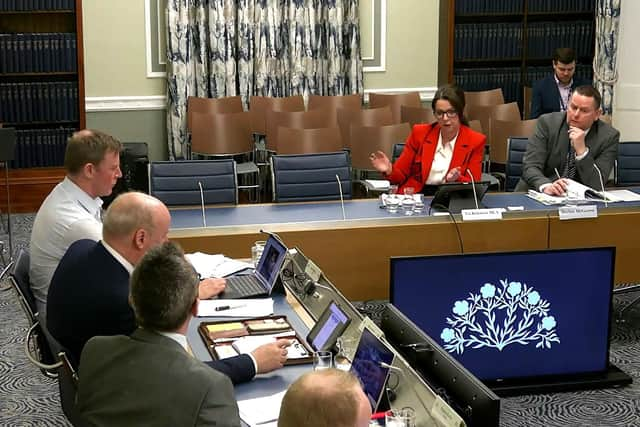
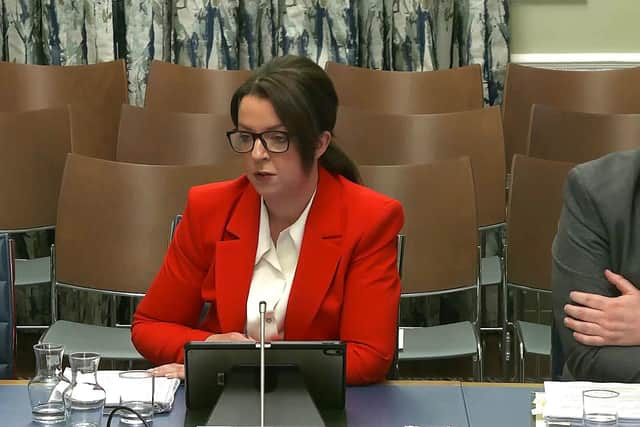
Speaking to MLAs at the infrastructure committee yesterday, Ms Kimmins had said the idea of introducing an "infrastructure levy" had been raised with her.
"Any decision to apply an additional levy to rates bills would be a cross-cutting matter to be considered by the executive, and substantive changes would need to be made to rating legislation and the rating administration system in respect of such a change," she said.
"However, for the avoidance of doubt, for me this represents a form of water charging: so I will not be proposing an infrastructure charge is added to household rates, and increasing to the financial burden already faced by people here by imposing any form of water charges."
A press release yesterday from the DUP, in the name of MLA Peter Martin, stated: “Households already contribute towards water services through the regional rates system.
"The DUP does not believe families should be burdened with an additional water bill, particularly at a time when many are already under significant financial pressure.
"There must be realism about imposing further costs on struggling households.
"The Department for Infrastructure’s primary difficulty is not simply about funding levels, but about how effectively existing resources are used.
"The department has spent approximately £200 million on the A5 project, yet no land has been acquired and no road has been constructed.
"Against that backdrop, it is entirely reasonable for the public to question calls for additional revenue.
"Wastewater infrastructure is no longer solely an environmental concern.
"It is now a major constraint on economic growth, restricting both housing development and business investment.
"This issue is actively holding Northern Ireland back.
"There will not be a single solution to these challenges. However, while the minister has been quick to dismiss various options, she has been far less forthcoming in advancing workable proposals.
"Developer contributions are not the comprehensive solution the minister suggests and cannot be treated as a substitute for strategic investment.
"Enabling NoI Water to borrow has long been recognised as a key component of any sustainable, long-term infrastructure strategy.”