
Carryduff community gets cyber smart with Age NI
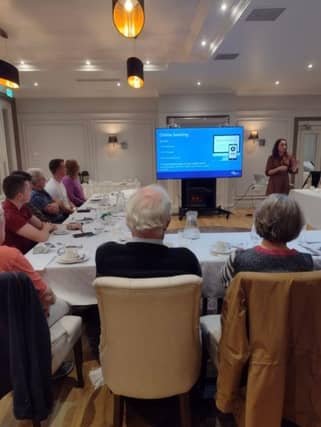

Residents in the Carryduff area have learnt how to protect themselves from online scams, thanks to a recent Cyber Security Session delivered by Age NI.
The session began on Thursday 9th October and was attended by members in the Carryduff community to help them build confidence and spot the signs of a scam.
The event formed part of Age NI’s wider Cyber Safety Awareness Programme, which is being rolled out across Northern Ireland.
Claudine Kelly from Age NI said that:
“We provide care, wellbeing, and advice services, promote the voices and rights of older people, and build the capacity of older people’s groups and networks across NI.
“Our vision is ‘a society in which we can thrive as we age,’ and our mission is ‘Let’s change how we age'.”
Kelly explained that cybersecurity has become an essential part of the charity’s work as more adults use digital devices for online banking and shopping.
The idea began when many reported feeling vulnerable online, according to their ‘2023 Lived Experience Survey’, which inspired them to help older people protect themselves in a safe, secure way.
During the session, the participants were guided through online safety, common scams, and practical steps to stay secure.
“In response to what we heard from older people, we recognised an urgent need to build confidence and resilience through education.”
They learned how to identify red flags, phishing attempts, use antivirus software and report suspicious activity.
Kelly explained red flags and demonstrated how to report suspicious messages.
“Feedback was highly positive: attendees appreciated the jargon-free approach and said they felt more confident online.” Kelly said
Scamming is becoming increasingly popular with the emergence of artificial intelligence, and Kelly explains that “these are harder to detect and require extra vigilance.
“They often create urgency, claiming accounts are compromised or relatives are in trouble, and pressure victims to act quickly.
“They may use official logos, spoofed caller IDs, or fake websites to appear legitimate.”
“You need to be cautious of the red flags, which may include being pressured to act immediately, poor grammar or spelling in messages, unexpected links or attachments in emails/texts and caller or email claiming to be from government or tech support.”
Claudine says that there are ways to protect yourself from online scamming, such as using privacy settings on social media, installing antivirus software and avoid sharing personal details online for those who aren’t tech savvy.
Kelly encourages people to take care of themselves when online and to contact the PSNI if they believe they have been scammed.
For more information, visit Age NI’s website on www.ageni.org