
Victorian ghost story pioneer Charlotte Riddell honoured with Blue Plaque in Carrickfergus
Carrickfergus honours one of the Victorian era’s most remarkable women writers with a blue plaque at her birthplace
One of the most prolific and successful authors of the Victorian era, Charlotte Riddell (1832–1906), is being officially recognised in her hometown of Carrickfergus, with the unveiling of a blue plaque by the Ulster History Circle.
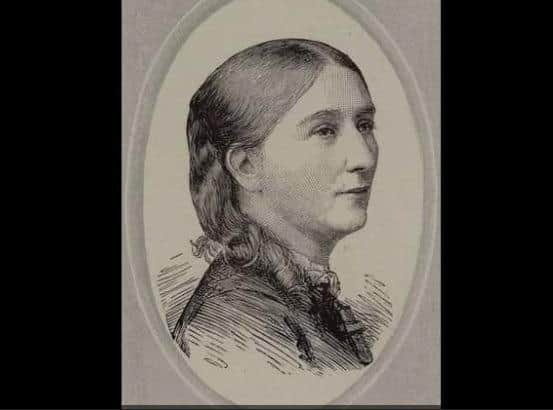

The plaque will be placed near the site of her childhood home, The Barn, which once stood where Carrickfergus Hospital was later built, close to the current Carrick Rangers and Barn United football grounds.
This long-overdue recognition marks a significant step in restoring the literary reputation of a writer once celebrated for her atmospheric ghost stories and insightful portrayals of Victorian life.
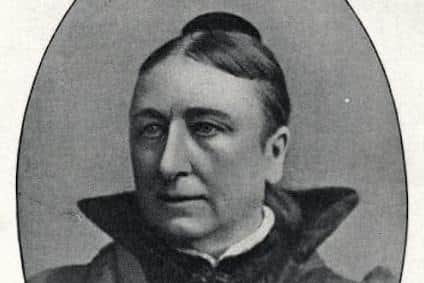
Born Charlotte Cowan, Riddell was the youngest daughter of a mill-owner father and a Liverpool-born mother. She demonstrated a natural gift for storytelling from a young age, completing a novel by the age of 15.
Her early writing drew inspiration from the surrounding landscape, including stories like Tales from Boneybefore, based on a nearby village. She even renamed her hometown “Kingslough” in her fiction.
After her father’s death, financial hardship forced Charlotte and her mother to leave Carrickfergus. They moved briefly to a cottage in Craigantlet outside Belfast before settling in London, where Charlotte resolved to support them both through her writing.
Determined to make a living as a writer, she faced repeated rejection in a publishing world dominated by men. She adopted male-sounding pseudonyms — including F.G. Trafford and R.V.M. Sparling — in hopes of being taken seriously. In later years, she wrote under the name Mrs J.H. Riddell, following her marriage to engineer Joseph Hadley Riddell.

Her literary breakthrough came in 1864 with the publication of George Geith of Fen Court, a financial drama that reflected the ambitions and moral dilemmas of Victorian London’s middle class. Riddell became known as “the novelist of the City” for her fiction set in the heart of London’s financial district. Her husband’s failed business ventures and mounting debts became material for stories that explored the fine line between ambition and ruin.
When her husband died in 1880, leaving her once again in financial distress, Riddell responded as she always had — by writing. She became co-owner and editor of the St James’s Magazine, a respected literary publication.
Riddell published more than 50 novels and short stories, many of them ghost tales steeped in gothic atmosphere and psychological suspense.
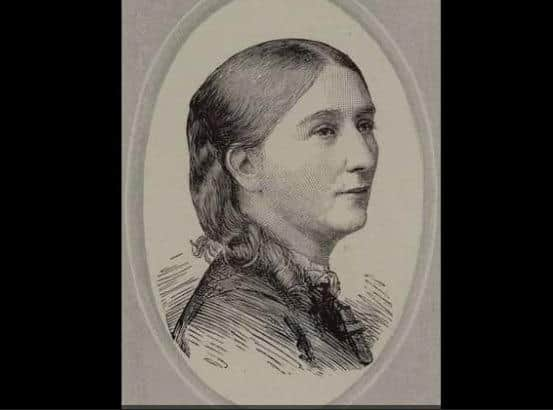
Stories like The Open Door captivated Victorian readers with their eerie settings and moral undercurrents. According to critic Victoria Margree, Riddell’s ghost stories are about more than haunted houses: “It is money that makes ghosts of people in her fictions, and it does so even while they are alive.”
She was celebrated during her lifetime, especially for her ghost stories, which critics today place alongside the works of Wilkie Collins (The Woman in White) and Sheridan Le Fanu.
Despite her success, Riddell died in relative obscurity in 1906. Her work was neglected for much of the 20th century, but recent scholarship has reignited interest in her writing, particularly for its insight into class, gender roles, and domestic life.
Chris Spurr, chairman of the Ulster History Circle, explained: “Charlotte Riddell, known as ‘the queen of ghost stories’, born at The Barn in Carrickfergus, found fame as a novelist in Victorian London.
"The Ulster History Circle is delighted to commemorate this once-popular and prolific writer with a blue plaque at the appropriate setting of Carrickfergus Library. The Circle is grateful to the Ulster-Scots Agency for their financial support towards the plaque and to Libraries NI for their kind assistance”.
Today’s blue plaque unveiling will take place at Carrickfergus Library and not only honours a significant literary figure from Northern Ireland but also serves as a reminder of the challenges faced by women writers of the past — and the stories they told that still resonate today.