
VJ Day: Life of Second World War hero of the Pacific Theatre who revolutionised emergency medicine, Ulsterman Frank Pantridge, to be celebrated
The life of a Second World War hero who went on to save uncountable lives across the world by inventing the portable defibrillator is to be celebrated for VJ Day’s 80th anniversary.
Professor Frank Pantridge was a medical officer in the Pacific Theatre, where he endured brutal hardships as prisoner of war that left him with permanent health problems.
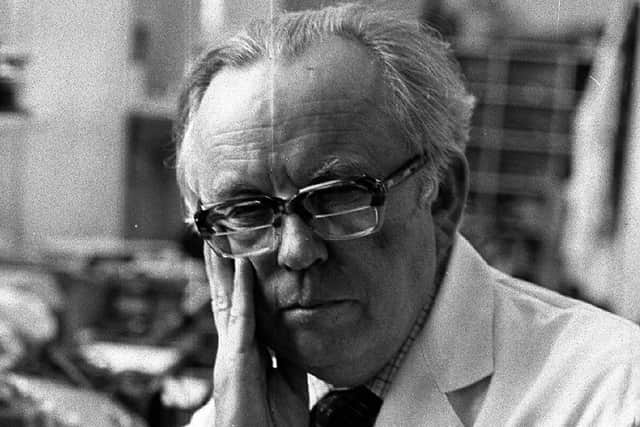

When the Ulsterman returned to his native soil, he joined Belfast’s Royal Victoria Hospital as a physician. In the 1960s he invented the portable defibrillator, a vital piece of technology that has saved the lives of untold millions around the world in the decades since – earning him the soubriquet “the father of emergency medicine”.
Born in a farm outside Hillsborough, he’s currently honoured with a statue in Lisburn and a blue plaque on the Victoria Hospital, though many think his infamous problems with authority have prevented him from earning the recognition he truly deserves.
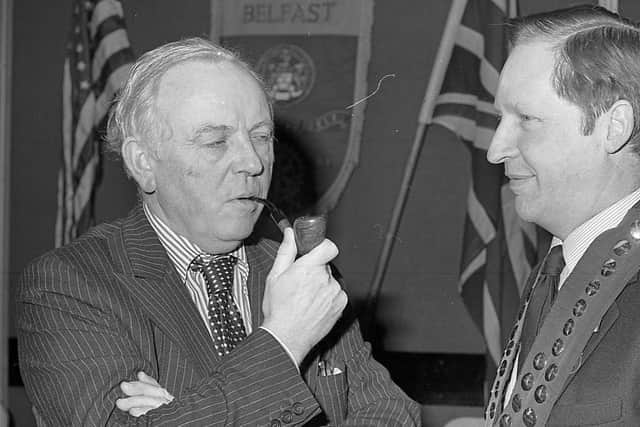
On Friday (15th) his remarkable legacy as war hero and medical pioneer will be marked with a special service and exhibition at Lisburn’s Lagan Valley Island, as part of commemorations marking the 80thth anniversary of the final end of the war, VJ Day.
Professor Pantridge graduated in medicine at Queen’s University in 1939. Winning a coveted house job at the Royal Victoria Infirmary, when war broke out he volunteered for the Royal Army Medical Corps and was posted to Singapore, where he medical officer to the Gordon Highlanders.
He was awarded the Military Cross for working “unceasingly under the most adverse conditions of continuous bombing and shelling”, with the citation highlighting his “absolutely cool under the heaviest fire”.
But in 1942 Singapore fell to the Japanese. A prisoner of war, Pantridge was transported to Thailand as slave labour on the Thai-Burma railway. During that time he contracted the usually fatal cardiac beriberi; although he survived, he suffered from ill health related to the disease for the rest of his life, with many theorising the experience sparked his interest in heart disease.
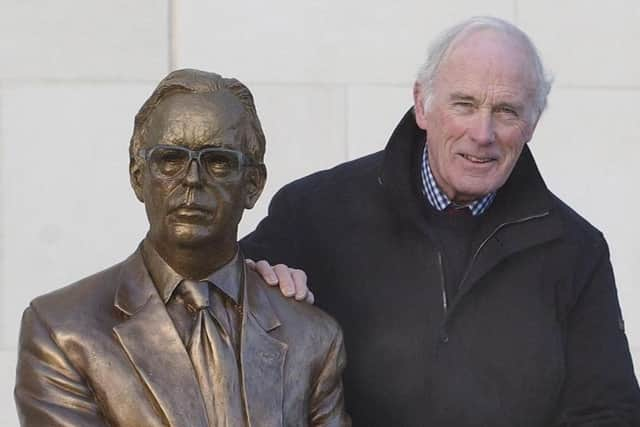
In civilian life he became cardiac consultant at the Royal Victoria and a professor at Queen's University. By that time doctors knew attacks disrupting heart rhythms could be corrected with a brief electric shock to the chest, but Prof Pantridge theorised it needed to happen as soon as possible – not just in hospital, but when the patient is at work or on the street.
That meant a portable defibrillator was needed, something Pantridge and two other men invented using car batteries as current. Rigging it it in an ambulance, his device was first used in January 1966.
Initially ridiculed by the British medical establishment, the devices are now standard in every ambulance and increasingly found in workplaces and on busy streets.
Lisburn mayor Amanda Grehan said this Friday’s events will “reflect with pride on the legacy of Professor Frank Pantridge, whose impact
continues to save lives across the world today”.
Deputy Mayor Hazel Legge, added: “This anniversary allows us to honour not only the past but the enduring values of service and innovation that our veterans, like Professor Pantridge, represent.”