
Annual island-wide sheepdog contest returns to Northern Ireland for first time in several years - general public welcome
A traditional skill of farmers is to be tested later this month as an island-wide contest returns to Northern Ireland for the first time in several years – and the public are welcome to come and watch.
The Irish National Sheepdog Trials 2026, the annual competition for dogs north and south, will take place over four days at the end of the month in Co Tyrone.
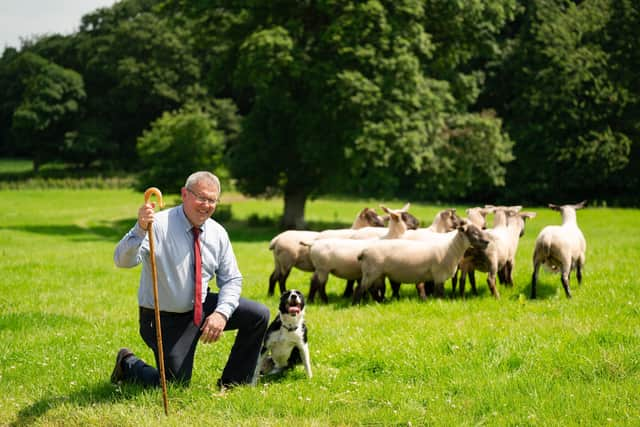

It runs from Wednesday August 26 to Saturday August 29 at Stuart Hall Estate outside Stewartstown in the east of the county, and to attend costs £10 per adult (under 16s go free), with a family-friendly fair being held on the Saturday.
The contest rotates around the island of Ireland, and last year’s event had taken place in Roscommon.
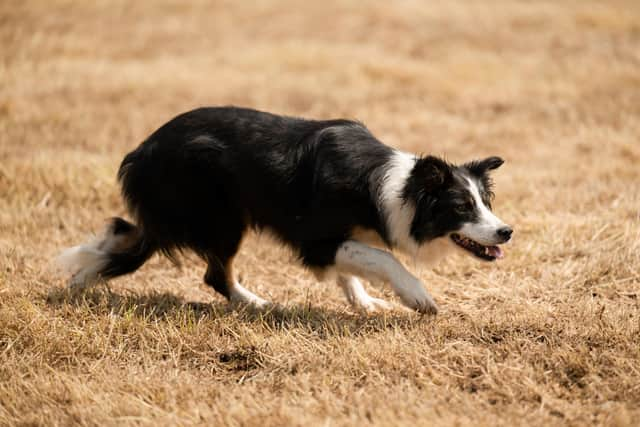
It graces Northern Ireland ever several years, having been last held in the Province in 2022 when it was staged in the Glenarm area.
The objective is to select the top competitors who will go on to vie for prizes in the International Championships involving dogs from Wales, Scotland, England and all of Ireland.
These are in Gloucestershire in September.
Irish National organiser Gerard Hegarty said that the competitions at Stuart Hall Estate will involve nine handlers marshalling 18 dogs as part of ‘doubles’ trials on Wednesday, then 50 dogs per day will compete individually in ‘singles’ trials on Thursday, Friday, and Saturday.
In all, the dogs will have to herd a combined total of 250 sheep per day over about a 0.5 mile course, with points deducted for mistakes.
Mr Hegarty, who farms sheep on the edge of the Sperrins, said that the Irish trials have been going on for over 100 years.
"It’s a very traditional skill,” he said.
"And nowadays more and more farmers are using quads and meal as a method of enticing sheep to move from one field to another, incentivising the sheep to move by giving them meal.
"What we’re trying to do is ultimately keep alive the art of using a sheepdog to move sheep.
"I wouldn’t say it’s a dying art, but certainly there aren’t as many farming people using dogs now as in the past.
"But having said that, dogs were never as expensive as they are now.”
He said “there’s a lot of interest in border collies,” driven by a growth in interest in the USA and Europe in competitve sheep herding – which was long seen largely as a British Isles thing.
“As a result of that, they’re buying a lot of dogs and good dogs now are fetching up to £15,000 now.
"They’re very skilled animals, and they’re regularly fetching those sort of prices.”
It can take four years to full train up a sheepdog, he said.
He will be competing himself at Stuart Hall Estate with his dogs Jim and Eve, having first started doing trials about 15 years ago.
The family-friendly fair on the Saturday will involve “a range of local food producers, crafts and independent traders” said organisers, as well as a display of vintage cars and tractors.
The “kids’ zone” will feature “inflatables, carousel rides, face painting, a petting zoo, and art and crafts”.
WHAT IS STUART HALL ESTATE?
The estate where the sheepdog trials are to be held used to be the site of a historic mansion house.
Stuart Hall (often also spelt Stewart Hall) was burned to the ground in an IRA bombing in 1972, and knocked down.
The Gazetteer of British Place Names records that it had been built around 1760 for Andrew Stewart, 1st Earl Castle Stewart (Earl Castle Stewart being a peerage title created in the 1800s).
"It was a three-storey Georgian block with a pillared porch, joined to an old tower-house by a 19th century Gothic wing,” the gazetteer said, adding that its walled garden dates from 1832.
After its demolition, “a new house was built around 1987”.
According to a post online by Derryloran Church of Ireland, over 1,000 evacuees of the Belfast Blitz “stayed at Stuart Hall and in the Nissen huts in the grounds, finding safety and security in those dangerous times”.
It adds: “Thank God for all who gave a home to those evacuated children!
"Sadly, Stuart Hall was blown up by the IRA in 1972, destroying one of our historic gems.”
The estate stands about two miles east of Stewartstown village itself whose name, like that of Stuart Hall, derives from the Scottish Stewart family that arrived in the area during the plantation.
The estate is also referred to sometimes as Castle Stuart Demesne.