
20,000 parents use Children's Symptom Checker
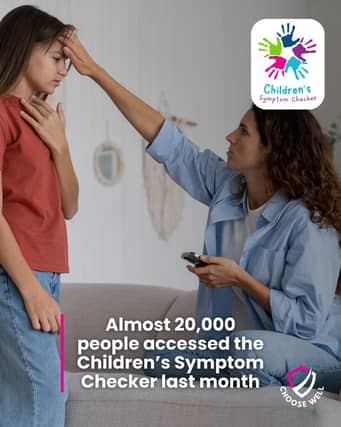

Almost 20,000 people checked out Belfast Trust’s Children’s Symptom Checker in December.
Emergency Departments are still facing high numbers of people attending, and Belfast Trust is urging people to have a look at the options available if they or their children are feeling unwell.
The Children’s Symptom Checker has more information on many of the conditions and symptoms seen in the Emergency Department at Royal Belfast Hospital for Sick Children.
These include breathing problems, fevers, tummy pain, coughs and colds through to burns and symptoms that are much more serious.
The Children’s Symptom Checker can be found here.
The platform can help ensure your child receives the most appropriate care in the right place, at the right time, from the most appropriate team.
It was developed by the Trust’s Paediatric Emergency and General Paediatric Team, in consultation with Alder Hey Hospital and the Healthier Together Programme and saw more than 19 thousand clicks in December, when coughs and flus were at their peak.
The online platform is easy to use, informative and provides high quality advice for parents or guardians to consider when their child becomes unwell.
Dr Julie-Ann Collins, Paediatric Emergency Consultant at Royal Belfast Hospital for Sick Children, said: "The Children's Symptom Checker is an easy to use, informative tool which provides high quality, reliable and evidence-based advice to empower parents and carers when their child is unwell.
“Children regularly get sick, particularly during the winter months when respiratory illnesses are circulating widely. We understand that this can be worrying for parents and want to ensure that children receive the right care, at the right time and by the most appropriate team.
“We would encourage parents to visit our online Children’s Symptom Checker to find information on the most common conditions and symptoms that affect children. The traffic light system guides you through what to do in different situations to find the best course of action for your child’s condition.”
Dr Sarah Kapur, General Paediatric Consultant, Royal Belfast Hospital for Sick Children said: “Bringing a child to an Emergency Department is sometimes the right course of action when there are red flag features as described in the Children’s Symptom Checker.
“The Children’s Symptom Checker also provides recommendations on other available supports such as guidance on self-care at home, GP services and pharmacies. We also hope it provides reassurance where appropriate to parents and helps them make informed choices.”
It can be found at: https://belfasttrust.hscni.net/hospitals/childrens/childrens-symptom-checker/
Adults who are feeling unwell or parents of sick children can also use the Phone First telephone service before attending an Emergency Department by calling 028 9615 9444.
Callers to the service are assessed and advised by a healthcare professional and directed, if required, to the most appropriate urgent or community service to meet their treatment or care needs.
This could include direction to attend an Emergency Department, an Urgent Care Centre, a Minor Injuries Unit or being redirected to a GP, pharmacist or other service.
Phone First does not replace 999 – it is for those patients considering attending an emergency department with a non-life-threatening issue.
Phone First was introduced to address ongoing capacity issues across Emergency Departments which has resulted in longer waits for patients with minor injuries.
The service operates 8am-6pm Monday to Friday (excluding Bank Holidays).
Patients who require care outside these hours should attend the Emergency Department or call the GP Out of Hours service
For life-threatening emergencies, always call 999 immediately.
This can include stroke, heart attack, loss of consciousness, breathing difficulties, severe bleeding or major trauma.
Those patients who have non-life-threatening injury should call Phone First on 028 9615 9444 to be triaged by phone before being advised of the next steps to take.