
Sir Hugh Orde calls for dialogue with dissident republicans
The authorities must be prepared to talk to dissident republicans if they want to bring terrorism in Northern Ireland to an end, former PSNI Chief Constable Sir Hugh Orde has said.
Sir Hugh, who led the police service for seven years, believes negotiation is ultimately the only way to end an “insurgency”, arguing that physical force alone cannot defeat the dissident threat here.
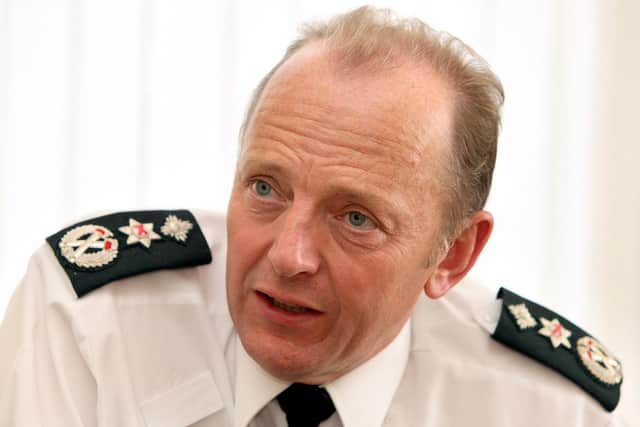

“There is clear evidence that if you want to bring terrorism to a conclusion, the only way you can do that is by talking,” he told the News Letter.
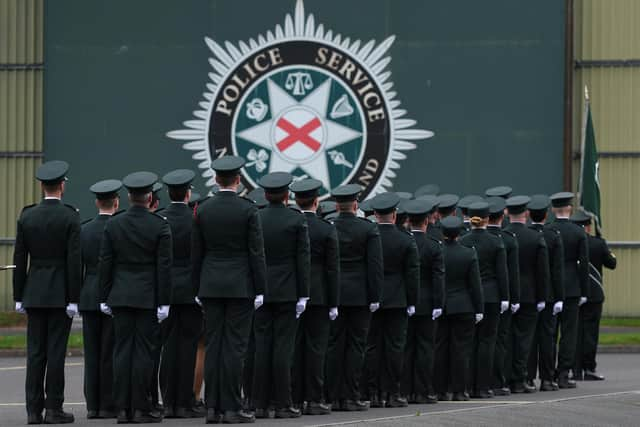
His comments came during an in-depth interview to mark the 25th anniversary of the PSNI in which he also reflected on the challenges facing the force, the legacy of the Patten reforms, political interference in policing and the personal cost of leading the organisation through some of Northern Ireland's most difficult years.
Asked about suggestions that discussions should take place with dissidents, similar to the negotiations which took place with the IRA, Sir Hugh drew on his subsequent work examining peace processes around the world.
“The other bit of learning around dealing with the endgame of terrorism is that 99.9 recurring per cent are dealt with by negotiation. Physical force will not defeat an insurgency, and there are very few examples, if any.”
Asked whether he believed that should happen in Northern Ireland, he backed the principle of engagement, while acknowledging that dissidents would have to be willing to participate.
“You're not going to end it in any other way. Now, whether they want to negotiate or not, of course, is a different issue. You can only negotiate with people if they want to negotiate.”
Sir Hugh said such an initiative would require independent agents to broker discussions.
“One of the learnings of endgames is you need independent power. You need independent agents to broker the deal. You need concerted effort and political leadership. You need highly credible third parties to start the debate, and it will not happen overnight.
“Whether it's achievable or not, I'm not persuaded. But if you don't try, you don't know.”
The former Chief Constable also expressed concern about what he sees as a growing gap between the vision of the Patten report and the present-day reality of policing in Northern Ireland.
Asked what would worry him most if he were leading the PSNI today, he identified police numbers, resources and the apparent lack of progress in achieving a representative service.
“My biggest worry is the growing gap between what Patten's vision of policing was and the current reality. Obviously, one is the 50-50 recruiting ambition, which seems to have stagnated. And my other worry is the finances and the numbers.
“Patten wasn't a pick-and-choose set of recommendations. It was take it or leave it. But what you see over time is that is is being denuded.”
He acknowledged that the current chief constable - Jon Boucher - had done “considerable work” on resources, but questioned whether the organisation had the numbers required to deliver the model originally envisaged.
“Patten was a blueprint for policing that should be strictly adhered to, and that's what every government agreed to. And yet, over time, they seem to have forgotten that commitment.”
He also warned against complacency about the threat from terrorism, saying people could quickly forget the dangers and how circumstances could deteriorate.
“People have short memories around terrorism and endgames in terrorism, and how quickly they can go backwards as well as forwards.”
Catholic representation within the PSNI is another significant concern for him. Asked whether he believed the PSNI represented Northern Ireland, he gave a blunt assessment.
“Well, I don't think it's for lack of effort. But if you look at the numbers, the short answer is no.
“Of course, I had the benefit of a sort of legal underpinning which has gone. I had something which I could use to ensure we recruited on 50-50, which successive chiefs after me didn't have.
“They haven't got that lever. You need levers, and I had that lever to pull, which was a great help.
“Plus, maybe it was because of timing. It was a time when there was huge enthusiasm. We were never short of high-quality recruits from both sides of the divide.”
He said the need for a representative police service went beyond recruitment figures, arguing that it was fundamental to the legitimacy of policing by consent.
“The broad principle I've always adhered to is a more representative of the population the police service is at a strategic level, the more likely it is to have that legitimacy that is essential when you're dealing with a policing by consent model.
“If you look at the UK generally, you've got 140,000 cops and 65 million people. The only way you can police that is with the consent of the vast majority of the population.”
Despite his concerns about the present position, Sir Hugh was keen to reiterate the quality of the officers who served during his time in charge.
“One of the great strengths of policing in Northern Ireland was the quality of the officers. They were bloody good.”
On political leadership, he warned that the relationship between politicians and policing had to be carefully managed.
Although he described himself as out of date with Northern Ireland politics, he remained firm on the importance of operational independence.
“The moment politics and policing collide, you're in a very bad place.”
He explained that his understanding of operational responsibility as chief constable meant making decisions without political influence, regardless of which party or political tradition was involved.
Sir Hugh served seven years as chief constable, having initially been asked to stay for five. He agreed to remain after the Policing Board asked him to continue, but only on the condition that "every member supported the decision”.
Looking back on his time in office, he believes the achievements of the organisation were very much a collective effort.
The Patten report contained 175 recommendations, more than 90% of which were delivered during his seven years in charge.
“You don't do that single-handed. You do it because you got a bloody good team.”
He described himself as the captain of a ship, but said it was his senior management team who drove the change process.
“As a chief, you inherit your team, so you have to make some adjustments, and then you have to give them the freedom to succeed.
“In a way, I was just the captain of a ship, but all my senior management team who were with me pretty much the whole of my time there drove a change process.”
The scale of the transformation was all the more significant given the challenges facing the service at the time.
Sir Hugh recalled bank robberies, the raid on Stormont, serious rioting in east Belfast and continuing terrorist threats from organisations including the Continuity IRA, Real IRA and Óglaigh na hÉireann.
He also highlighted the importance of front-line officers being prepared to take risks in order to deliver change, while accepting that mistakes would inevitably happen.
“When you look at the delivery of 175 recommendations against that backdrop, it is quite extraordinary.”
But the achievements of his time in office are inseparable from the personal tragedies he witnessed.
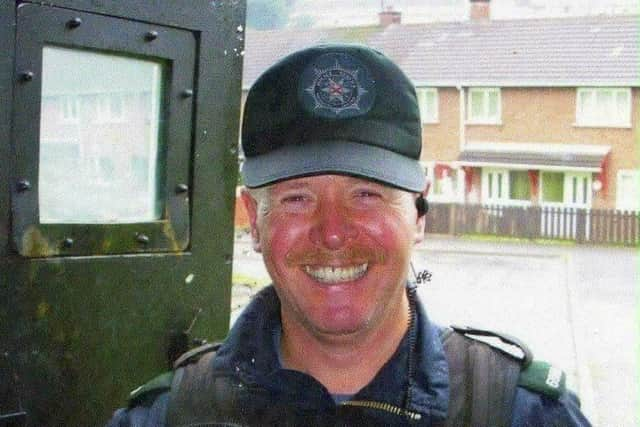
One memory, above all, remains with him: the murder of PSNI officer Stephen Carroll on March 4, 2009.
Sir Hugh was off duty when he received the call. He was at the Odyssey Arena in Belfast before travelling directly to the scene.
He recalled that Carroll and two colleagues had been travelling in a backup vehicle because of the high level of threat. Their role was to provide support to local officers who were dealing with the incident.
“Steve and his two guys were a backup vehicle to give the local cops some perimeter whilst they went to deal with the case.”
For Sir Hugh, the murder represented the commitment of officers who continued to carry out their duties despite knowing the dangers.
“Cops going about their own duties, knowing there was a threat, knowing the risk certainly in that area was high, yet nonetheless continuing to do the job they were paid to do. They were quite extraordinary.”
Carroll had given around 26 years of his life to policing and was only six months away from retirement.
Asked how often he thought about the murder, Sir Hugh replied: “All the time. You think you'd never forget those sorts of things. I remember the funeral to this day.”
Asked whether the emotional demands of the job had ever become too much, he said policing was “an emotional experience throughout”
“Leaving was emotional. Starting was emotional. Every moment, every day was up and down. Cops are human. I remain proud of what we achieved together,” he said.