
Council releases statement from consultant entomologist on bug bites in Ballykelly as concerned resident says 'this informative study is not going to help the situation that is plaguing our village'
The Council at the centre of the insect bites furore in Ballykelly in Co Londonderry – Causeway Coast and Glens Borough Council – today released a statement from consultant entomologist, Paul Moore regarding the rise in insect bites in the Ballykelly area.

In his statement, released today to the News Letter, he says the “specimen responsible has been identified as a female mosquito – Culiseta annulata” which is “one of the most common species (out of 18 species on the island of Ireland) found in the rural environment”.
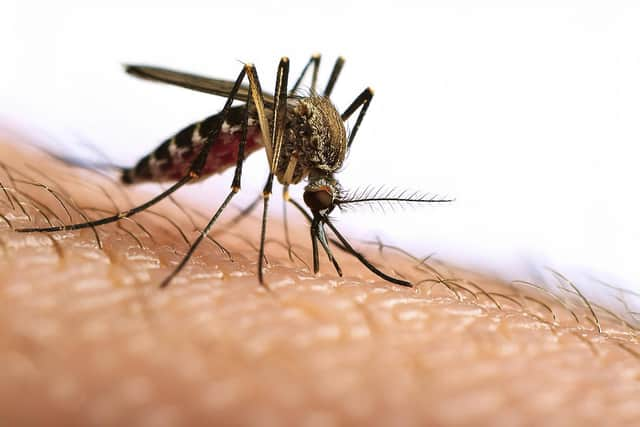

"They normally enter a hibernation state during the winter months in cold dark spaces but can ‘wake up’ if the ambient temperature increases enough, as in past days,” he added.
"Once awake, they may seek out a nearby host to feed on – bird, horse, dog or human.
"They usually target bare skin but can bite through tight, thin clothing. Having fed, they will seek out a suitable hibernation site, such as trees, caves, attics, garages and outhouses. Hibernation lasts until temperatures rise in spring but can be interrupted by unseasonal weather.
“From early spring and through the summer months, mosquitoes lay their eggs in still water.”
He added that “mosquito bites are very irritating to some individuals but not of any health concern”.
"There are no diseases currently in Northern Ireland for them to act as vectors. Antihistamine, hydrocortisone, and calamine lotions will help to ease the irritation.”
He said that “treatment is best achieved by eliminating any potential breeding grounds for next year” but that “insecticide application on a large scale is not warranted due to detrimental effect on non-target species”.
"Households could treat suspect hibernation spaces with aerosols containing permethrin insecticide, but this is overkill for possibly one or two mosquitoes,” he added. “Control treatments should be carefully balanced where warranted.
The latest news comes as one concerned resident on the Ballykelly page said: “I'm sorry but this informative study is not going to help the situation that is plaguing our village ....people having to continously go on antibiotics due to secondary infections or infections because of these bites is terrible..this isn't a small issue ...its a huge issue”.
Earlier we reported how residents had taken to social media to express their concern at being bitten by unknown bugs, leaving them with large itchy red spots and rashes.
Contractor Dessie Loughrey, whose company was doing maintenance work in the Ballykelly area, told the News Letter his men were “badly bitten”.
"I had six men working at maintenance in the Ballykelly area late last week and every one of them was bitten badly, although some bites did not come up for a few days,” he said.
"I think only one of my men went to the doctor because he was bitten all over – his head, arms, legs – to get help with the pain of it. But the rest, well you know what builders are like…
“And the one who went to the doctor was asked if he there because of the ‘Ballykelly flies’?
"Another one of my men was badly bitten all over his head and neck too and I would love to know where these things come from and what brings them because it does affect life in Ballykelly.”