
Former Northern Irish health minister says it will be 'a travesty' if assisted dying bill gets green light from MPs tomorrow - adding there is 'no appetite' for such measures in Northern Ireland
If a bill on assisted dying passes the House of Commons in a vote tomorrow, it will be a “travesty” says a former health minister.
Robin Swann – who served in post from January 2020 to October 2022, then again briefly in 2024 – also said that there is “no appetite” for any such measures in Northern Ireland.
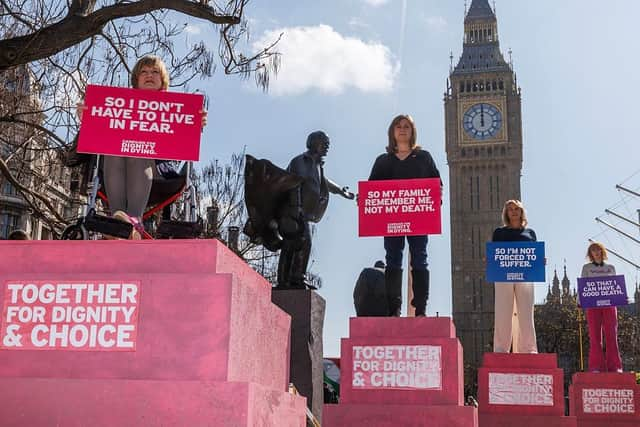

The UUP MP was commenting ahead of a key debate on the issue tomorrow.
MPs will vote on whether to let the Terminally Ill Adults (End of Life) Bill progress to the next stage, and Mr Swann said this vote looks “too close to call”.
If enacted, the bill basically would allow the state to give people poison upon request if they have less than six months left to live (further details below).
It was originally introduced by Labour MP Kim Leadbeater in 2024 but faced stiff opposition, and the 2024/26 parliamentary session ultimately expired before it could be taken through to its conclusion.
Now it has been basically resurrected by another Labour MP, Lauren Edwards.
Friday will be the revived bill’s second reading – the first real chance to debate it and vote on it.
The bill would (except for a handful of minor clauses) only effect England and Wales, though there have been calls for similar assisted dying measures to be considered for Scotland and Northern Ireland (critics of the practice call it ‘assisted suicide’).
Though the bill was never officially backed by the Labour government Mr Swann said that Keir Starmer had approved it "behind the scenes”, but the new Prime Minister is much cooler on it which could sway the vote against it – adding it will be “a travesty if this is passed on Friday”.
"I think when you look at where this legislation ends up when it’s been introduced in Canada and Australia, it opens the door to something I don’t think we should be facilitating,” he said.
"We should actually concentrate on the making sure palliative care and end-of-life care is in position where it actually supports families.”
In Canada, the BBC reported that 15,300 deaths in 2023 – roughly one in 20 of all deaths – was through assisted dying.
What about assisted dying for Northern Ireland?
"I don’t see any appetite for the introduction of this legislation in Northern Ireland from any political party at this minute in time,” he said.
“And I don’t think it’s something that our health service should be looking to either.”
Under the bill as originally envisaged, people would be allowed to apply for state help to die if they are aged 18 or over and are expected to die within six months.
They would have to make two separate declarations, witnessed and signed, and two doctors must be satisfied the person is eligible and that they have not been pressured.
The dying person would have to take the fatal medication themselves.
Mr Swann said of the revived bill that “I don’t think they’ve recognised any of the flaws that were in the original legislation… they’re still there”.
Gavin Walker, chairman of the group My Death My Decision (Northern Ireland), which advocates for assisted dying, said that “compassion should know no borders”.
"People in Northern Ireland deserve the same fundamental rights to an open, respectful and evidence-based dialogue to determine their choices at the end of their lives as anyone else in the UK,” he said.