
Widow of late Secretary of State James Brokenshire determined Northern Ireland must have fair access to cancer services
The widow of former Secretary of State James Brokenshire is campaigning for better lung cancer cancer services in Northern Ireland – the only UK nation that does not have a screening programme or commitment to introduce one.
Cathy Brokenshire was speaking ahead of a health conference at Hillsborough Castle, which is scheduled to hear warnings that Northern Ireland risks being left behind as the rest of the UK moves ahead with life-saving lung cancer screening. James Brokenshire MP was appointed Secretary of State for Northern Ireland by Theresa May in 2017 but resigned the following year for a lung operation.
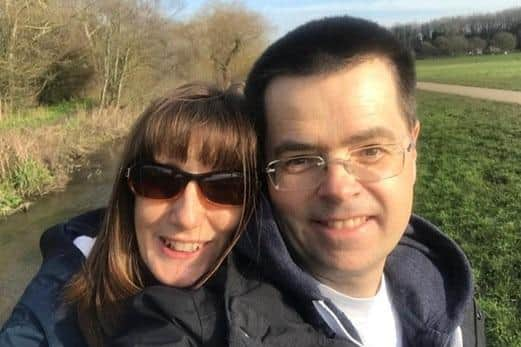

A lifelong non-smoker he died in 2021, aged 53, having been diagnosed with lung cancer more than three years previously.
Parties across the political spectrum in NI paid tribute to him after his death.
Today, Thursday 19 November, his widow Cathy will join clinicians, healthcare leaders and patient representatives at Hillsborough Castle for the Northern Ireland Lung Cancer Meeting, organised by the Ulster Thoracic Society and supported by the UK Lung Cancer Coalition (UKLCC).
Health Minister Robbie Butler has also been invited.
Now a director of the UKLCC as well as a lung cancer campaigner, Cathy said: "People in Northern Ireland should not have to wait longer for access to a service that is already benefiting patients elsewhere in the UK,"
She added: "As part of James's legacy, I am determined to keep lung cancer screening high on the political agenda and ensure that no family faces the devastating consequences of a late diagnosis, whoever they are and wherever they live. Earlier detection saves lives."
Dr Wendy Anderson, Respiratory Physician, Chair of the Lung Cancer Clinical Reference Group in Northern Ireland said lung cancer is the province’s biggest cancer killer.
"Despite the UK National Screening Committee recommending targeted lung cancer screening in 2022, Northern Ireland remains the only UK nation without a screening programme or public commitment to introduce one,” she said.
"Northern Ireland has a real opportunity to transform lung cancer outcomes. We know that finding lung cancer earlier via screening gives people access to more treatment options and a far greater chance of survival. It is vital that Northern Ireland does not fall further behind the rest of the UK.”
More than 1,000 people die from lung cancer in Northern Ireland each year, and almost half of patients (44.6%) are diagnosed at stage IV, when curative treatment is rarely possible.
Currently, only 15.9% of lung cancer patients in Northern Ireland will survive five years after diagnosis, the lowest of the UK nations.
However, experts estimate that around four in five (79%) lung cancer cases are preventable.
The UK National Screening Committee therefore recommended that smoking cessation programmes should be firmly embedded in all UK targeted lung cancer screening programmes.
Alongside screening, delegates at the Hillsborough Castle meeting will review progress on wider priorities for lung cancer services, including stop smoking services, tackling the health inequalities, improving access to diagnostics and treatment.
The UKLCC is the UK’s largest multi-interest group in lung cancer and was set up in 2005 to tackle poor lung cancer survival outcomes and, specifically, to double five-year survival by 2015, which has been achieved.