
Economist warns that suggestions UK-EU deal will end Irish Sea border frictions is 'far too simplistic'
Suggestions that the expected SPS deal between the UK and EU will be the end of frictions at the Irish Sea trade border is “far too simplistic” according to an Ulster University economist.
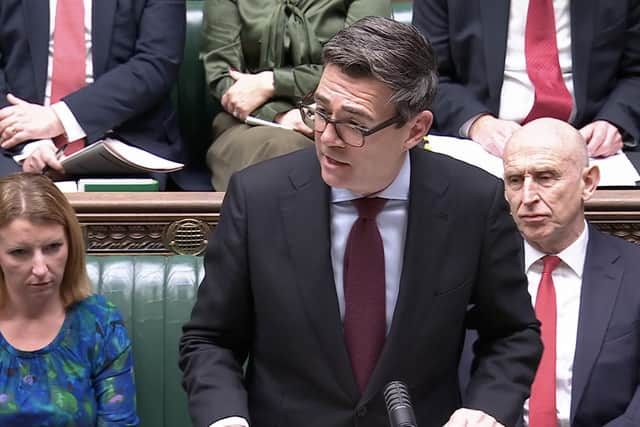
Andy Burnham’s government is expected to sign new agreements with Brussels on food, energy and youth mobility later today – with the government arguing that the current deal is not good enough.
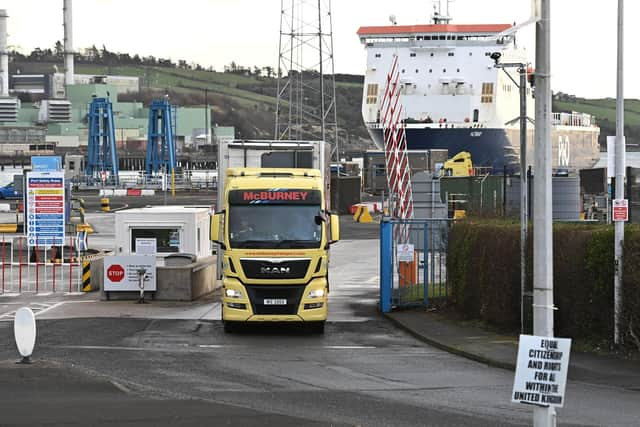

A Sanitary and Phytosanitary (SPS) agreement will be part of that – making it easier for firms in Great Britain to sell food and drink products into the European Union, and by extension, Northern Ireland.
But Dr Esmond Birnie, Senior Economist in Ulster University’s Business School, says there is a trade off, and following EU rules will “represent a drag on UK productivity growth”.
Under post-Brexit trading arrangements, Northern Ireland effectively remains part of the EU’s single market for goods – causing regulatory divergence with the rest of the UK.
Those differing regulations have necessitated checks on goods travelling from Great Britain into Northern Ireland, what has become known as the Irish Sea border.
The UK government believes the SPS deal it is expected to announce today will vastly reduce friction faced by businesses selling into Northern Ireland.
“Regarding the impact on Northern Ireland, the Government will almost certainly declare victory. It will argue that the prospective harmonisation or regulation between UK and EU food and farming products (the SPS agreement) implies the end of frictions in the Irish Sea. That, unfortunately, is far too simplistic”, Dr Birnie said.
He added: “For sure Burnham will have made concessions to the EU which will cost the UK, especially over the long run, and it does look like the balance of concessions has been made by the UK. Yes, GB based farmers and food processors will gain from access to the EU Single Market (their Northern Ireland based counterparts already have such access given the Protocol/Windsor Framework) but they also face the downside that they will now have to operate under the full range of costly EU regulations”.
The senior economist also pointed out that a customs frontier (within the UK) in the Irish Sea continues even if there is an SPS agreement.
“To get rid of that friction either the UK/Burnham will have to re-join the EU customs area or adopt an alternative method of managing Northern Ireland’s trading arrangements such as mutual enforcement”, he said.
Speaking in the Commons yesterday, Foreign Office minister Hamish Falconer said that he was “confident” he would “deliver a better deal for those who voted Brexit and the like” at the EU summit.
He told MPs: “Our focus is to ensure our relations with the European Union are fit for the challenges we face now and in the future”.
However, Shadow Cabinet Office minister Mike Wood accused Downing Street of having been a “docile negotiating partner” in negotiations with the EU.
“This is the first and only opportunity that members of this House will have to express a view before the Government prepares to sign away basic areas of British sovereignty at this weekend’s summit, and to pay Brussels for the privilege.”
He continued: “Looking at the draft agreement that is currently circulating, one is forced to conclude that this Government arrived in Brussels without a plan, without a compass, and with only one overriding strategic objective: to avoid coming home without a piece of paper to wave at the cameras.”