
Belfast's Assembly Rooms to share in seven-figure sum
Belfast’s crumbling Assembly Rooms are to share in a seven-figure award from an international body that has singled them out for global recognition.
Around a year ago, the 18th century building was added to the World Monuments Fund (WMF) watchlist, spotlighting both its importance to the heritage of Belfast but also the fact that they’re under threat.
Among the oldest surviving civic buildings in Northern Ireland’s capital city, the Assembly Rooms currently lie derelict and were officially declared at-risk more than 20 years ago – but they won universal support when the international body debated their nominees, the WMF describing the building as “enormously significant”.
Today the WMF announces more than $7m (£5.2m) to be spent supporting 21 projects around the world, including the Belfast building.
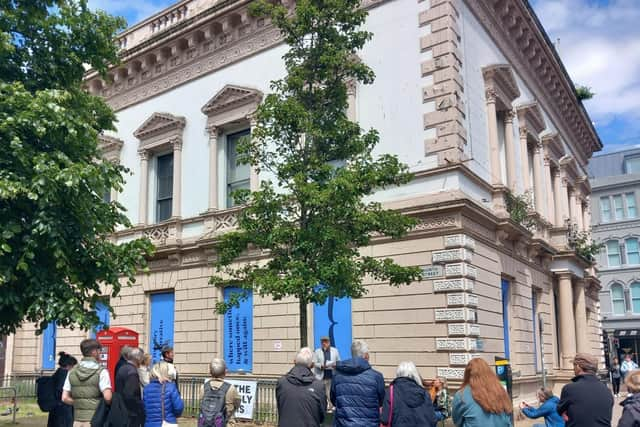

The money’s to be spent on documentation and conservation to prepare the building for restoration and renewed public use, after it was last year bought by Belfast City Council.
Announcing the funding, WMF president Benedicte de Montlaur said the global projects “reflect the next phase of our work, translating visibility into sustained investment and collaboration”.
He added: “By working alongside local partners, we are advancing preservation efforts that support recovery, adaptation, and long term stewardship of places that matter deeply to the people connected to them.”
Built in 1769, massively reworked by visionary 19th century architect Charles Lanyon, and listed for protection in the 1970s, the Assembly Rooms have been officially at-risk since 2003.
The WMF says the new money is part of its moves “supporting Belfast City Council’s heritage-led regeneration that reconnects the Assembly Rooms with public life”.