
Runner hails 'explosion' of interest in activity since Parkrun arrived in Northern Ireland as the charity celebrates its birthday today
Today the phenomenon of parkrun celebrates its birthday – and one devoted runner has hailed the “explosive” effect it has had since it arrived in Northern Ireland.
Parkrun was founded in London 22 years ago today, and mid-Ulster athlete Declan Leung has said it has now ballooned into a “worldwide, global phenomenon”.

They are a free charity-run events staffed by volunteers, which see thousands of runners across Northern Ireland gather at 9.30am each Saturday for a timed 5km (3.1 mile) run.
The parkrun movement began on Saturday October 2 in 2004, when 13 runners and five volunteers gathered in Bushy Park, London.
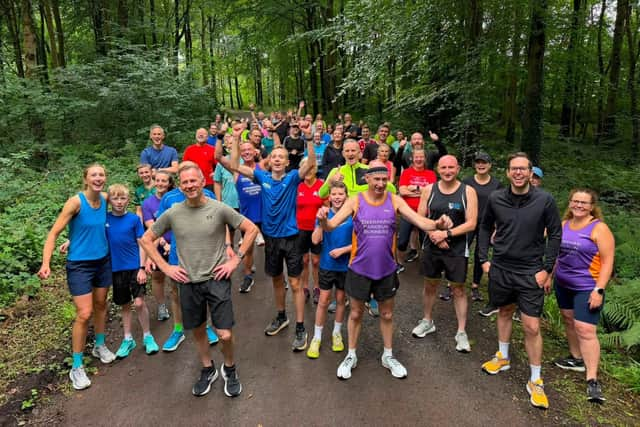
The charity said: “From those humble beginnings, parkrun was born, and today, you’re part of a global community that sees over 450,000 parkrunners take part every weekend.”
The first Northern Irish parkrun took place in 2010 in the Waterworks in north Belfast, led by athlete Matt Shields.
Today, Mr Leung says there are around 40 adult parkrun events every week in Northern Ireland and about 20 junior ones each Sunday, where under-14s run 2km.
Event sizes can range from perhaps a few dozen runners at somewhere like Garvagh, Co Londonderry, to perhaps 600 runners at somewhere like Ormeau Park in Belfast.
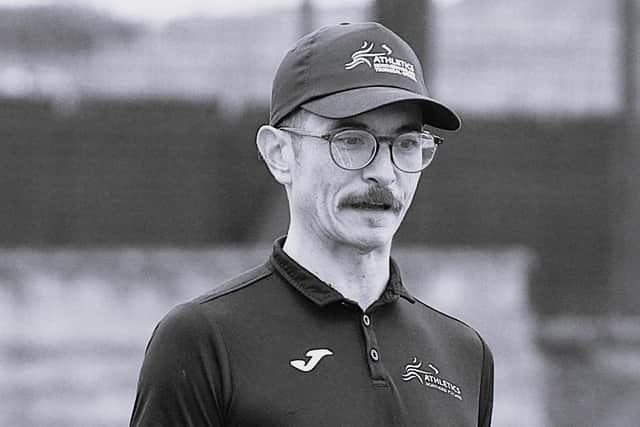
Mr Leung, who is development manager at the public body Athletics NI, said he has personally run about 50 parkruns and volunteered at perhaps another 100.
Mr Leung knows Mr Shields, and said that he had happened to have been in London when he had a chance encounter with a parkrun in action, “and got so into it at that point in time that he thought: ‘we need something like this here in Northern Ireland’”.
Setting up a parkrun in a local area costs perhaps £4,000 to £5,000, which buys insurance, signs, risk assessments, and first aid kits.
His own local junior parkrun in Magherafelt takes 27 volunteers to organise, partly because a volunteer needs to be stationed at least every 100m along a route.
Thankfully, there has been “a massive increase involunteers… you see a lot of ones who’ve never run a step in their life becoming ingratiated into the parkrun family suddenly as a volunteer”.
Then “all of a sudden they’re racking up milestones”.
As to the effect of parkrun on the running scene in the Province, Mr Leung said: “It has absolutely boomed with the dawn of parkrun.
"Historically, if you wanted to run a 5km in Northern Ireland before 2010 it was predominantly seen as very club-based, club-led – you had to be a member of an athletics club or a running club.
"It was seen as quite a niche sport.
"Whereas parkrun came in and just created drop-in sessions where you could come in and run when you want at a place you want, and there’s no pressure, no-one’s really judging them on their time.
"Though you do get a time and a finish position, it’s pesonal to yourself; there’s no winners or losers, no podiums, no prizes.
"Parkrun is all about participation.”
He said that in 2015 the average finish time for a parkrun was around 22 minutes.
But 2025, the average finish time was about 39 minutes – and this is a good thing.
"It just shows that the level of participation has grown so much,” said Mr Leung (aged 44, whose own average time is around 19 minutes).
"You still have those incredibly fast runners that are able to go out and run a 15-minute 5k, but because that average time has shifted slower, it shows walkers are welcome people who are just new to running, just dipping their toes into the water for the first time ever, they’re getting the chance to get active and move.
"And we’ve seen an explosion of people who are wishing to join our actual affiliated clubs off the back of it.”