
Austen Morgan: Key questions that arise from judge's unprecedented withdrawal in Loughinisland case
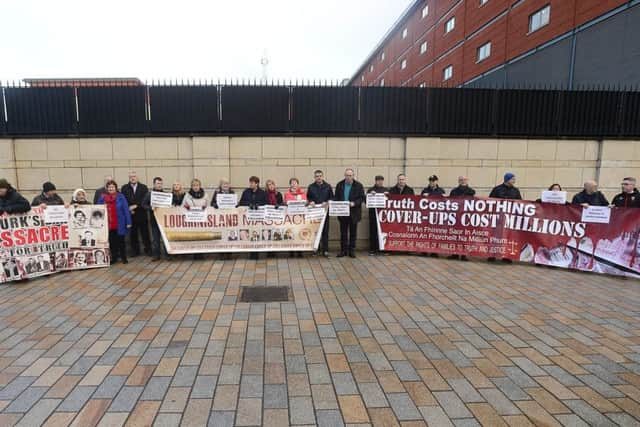
Last Friday, something unprecedented (so far as I know) happened: sitting in the high court in Belfast, Mr Justice McCloskey '“ having dismissed an application to recuse himself on the ground of apparent bias '“ then withdrew from a case, because '˜the families [had] become engulfed in a veritable maelstrom' during the legal proceedings.
The six men killed watching the world cup in a Loughinisland bar in June 1994, are among the approximately 30% murdered by loyalists during the Troubles (republicans being responsible for 60% of deaths and the state for the remaining 10%).
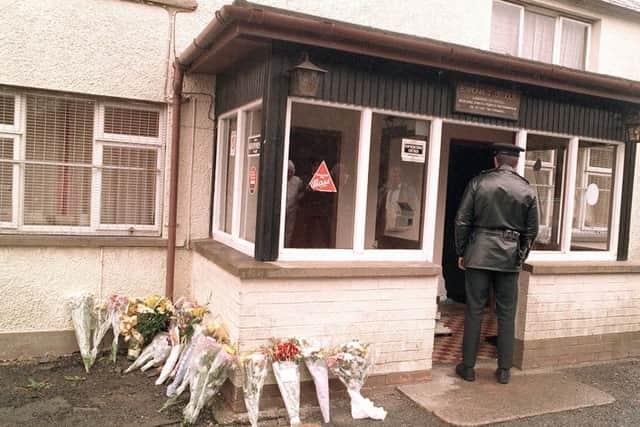

The basic facts of the litigation need to be stated.
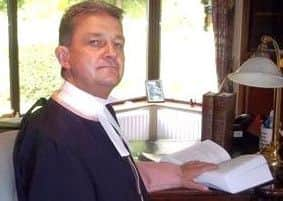
First, there was nothing unusual in the judge, as a senior barrister, having been involved in a previous judicial review in 2002, of the first police ombudsman, Nuala O’Loan, a case he had completely forgotten.
Second, the relatives successfully reviewed the second police ombudsman, Al Hutchinson (from Canada), whose report – finding no collusion between the police and loyalists – had been quashed by a different judge, in 2012.
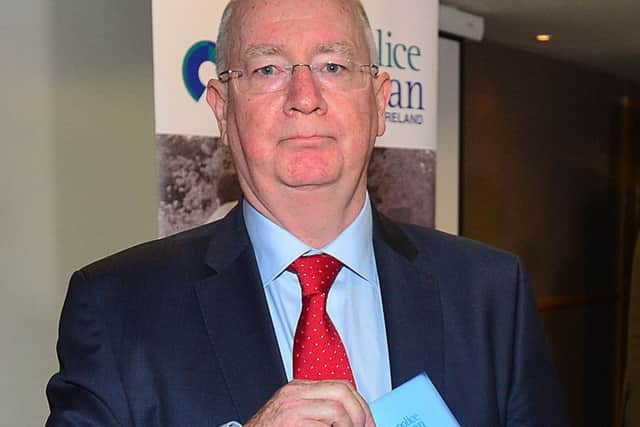
Third, there was a campaign against Al Hutchinson, which led to his early resignation. Dr Michael Maguire, as the chief inspector of criminal justice, wrote an extremely critical report of the police ombudsman. Peter Robinson and Martin McGuinness then appointed Dr Maguire the third ombudsman.
Fourth, the relatives welcomed Dr Maguire’s Loughinisland report of June 2016, which found that there had been collusion. But what does collusion mean?
Fifth, when a retired police officer (Thomas Hawthorne), with support, sought this judicial review, he was up against Dr Maguire and the relatives as an interested party; we now know that Mr Justice McCloskey did not intend to quash the report, merely to remove passages containing conclusions reached unfairly.
• See below other reaction to the ruling
Sixth, the police ombudsman did not apply to have the judge recuse himself, on the ground of apparent or even actual bias, before judgment was given on 21 December 2017, and even afterwards.
Seventh, Barra McGrory QC, who had stepped down recently as director of public prosecutions, dramatically altered the position, by agreeing to act as counsel for the police ombudsman. The judgment of 26 January 2018 is replete with criticism of this very late challenge.
The administration of justice, it is all too obvious, is at serious risk of becoming politicised. During the Troubles, the judiciary maintained its independence (and avoided the miscarriages their English brethren did not prevent).
Twenty years after the Belfast agreement, and with the relative absence of paramilitary violence, legacy litigation has become the new arena of sectarian conflict by proxy.
A number of questions has been opened up.
One, Mr Justice McCloskey acted out of sympathy for the relatives. But – someone now needs to ask – are the relatives concerned about justice for all (including police officers), or have they become attached to maintaining the theory of ‘collusion’ adopted by Dr Maguire?
Two, is it sensible for a former director of public prosecutions to return to legal practice, and to do so in such a dramatic manner?
Three, did parliament, when it provided for a police ombudsman in 1998, envisage such historical investigations, decade after decade?
Four, and separately (and given that Al Hutchinson was driven from office), what chance is there of Dr Maguire resigning as police ombudsman, in the general interest of restoring public confidence (or, failing that, amending his report by remove the unfair passages)?
Five, and given that English judges have recently been standing firm against applications to recuse, has an effective precedent now been set about victim power?
Has trial by media (including social media), with the emphasis upon emotion and immediacy, replaced the ‘bewildering and confusing’ legal system, as Mr Justice McCloskey put it last Friday?
Finally, I muse, what if Thomas Hawthorne were to seek to appeal last Friday’s decision?
What would Mr Justice McCloskey’s senior judicial colleagues in Northern Ireland say?
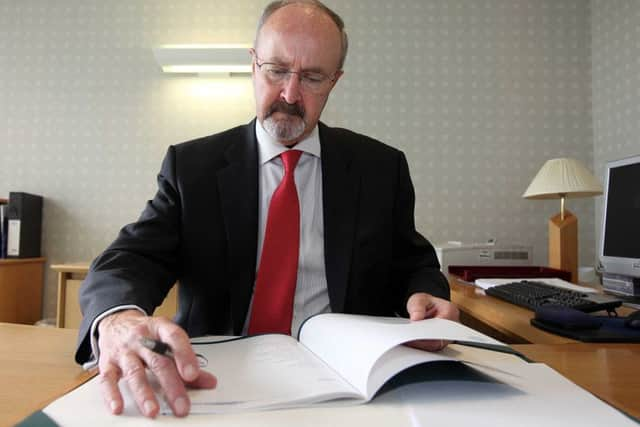
And, assuming the Maguire/McGrory/relatives’ alliance held, what would the supreme court say about Mr Justice McCloskey’s decent gesture?
• Dr Austen Morgan is a barrister in London and Belfast and author of ‘Tony Blair and the IRA’ (London 2016)