
Building a more competitive Northern Ireland
Northern Ireland’s business community continues to show remarkable resilience.
Across our manufacturers, service firms and growing tech sector, there remains an admirable spirit of determination.
Yet, the findings of the NI Chamber’s latest Quarterly Business Insights report are a timely reminder that resilience alone cannot deliver sustainable economic growth.
Businesses need an environment that enables them to invest, innovate and compete globally.
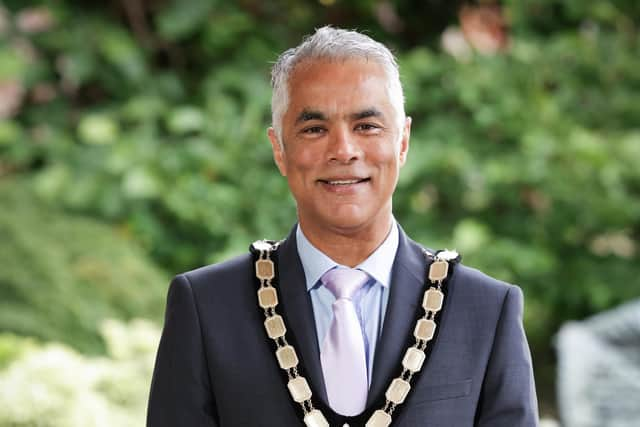

Published last week in partnership with Queen’s University Belfast, our report illustrates that while sentiment remains cautiously positive, confidence has moderated since the beginning of the year.
Behind the headlines, many firms are operating with tightening margins, weaker
cashflow, and limited financial headroom. Just over half of respondents report that activity or
demand has softened in recent months, and nearly a quarter are now under clear financial
pressure, which is the highest proportion in over two years.
This is not due to a lack of ambition or effort. It reflects sustained cost pressures, particularly
from wages and taxation, that are stretching the capacity of even the best-managed firms.
Rising input costs and the ongoing squeeze on margins leave businesses with little room to
invest for future growth or to absorb further shocks.
And yet, businesses are persevering. Over a third report trading well, and most are
maintaining investment in skills and training, even as they confront financial strain. That
decision to continue developing people in challenging times says much about Northern
Ireland’s long-term mindset. Our members understand that talent is the foundation of
competitiveness.
But we face a structural skills challenge that must be addressed urgently. Recruitment
difficulties remain widespread, with a balance of +84% of manufacturers and +75% of
service firms struggling to find the right candidates. The mismatch between workforce
capabilities and business needs is constraining productivity and growth. Employers report
acute shortages in engineering, digital, finance, and operational roles—gaps that are limiting
productivity and hindering expansion.
Addressing these shortages requires coordinated action to align skills provision with
business need, improve regional talent pipelines, and make Northern Ireland a magnet for
skilled workers. Because this is not just a hiring challenge; it is a competitiveness issue.
Without the right people in place, firms cannot seize new opportunities, innovate effectively,
or scale to meet demand. Twelve months ago, NI Chamber called for the establishment of a
Workforce Development Agency. Since then, we have welcomed the approval of an
Assembly motion proposing a Talent Development Agency. This is a positive first step– now
it is time to get on and deliver it.
As we look ahead to the Autumn Budget, businesses want to see government follow through
on commitments to support growth and strengthen Northern Ireland’s competitive
proposition. There is a clear appetite among firms for policies that reduce costs and create
stability.
It is in this context that I believe a renewed conversation on Corporation Tax reform is
important. The vast majority of businesses who responded to this survey (82%) support
reopening discussions between the UK Government and the NI Executive on lowering the
rate in Northern Ireland. For many, this is seen as a crucial lever to stimulate
entrepreneurship and attract investment.
However, this must be part of a broader, long-term economic strategy for Northern Ireland,
one that prioritises investment in skills, research and development, and infrastructure. Fiscal
reform alone cannot transform the economy, but when aligned with long-term investment
and a stable policy environment, it can be the catalyst for growth and innovation.
Northern Ireland has shown time and again that it can outperform expectations when given
the right tools. The challenge now is to build on that momentum. By working together;
government, business, and academia, we can create the conditions for sustained and
inclusive prosperity.