
Co Down woman whose young son suffered a E.coli infection wins High Court battle over water quality strategy
A Co Down woman whose young son suffered a life-threatening E. coli infection has won a High Court battle over a failure to publish an updated strategy for safeguarding Northern Ireland’s water quality on time.
Michelle O’Hare was granted a High Court declaration that the Department of Agriculture, Environment and Rural Affairs breached a statutory duty in its River Basin Management Plan (RBMP).
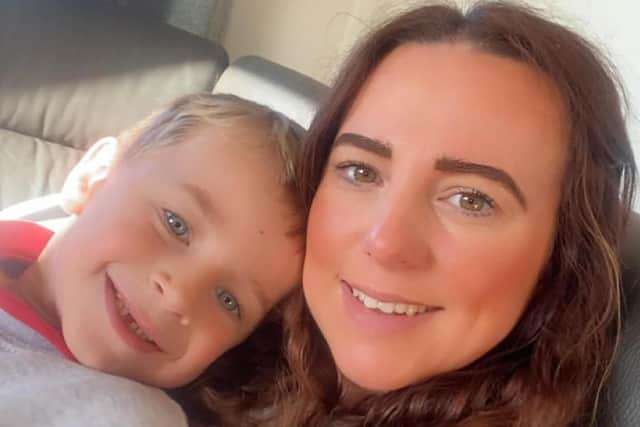

Ms O’Hare, from Drumaness, issued legal proceedings after her son Seaghan, then aged two, contracted E. coli in September 2022.
He suffered seizures, kidney failure and was placed in an induced coma during a period in an intensive care unit. Another child in the area also contracted a similar infection as part of reported illnesses in the neighbourhood, according to the family’s lawyers.
Although the source of the infection was never established, Ms O’Hare remains concerned about the safety and oversight of local drinking water.
She issued judicial review proceedings against DAERA over an alleged breach of a statutory obligation under the Water Environment (Water Framework Directive) Regulations (Northern Ireland) 2017.
Her legal team claimed failing to approve and publish the latest RBMP by a required date in December 2021 could have either contributed to poor water quality in Northern Ireland or possibly been a factor in her son’s illness.
The cyclical plan, which is now in place and runs until the end of 2027, sets out key objectives and strategies for protecting and improving the region’s water bodies.
Ms O’Hare’s challenge had been due to get underway at the High Court in Belfast today. Instead, however, the case was conceded based on a breach of a statutory duty.
A judicial declaration was granted that the Department failed to comply in time with an obligation under the Regulations to publish an updated RBMP before December 22, 2021.
Speaking outside court, Ms O’Hare claimed the concession showed systems were not properly followed.
“I took this case because my son went through something no child should ever have to endure,” she said. “When he became gravely ill I needed answers and I needed to know that the systems meant to protect our water, and our health were working.”
“I’m relieved this has now been recognised, but I also want to make sure it never happens again, for my family or for anyone else.”
Her solicitor, Ciaran O’Hare of McIvor Farrell law firm, described the outcome as an important milestone in environmental accountability.
“River Basin Management Plans are legally mandated tools intended to protect water quality through transparency and long-term planning,” he said.
“It is vital that public authorities comply with environmental law, not only because the law requires it, but because people’s health and the integrity of the natural environment depend on it.”