
Decision to grant Belfast neurologist Dr Michael Watt voluntary removal from medical register is quashed
A decision to grant a Belfast neurologist voluntary removal from the medical register is to be quashed, a High Court judge ruled yesterday.
Mr Justice McAlinden held that a Medical Practitioners Tribunal (MPT) had no jurisdiction to deal with Dr Michael Watt’s application because fitness to practise proceedings were not properly underway.

In a withering assessment, he described the alleged circumstances surrounding the decision taken in private as “frankly shocking”.
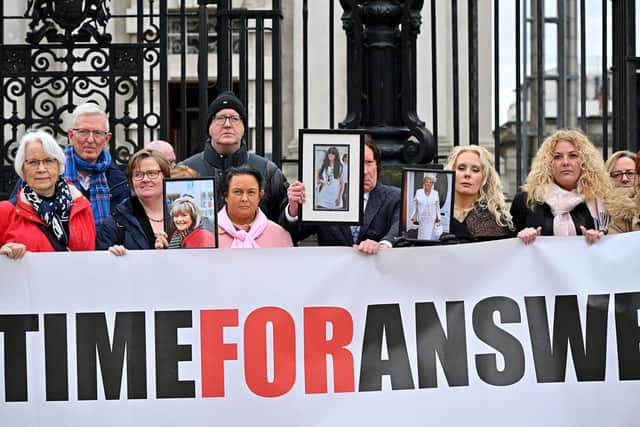
The verdict came in a challenge by some who were treated by the medic at the centre of Northern Ireland’s biggest ever patient recall.
In October 2021 the former Royal Victoria Hospital consultant was allowed a Voluntary Erasure (VE) from the register.
It meant he would not face a public hearing about any fitness to practise issues.
Former patients Danielle O’Neill and Michael McHugh both issued judicial review proceedings against the MPT.
The court heard Dr Watt appeared to have received a “get out of jail free card”.
Dessie Hutton KC, for Ms O’Neill, said his client was among a “legion” of alleged malpractice victims denied public scrutiny of the clinical care they received.
“They got notification of a decision taken during a secret or private hearing,” he submitted.
“It’s something of an understatement to say that decision was met with dismay throughout this jurisdiction. Outrage might be a more appropriate term to categorise reaction.
“In the context of this extraordinary recall, with extraordinary consequences, and where accountability and transparency was expected, this decision looks like something of a ‘get out of jail free card’ for the doctor concerned,” counsel argued.
During a series of exchanges, Mr Justice McAlinden expressed alarm at how the issue was dealt with.
“At its most charitable view this is a gross misunderstanding of the statutory framework; at its least charitable interpretation it’s a bit of a fix up,” he commented.
“This is something that somebody with a GCSE in law should know.”