
Northern Ireland's truth-and-reconciliation body declines to say how many security force / loyalist / republican cases it is investigating so far
The Independent Commission for Reconciliation and Information Recovery (ICRIR) has declined to give a breakdown of the types of cases it is now investigating so far.
In a press release this month, the truth-and-reconciliation body – overseen by judge Sir Declan Morgan – said it has received “85 enquiries from victims, survivors and families about the possibility of an investigation into their injury or the death of a loved one”. Of these enquiries, eight have been “accepted for investigation”.
The News Letter asked how many of these 85 enquiries concern deaths or injuries attributed to the security forces, to loyalists, and to republicans – and the same for the eight now under investigation.
It responded: “While the Commission website will contain high level information about the cases being taken forward, the level of detail provided about any investigation will be limited according to the circumstances. To date we can confirm that the Commission has received enquiries from each of the three communities represented in your question.”

It added: “We have provided the level of information that we can at this stage, on the Commission’s website.
"It’s important that we balance the wishes of victims, survivors and families with our value of openness. Victims, survivors and families, who are at the heart of what we’re doing, have expressed to us that they want their privacy respected and that they do not want to be treated as statistics or numbers. In addition the Commission is not restricted or limited to communities in Northern Ireland in terms of the work we’re doing.”
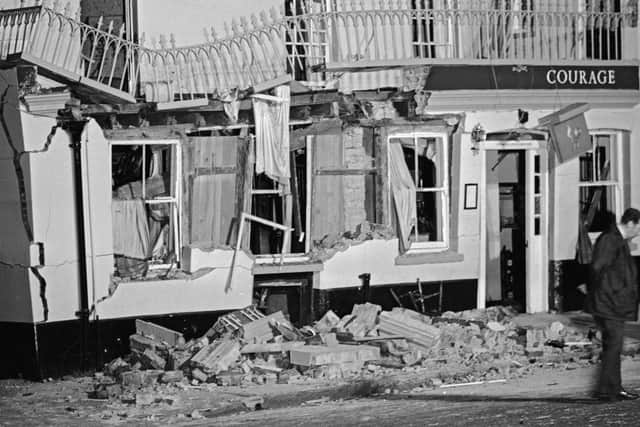
The commission’s website so far names only one case it is investigating: the 1974 IRA Guildford pub bombings.
The ICRIR was set up by the controversial Legacy Act of 2023, with a view to taking over control of all Troubles investigations from the police. It has said one of its “values” is a commitment to being “open”.
Last week Belfast’s Court of Appeal found that a government veto power over what sensitive material can be disclosed to bereaved families by the commission was unlawful. It also ruled that the work of ICRIR does not give victims adequate means to participate in its processes.