
Push to raise criminal age to 14 'ideological' says Burrows after barrister body backs the move in GB - with no exceptions
Jon Burrows has hit out at a fresh call to raise the age of criminal responsibility to 14 – this time from barristers in Great Britain.
The former policeman-turned-UUP leader said that the drive is an “ideological” one and that its advocates “are unable to answer real-world questions”.
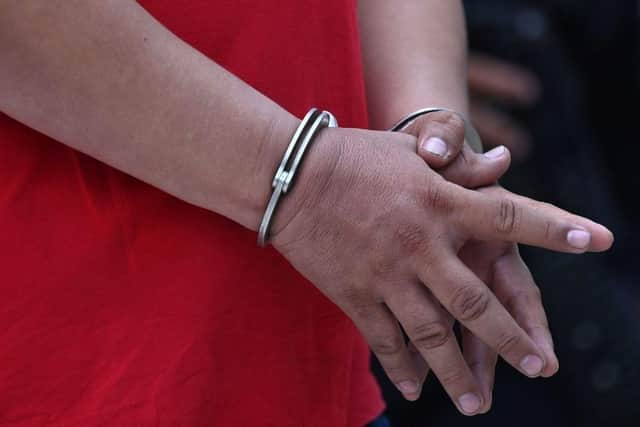

The Bar Council, representing barristers in England and Wales, came out at the weekend in favour of setting the minimum age at 14.
This will be seen as a boon to current efforts, led by the Alliance Party and supported by Sinn Fein and the SDLP, to lift the age threshold in Northern Ireland from 10 up to 14, with exceptions for murder, manslaughter and rape.
The Bar Council’s call is for it to rise to 14 with no exceptions.
Its report, published on Sunday, said that 14 is the most common age in operation worldwide.
Bar Council chairwoman Kirsty Brimelow acknowledged the debate “brings back the memory of the James Bulger case”, but said while that case was “terrible and grave” it was also “exceptionally rare”.
The report states that, of the 1,590 children aged between 10 and 14 found guilty of offences in the year to March last year, 22 were sentenced to immediate custody.
It argues that such a small number “makes it clear that any argument for criminalisation of this cohort cannot realistically be supported by an appeal to the need for criminal process in order to protect the public, even for the short duration of a custodial sentence”.
It adds: “We have considered whether there should be an exception, such that the minimum age of criminal responsibility remains lower than 14 for certain very serious crimes, and we caution against such an exception.”
Mr Burrows said: "The Bar Council rightly say that serious crime by young people is rare.
"That is true – but it is not non-existent.
“Their own figures show the vast majority of youth offending is dealt with by in a diversionary manner.
"This shows the inherent proportionality in the current arrangements."
He also said: “Those who argue for riaising minimum age of criminal responsibility are unable to answer real world questions.
"When someone is the victim of a serious crime and the perpetrators is under 14, how do the police gather evidence?
"And why should the victim get no say in whether their is a justice outcome?
"What do the Bar Council say to the female pupils or teachers who are sexually assaulted or harrassed by a 13 year old – that such behaviour isn’t a crime?
"What about a victim who receives life-changing injuries as a result of a serious assault?
"The police can only make arrests, secure forensic samples, or conduct identification parades if the suspect is over the age of criminal responsibility.
"What about repeat youth offenders?
“There are no answers to these questions.”
He concluded: “The case to raise the minimum age of criminal responsibility remains unconvincing and ideological and not rooted in evidence.”
In the UK, children between 10 and 17 are dealt with by youth courts and sent to secure centres for young people rather than adult prisons. They are also granted anonymity.
Prior to 1963, when it was raised to 10 in England, Wales and Northern Ireland, the minimum age had been eight.
Scotland raised its minimum age of criminal responsibility from eight to 12 in 2019.
The Law Society of England and Wales, representing solicitors, also supports a threshold of 14.
A Ministry of Justice spokesperson said: “The current age of criminal responsibility is 10 and no decision has been made on changing it.
“Any decision we make will always be guided by expert evidence and have the public and victims’ best interests at its heart.”