
Retired major Doug Beattie says Operation Denton 'drew important distinction' between individual and 'systemic' loyalist collusion
Doug Beattie has said that this week’s landmark report into the operations of what is often called the “Glennane gang” has made an “important distinction” – that whilst some individuals colluded with loyalists, there was no evidence it was “systemic”.
The former army major and UUP MLA was reacting to the findings of the police’s Operation Denton, published on Tuesday (alongside the final report from Operation Kenova).
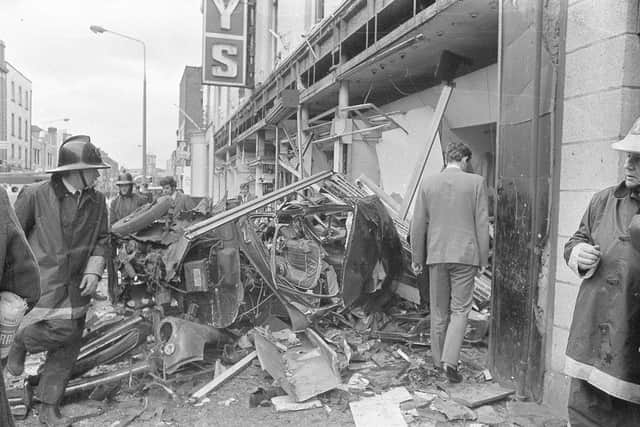
Operation Denton’s report into loyalist collusion found there was no evidence of any in the case of the worst single atrocity of the Troubles – the co-ordinated bombing of Dublin and Monaghan by the UVF on May 17, 1974.
It further found that while some members of the police and military did collude with loyalists, the reviewers had seen nothing to indicate this was “high-level” or part of a “deliberate strategy”.

Mr Beattie said that whilst those who did collude had “shamed the uniform they wore”, it should be remembered that most members of the security forces “served with great distinction”.
Operation Denton was set up in February 2020 to look at loyalist attacks on both sides of the Irish border from 1972-1978, including 127 murders, mainly of Catholic civilians.
It found: “An easily defined discrete ‘Glenanne gang’ did not exist.
"The term has evolved over time to become a convenient shorthand construct, used widely to group together the horrific activities of a broader network of paramilitary groups, primarily the wider UVF and Mid Ulster UVF acting with corrupt members of the security forces, including the RUC and UDR.”
Whilst the name stems from the Co Armagh hamlet of Glenanne, where some of the conspirators met at a farmhouse, the name has come to refer to “a much wider and more extensive network far beyond any connections to the original farm”.
For these reasons it is “not possible to describe a clearly defined ‘Glenanne series’ of offences”.
Operation Denton “found in a number of individual cases, clear evidence of the active involvement of members of the security forces with loyalist paramilitary groups” – including in “extremely vicious and serious criminal activity”.
Its report adds that “security force intelligence assessments indicate that paramilitary groups were regularly supplied with intelligence by members of the security forces and that UVF members and sympathisers existed within the UDR, the RUC and RUC Reserves and the Territorial and Army Volunteer Reserve”.
However, it found “no evidence which indicates that the RUC at an organisational level was involved or complicit with the activities of extremists or terrorists”, and that “the review has not discovered any material which indicates that the security forces systematically collaborated with prolific offenders, or that any individuals or groups were organisationally ‘protected’ by the security forces”.
When it came to Dublin and Monaghan, in which 35 people were murdered in co-ordinated bomb attacks, the reviewers did not find “any evidence of state collusion”.
Meanwhile there “was no specific intelligence which, if acted upon, could have prevented the 1974 Dublin and Monaghan bombings”.
Mr Beattie, the UUP justice spokesman, said: “Within the ranks of the Glennane Gang were members of the RUC and British military.
"These individuals shamed the uniform they wore and lowered themselves to the very level of the terrorist they swore to protect the population against.
"It was disgraceful behaviour, and there can be no whitewashing of their behaviour.
“Where the report outlined collusion between individuals and loyalist terrorists, it did not find systemic collusion between state forces [and loyalists], or British involvement in the Dublin / Monaghan bombings.
"This is an important distinction, given the thousands of members of the security forces who served with great distinction in protecting all within our society.
“At the end of the day, be it members of the Glennane Gang or the PIRA Internal Security Unit, it is those who committed the murders we need to focus on and those who directed, supported, and justified their actions.”