
Top prosecutor warns of problems with efforts to formalise what it means to be 'a vulnerable victim'
A senior prosecutor has pointed to potential problems in the justice minister’s new Sentencing Bill.
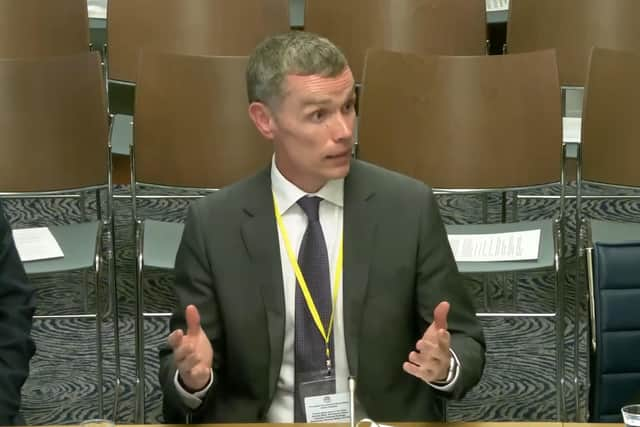
Specifically, Michael Agnew, the deputy Director of Public Prosecutions, was critical of plans to formalise the meaning of the word “vulnerability” in the new law today.

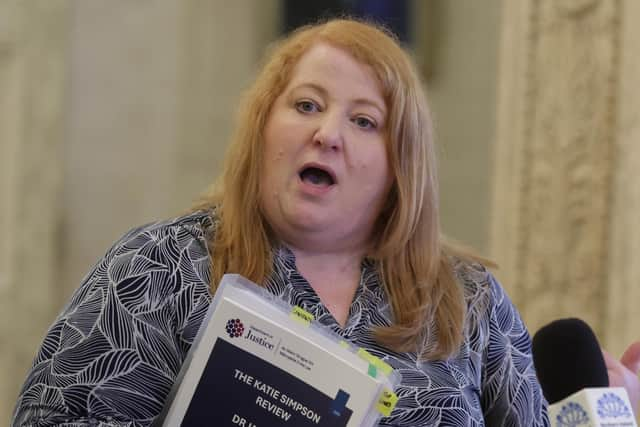
Naomi Long’s Sentencing Bill would require a court take into account whether a victim was vulnerable or not when sentencing an offender.
That would be done according to the following definition: that the victim is under 18, or “a person whose ability to protect himself or herself from violence, abuse, neglect or exploitation is significantly impaired through physical or mental disability or illness, old age or for any other reason”.
This would be added on to the charge (such as a count of assault, for example) as an “aggravator”, and would increase the punishment if the offender were convicted.
For this to apply, the offender must have known or “ought reasonably to have known” that the victim was a vulnerable person.
But Mr Agnew said that “vulnerability is inherently subjective – victims may not identify as vulnerable, or may disagree with decisions taken by the prosecution” to apply that label.
He added that “the attachment of a statutory aggravator is likely to make cases more difficult to resolve – experience suggests that defendants are less likely to plead guilty where an aggravator is an issue, which may lead to more contested hearings”.
"While the definition is broad, the statutory aggravator appears to create thresholds that may be difficult to satisfy,” he went on to say.
"For example, it requires significant impairment of the victim's ability to protect themselves.
"It also requires that the prosecution prove that the defendant knew or ought to have known of the vulnerability.
"There is considerable flexibility in how courts currently approach vulnerability when dealing with it as an aggravating factor for the purpose of sentence.
"We would be concerned that the introduction of a statutory aggregator in this form may add complexity and create a number of operational problems without necessarily improving clarity or outcomes...
“I think the process works quite well as it is at the minute without having to formalize it in the way that this provision envisages.”
Another problem, he said, was that under the proposed model “the jury will be the ones who have to make a determination around vulnerability, and the judge will have to give the jury directions around that – so the jury will not only have to find whether the defendant is guilty on all counts, they'll have the additional responsibility of making a finding around determining vulnerability... so it is definitely adding to and potentially complicating the jury's task”.
Mr Agnew was supportive of another key aspect of the Sentencing Bill: the plan to expand they types of sentences that can be considered “unduly lenient”.
At present, sentences for the following crimes can be appealed as overly lenient: murder and manslaughter, death by dangerous driving, rape and some other sexual offences, child cruelty, threats to kill or cause damage, human trafficking, and some offences involving fraud, money laundering, paramilitarism and organised crime.
Naomi Long’s proposals would extend this to include all sentences handed down in a crown court, for any offence.