
Muggy weather conditions and the need to 'mate and lay eggs' is reason why increasing number of flies in Northern Ireland homes


The increasing number of flies in Northern Ireland homes is not that we know of biblical significance, but linked to the unusually ‘warm humid weather’ and the insects need to procreate.
Agri-Food and Biosciences Institute Entomologist Dr Archie Murchie said: ‘There are approx. 3,300 species of fly in Ireland.
‘At the moment there have been large numbers of elongated black flies known as bibionids, with some species called “fever flies” (Dilophus febrilis).

‘The warm humid weather is ideal for their emergence”.
He added: “These little flies spend most of their time as grubs in the soil feeding on organic matter.
"They can be occasional pests if their numbers are excessive and they feed on roots but in general are beneficial decomposers.
"The adults emerge to mate and lay eggs in two periods each year, usually around April-May and then August-September.

"They are harmless to humans.
"The name ‘fever fly’ may relate to the atmospheric conditions, warm, muggy, that suit their emergence.”
Home owners know flies are attracted to readily available food sources like rotting food, garbage, and decaying organic matter.
Warm weather, open doors and windows, and even houseplants can also contribute to fly infestations.
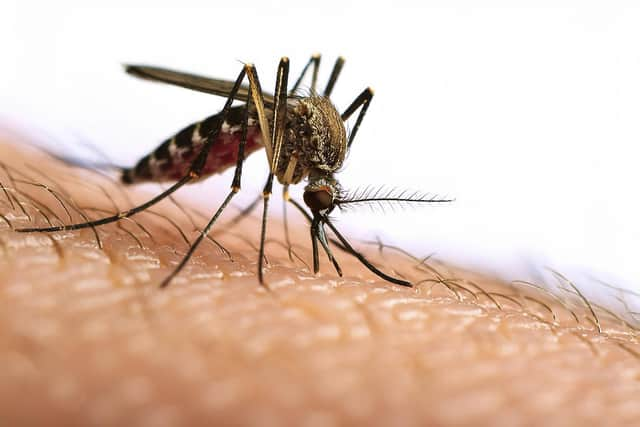
And poor hygiene, such as uncovered garbage cans and pet waste, further exacerbates the problem by providing breeding grounds.
Earlier this week the Department of Housing, Local Government and Heritage, confirmed a recent sighting and subsequent capture of an Asian hornet in the Cork area.
In a statement the National Parks and Wildlife Service (NPWS) described the Asian hornet as being ‘a highly effective predator of honeybees, wasps and other important pollinators, such as hoverflies’.
The huge size of its colonies (consisting of up to 10,000 individuals per season) means that they can rapidly decimate bee numbers.
Due to its aggressive nature and feeding habits, it could have a serious impact on native insect biodiversity and on pollination more widely.
A Northern Ireland Environment Agency (NIEA) spokesperson said: “This recent sighting acts as a timely reminder of the potential for the Asian hornet to reach Northern Ireland.
"This is the second confirmed record of Asian hornet in Ireland, with the National Parks and Wildlife Service continuing its monitoring to determine whether this is an isolated individual or part of a larger population.
“While there have been no confirmed sightings in Northern Ireland to date. a precautionary approach is essential here.
"Members of the public and local beekeepers are asked to remain vigilant for sightings of the Asian hornet.
“Early detection and nest destruction are critical to achieving eradication following any confirmed sighting.
“The NIEA is working in partnership with NPWS and the National Biodiversity Data Centre to address the threat posed by Asian Hornet, as part of the All-Island Biosecurity and Invasive Species Initiative, which will help ensure that the island of Ireland is well prepared.”