
Northern Irish shark-seeker Heidi McIlvenny honoured with huge and elaborate artwork
A woman who has helped to catch and tag about 640 sharks and rays has been honoured with a highly-unusual artwork.
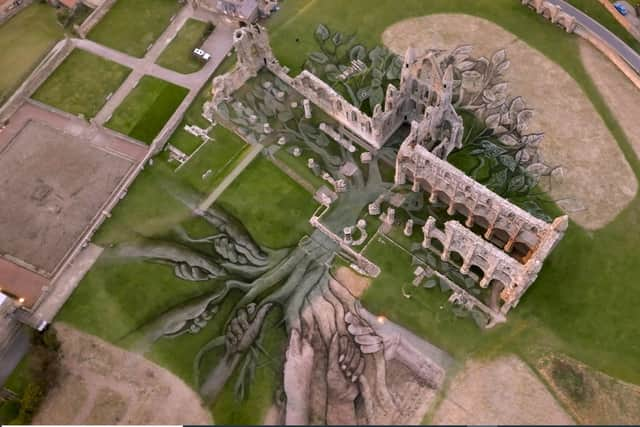
A giant painting on the ground, the size of four Olympic swimming pools, is being officially unveiled today at Whitby Abbey in Yorkshire to mark the achievements of seven people – one of them being marine conservationist Heidi McIlvenny.
She and the six others have been awarded the title of “Game Changers” by the National Lottery, which commissioned the artwork called 'The Heritage Tree’ as part of its 30th anniversary celebrations.
It depicts all seven people’s arms clasping the roots of a tree, bursting out of the ruins of the old abbey, rendered in natural pigments.

She was chosen because she led a project called Sea Deep, operated by the charity Ulster Wildlife and funded by the National Lottery, which ran for a few years up until 2022.
It involved going out with anglers who routinely catch and release sharks and rays, measuring the creatures, and showing the anglers how to tag them.
Many shark and ray species in the waters around Northern Ireland are endangered and the idea was to learn as much as possible about their populations and habits.
Tagging them means that the next time the animal is caught the conservation team can see what changes have occurred.
The project also included visiting schools to teach children about our native sharks.
"[Anglers] have this long history of knowledge in terms of what sharks are in our waters, what time of year you can expect to find certain species, and that’s really rich scientific information we wanted to gather,” Heidi said.
The project had a particular focus on a large kind of ray called a Flapper Skate.
These were once known as Common Skate, but that’s a misnomer today because they are critically endangered.
“We worked with them, trained them up to ensure they were able to handle the skate in a safe way so it wasn’t stressed and harmed, insert the tag, and release the skate again, because that’s all really important data we can collect.”
What about sharks – what kinds do we have in NI waters?
"People’s first instinct when they hear ‘shark’ is to be frightened and think of the movie Jaws. But ultimately we don’t have that type of sharks in our seas. We don’t really have any sharks that you need to be scared about.”
Some local species include the little bottom-dwelling Catshark and Porbeagles.
These latter ones look like a “tiny Great White shark”, and “you don’t want to put your hand in its mouth, that's for sure”.
Catching them is quite a specialist skill, and requires keeping away from their heads and supporting their bellies, then calming them down by placing a wet rag over their eyes.
In all, the programme has tagged "over 640” sharks and rays.
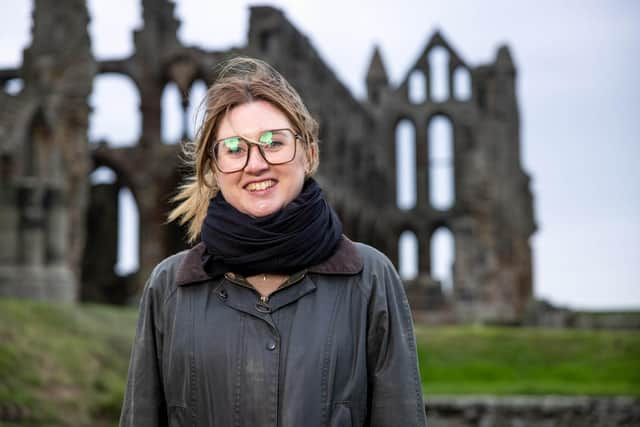
Heidi, 31 and originally from Londonderry, first started scuba diving aged 14, and went on to dive with sharks in Honduras and Mozambique, describing them as “entrancing” and “incredible” animals.
She modelled her hand for the artwork being unveiled today (by broadcaster Tony Robinson), which was created by artist David Popa.