
16% of health imaging equipment in Northern Ireland is ‘effectively obsolete’: audit report
Around 16% of imaging equipment used in health settings in Northern Ireland is "effectively obsolete", an Audit Office report has found.
Comptroller and Auditor General Dorinnia Carville has raised concerns over the "substantial proportion of out-of-date equipment" and a growing gap between demand and capacity.
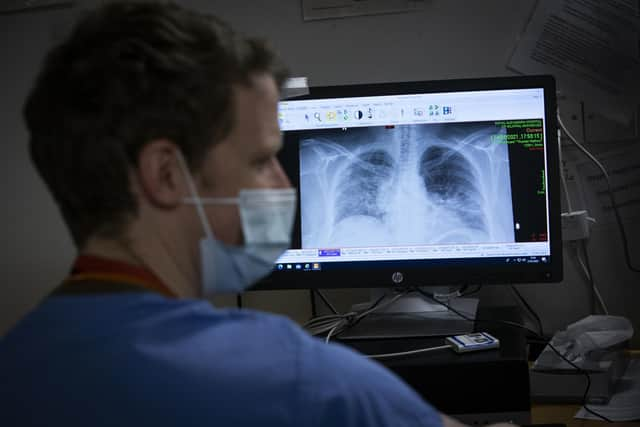

The report said that around 90% of all hospital patients have images taken and interpreted.
It said that increasing recognition of the benefits of imaging services has resulted in a "growing demand for them".
The report added: "Combined with changing patient demographics, and an absence of sustainable funding and resources, capacity has been unable to keep pace."
The report said that between 2018 and 2024, the health service delivered a total of 350,000 fewer scans (MRI, CT, and non-obstetric ultrasound scans) than what was required to meet demand.
Similarly, waiting lists and waiting times for imaging services have risen in that period.
It said: "Between March 2019 and March 2024 the total numbers on waiting lists for the four main imaging categories combined have increased by 56%, from 50,500 to 78,700.
"Concerningly, the number of patients waiting longer than two weeks for a red flag suspected cancer scan has increased five-fold from 260 cases to almost 1,800."
The report said that timely replacement of imaging equipment is one of the "key components to service delivery and quality".
It said: "Currently 16% of all HSC imaging equipment is over 10 years old and is effectively obsolete.
"Older equipment can result in increased downtime and maintenance costs.
"It can also be potentially slower, reducing the number of patients which can be scanned, and may produce lower quality images meaning an increased risk of missed disease."
However, the report noted a shortfall in the funding for replacing equipment.
It said: "Compared to the estimated £15 million to £25 million required annually, an annual average of just over £6 million has been provided since 2020-21.
"Without additional funding, the proportion of older equipment will almost inevitably increase further."
The Audit Office report also said if workforce challenges are left unaddressed it "could further undermine service delivery".
It said workforce planning indicated that the number of current consultant radiologist training places needs to be doubled to meet current demand.
Whilst a proposal for a NI Imaging Academy has been included in the Department of Health's current capital works plan, it is "currently unclear" if or when the funding required to support the delivery of this will be available, the report added.
Ms Carville said: "When delivered on a timely basis, imaging services can significantly assist patient diagnosis.
"They also help clinicians identify future treatment and interventions required to ensure patients conditions are appropriately treated and do not unnecessarily deteriorate, with early intervention also widely recognised as often the most cost-effective approach.
"Today's report outlines several fundamental challenges and pressures facing these services, including a substantial proportion of out-of-date equipment, a growing gap between demand and capacity, and questions of how workforce shortages can be adequately addressed."
"Although there are clearly many competing priorities for the HSC budget, it is important that the department and other stakeholders take stock of the current situation facing imaging services and set out how they intend to address these to support the longer-term sustainability of services."