
Ben Lowry: Supreme court ruling in Troubles cases was a setback for Northern Ireland legal system and its central role in the legacy scandal
On Thursday there was a very important milestone on the crucial matter of the legacy of the Troubles.
(for a Ben Lowry column on a film about the buildings that Gilbert-Ash has helped construct, click here)
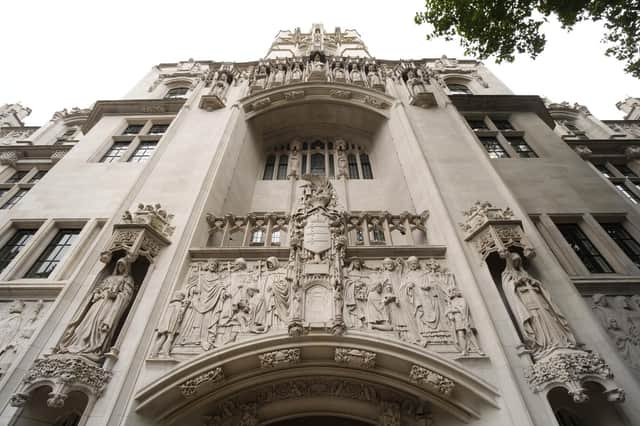

The UK’s highest court – the Supreme Court – in effect slapped down Northern Ireland’s highest court, the court of appeal, on how the past should be investigated.
It is a long and complicated judgement in a case called Dillon, that is still being assessed by experts such as the barrister Austen Morgan, originally from Londonderry but long since based in London. He has taken a close interest in the shameful way in which historic investigations have turned against the security forces who prevented civil war.
The key things to take from this week’s ruling are, first, that it rejected the expansionist interpretation of the Irish Sea border, as modified the Windsor Framework, championed by Irish nationalists and groups like the Northern Ireland Human Rights Commission and the Equality Commission for Northern Ireland (a footnote on that – at long last, all unionist parties are taking a joint stance against those two commissions and their activist positions in some important contested matters of politics here). That activist interpretation of the framework, if it had been endorsed by Britain’s top court, would have had implications for the EU’s reach into all sorts of matters here such as trans policy.
Second, the court limited the scope of legal interpretations of the role of the European Court of Human Rights in Strasbourg (which is not an EU body) when it comes to legacy investigations here. For example, republicans have been trying to hobble the Independent Commission for Information Retrieval and Recovery (ICRIR), led by the distinguished former lord chief justice of Northern Ireland, Sir Declan Morgan, which was set up by the former Conservative government. This was rejected by the Supreme Court, although the judges did suggest that the now ditched Tory proposal for a conditional amnesty for Troubles killings might or might not have been legal, depending on whether Strasbourg adjudicates on it in future.
Overall, the result is a huge and belated setback for the central role of the NI courts in bringing about a grossly imbalanced legacy system in which the security forces fear being dragged before the courts, but no IRA leader has any such anxiety. That scenario simply won’t happen, ever. In fact, it seems unlikely that senior IRA leaders will even lose libel cases or civil actions, the latter of which are almost all directed at the army or police.
What, though, are the practical outworkings of the Supreme Court ruling? That is far from clear. Some voices such as Jeff Dudgeon, whose Malone House group (which includes Austen Morgan) has done vital work on exposing the scandalous way in which legacy has panned out to help the principal killers of the Troubles, the IRA, think that Labour will find it much harder to get its legacy legislation through Westminster (click here for an essay Jeff wrote for us after the judgement), which will open the floodgates against the UK state on legacy.
My concern is that that Keir Starmer and Hilary Benn were already trying to appease nationalist critics of the ICRIR and the UK’s overall legacy approach prior to this week’s Dillon ruling. I have previously cited on this page the abject failure of Labour to challenge an Irish government that has been suing the UK for the now shelved amnesty plan, when Ireland has pursued a policy of flagrant amnesty for the IRA. Also, when Ireland has been allowed – by Sir Keir – to evade its responsibilities on the past. When I asked the prime minister about his failure to so much as criticise an Ireland that is suing the nation of which he is premier, he had little to say except that he wants good relations with Dublin (click here to read my account and see a video of that exchange).
I think veterans and police cannot yet breathe easy. The Labour government had, even prior to this week’s ruling, pledged to introduce protections for former members of the security forces from repeated and unfair historic investigations. But I think that a doomed exercise – such protections will continue to be almost meaningless because they will clash with Sir Keir’s key goal, which is resetting relations with the Irish government. That means giving Dublin what it wants on legacy – and the Irish position is indistinguishable from Sinn Fein, even though the other main Irish parties criticise the IRA.
So the deal that Sir Keir foolishly struck will keep the legacy spotlight on the UK state.
Ben Lowry (@Benlowry2) is News Letter editor