
Jeff Dudgeon: The UK's top court has inflicted a thumping defeat for the human rights orthodoxy on legacy which has helped terrorists
The Malone House group, which campaigns against the imbalance on how the legacy of terrorism is examined, warmly welcomes yesterday’s UK Supreme Court ruling on the topic.
The judgement has profound consequences for to the human rights orthodoxy that has taken hold in Northern Ireland legal circles with regard to investigations into the Troubles.

This hegemony has been driven by a largely nationalist and anti-state coalition of legacy activists, NGOs (non governmental organisations) such as the Committee for the Administration of Justice (CAJ), the Pat Finucane Centre and Relatives for Justice, supported by a cadre of legal academics at Queen’s University Belfast and both the Northern Ireland Human Rights and Equality Commissions.
The coalition has gone largely unchallenged by the media, with the exception of the News Letter. Such has been the effect and credentialing of the new orthodoxy that the academic analysis underpinning it has bled into all levels of the NI judiciary.
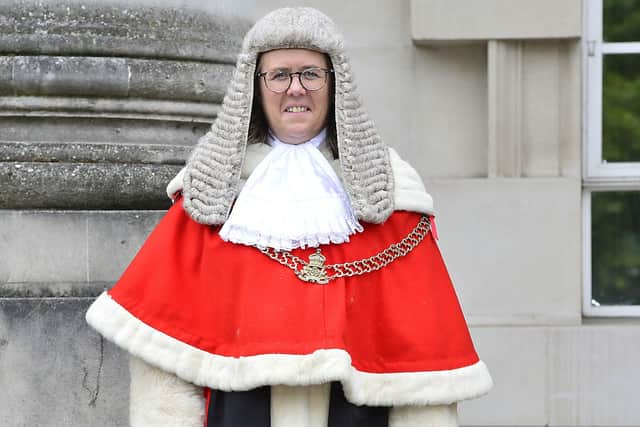
Yesterday the Supreme Court has emphatically ended the expansive interpretation of Article 2 of the Windsor Framework, and narrowed the weaponisation of the Human Rights Act, in comprehensively overturning the decision of the NI Court of Appeal, led by the lady chief justice Siobhan Keegan.
We will shortly be publishing an explanatory note in respect of the judgment, but it is very clear to us that in particular the chief commissioners of the statutory Human Rights Commission and Equality Commission should today be offering their resignations. In particular, the chief of the NI Human Rights Commission launched aggressive attacks on the Independent Commission for Reconciliation and Information Retrieval (ICRIR) and its chief commissioner Sir Declan Morgan, alongside consistently seeking to expand Article 2 of the Windsor Framework into the immigration area in an attempt to cut Northern Ireland off from the London government’s asylum policy.
This approach was echoed by the Equality Commission on gender and sex to avoid implementation of the UK Supreme Court ruling in the For Women Scotland case a year ago. The commission’s misleading and now plainly erroneous guidance on biological sex, still available to the public, should be urgently withdrawn. Indeed the two commissions need to consider their position given the amount of time and public money in legal fees they have allowed to be wasted on such highly political campaigning that led nowhere. The separatist tendencies in the Northern Ireland judiciary and quangos have been put firmly in their place.
We note the obiter dicta or comments in the unanimous Supreme Court judgment in respect of the 2023 Legacy Act’s amnesty and conditional immunity provision which the government advised by Lord Hermer (Gerry Adams’s counsel in his civil case) failed to appeal.
The judgment summary explained that “the Supreme Court finds that the Strasbourg court has not decided that there is a reconciliation exception (though it has not ruled out the possibility that such an exception may exist)”. This is hugely important and studiously omitted by the Northern Ireland Office in its statement and absent from the four-hour delayed BBC NI news story.
It says in effect that amnesty, or immunity for reconciliation purposes as in the 2023 Act, is not necessarily a breach of the European Convention on Human Rights. The court in fact is encouraging the parties to the inter-state case at Strasbourg to test the issue of amnesty and get a definitive ruling on the matter. This concerns many member states at the Council of Europe and not just the United Kingdom. We have of course had numerous amnesties in Northern Ireland since the 1998 Belfast Agreement, as the Court lists, plus the on-the-run letters of comfort.
The government’s long delayed remedial order gutting the 2023 Legacy Act which fell a week back at the end of the parliamentary session has effectively been scuppered by the Supreme Court. We can only echo Baroness Foster’s statement that “that the remedial order brought forward by the Secretary of State for NI should not have seen the light of day – at least that is now settled”. The order’s remaining contents will have to be written into the primary legislation where they should always have been.
Alex Burghart, the shadow Secretary of State for Northern Ireland, said after the judgment, “The UK Supreme Court has just ruled that the vast majority of the Conservatives’ Legacy Act is LEGAL There is NO NEED for Labour’s dreadful Troubles Bill - it should be dropped NOW.”
His leader Kemi Badenoch wrote “My Shadow Attorney General stepped in, acted pro bono for veterans and won: the UKSC have reinstated immunities and confirmed that the vast majority of our Act is lawful. When a lower court said the Legacy Act breached the ECHR and the Windsor Framework, Labour did not appeal. It suited them to hide behind international law rather than stand up for those who served our country. There was no legal duty to betray our veterans. Starmer and Hermer chose to do that.”
We concur with these statements and suggest the Troubles Bill is now in serious jeopardy. It will not command parliamentary support and certainly not when it finally reaches the House of Lords.
• Jeffrey Dudgeon convenes Malone House Group. The other members are: Prof Arthur Aughey; Jamie Bryson LL.B; Baroness Kate Hoey; Dr Cillian McGrattan; Dr William Matchett; Austen Morgan Barrister