
Ian Ellis: Peace should not be taken for granted amid any discussions about holding a border poll
Following prime minister Andy Burnham's recent declaration that a border referendum was “off the table” (about which more below), and then comments by US president Donald Trump favouring unification, it is instructive to learn just how the Icelanders went about their recent referendum on European Union membership.
When they went to vote on the matter, on August 29, Icelanders were asked to answer a very straightforward question: “Should Iceland resume accession negotiations with the European Union?”
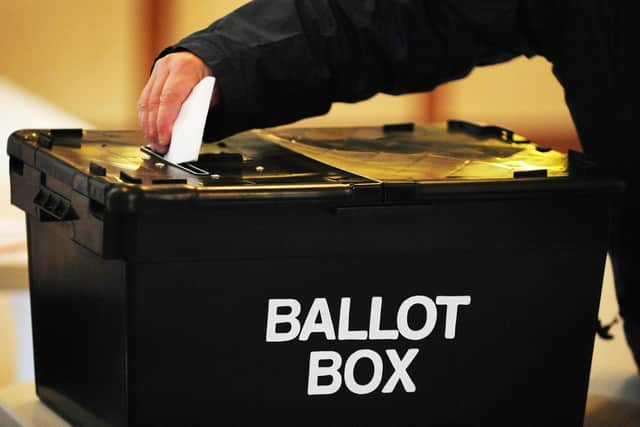

Iceland had in fact agreed to join the EU in 2009 but negotiations stopped four years later over the the EU’s common fisheries policy.
However, in the August 29 vote, the people of Iceland voted No by 52.84% to 47.16% in a very high turnout of 82.52%. The Euractiv news website ran a clever headline: “Iceland melts EU's enlargement credibility”.

That may have been irresistible to the editor, but whether or not it is true only time will tell because the EU is massively complex from a political point of view.
I suppose so too is Northern Ireland, albeit on a smaller scale.
As the question to the Icelanders made clear, the issue was a decision in principle only. If they had agreed to restart negotiations, talks would have been set in motion, but the people would have had to return to the polling booths to decide on any final agreement.
Only then, if agreed, would accession proceed.
Iceland is already closely linked to the EU in that, as a member of the European Economic Area, it has access to the EU single market. It is also part of the Schengen Area, providing passport-free movement between Iceland and other Schengen area countries on the continent.
However, the big sticking point remained the common fisheries policy. As the BBC has reported, fish and marine industries account for almost 40% of Iceland's exports and many No voters had feared they would “cede some control of their lucrative fishing grounds” under the policy.
So, regarding any potential poll about the border on the island of Ireland, such a two-stage process would commend itself.
A two-stage process avoids the pitfalls of the Brexit referendum which saw citizens casting their votes without clear knowledge of what the precise outworking of a Yes vote would actually be.
As I mentioned several years ago in an earlier News Letter column (It is our responsibility to work at making peace more secure, May 4, 2021), University College London's Independent Commission on Referendums had carried out considerable work on the implications of holding such plebiscites, with one of its reports indicating the importance of clarity in referendum proposals.
In the case of Brexit, with the withdrawal agreement coming after the decision had been made, with no second referendum, there was only a parliamentary vote on it.
Mr Burnham's comment that a border poll was “off the table” sounded quite categorical and was badly received by those favouring a poll, but it has since become clear that he was referring to meetings that he was having in Belfast that particular day (News Letter report, Border poll conditions 'have to be discussed', September 8).
The prime minister has also made it clear that he and the government stand by the Belfast Agreement, which allows for a poll should it appear likely to the secretary of state that a majority would express a wish that Northern Ireland should become part of a united Ireland, with the people of the Republic also giving their consent to such a change.
Regarding the likelihood or otherwise of a majority being in favour, a secretary of state would no doubt make the assessment as a result of careful analysis of political sentiment in Northern Ireland as may be evident, for example, in election results, surveys and various platforms for public debate.
It has to be said, however, that comments made recently by Heather Humphreys, a former Fine Gael politician and Irish government minister who was a candidate in last year's presidential election in the Republic, raise deep concerns.
Ms Humphreys wrote in The Irish Times (September 5) that her campaign had exposed “an undercurrent of something we can’t ignore”, in that a minority had tried to “weaponise” her identity as a Presbyterian woman raised on a rural border farm.
She wrote that she and her family had been subjected to “toxic, targeted sectarian abuse”.
The former presidential candidate indicated that she “truly believed our country had moved past that kind of tribal prejudice”, and highlighted three ways it could be tackled – first by calling it out; second, by regulatory action against online platforms promoting sectarian abuse against public figures and their families; and third, by deepening education and understanding.
There is no doubt that mutual respect is a hallmark of decency.
By virtue of the Belfast Agreement, the issue of the border on this island has been settled in that the conditions for calling a referendum have been agreed.
The peace brought about by the Belfast Agreement should not be taken for granted and, for that reason, any discussions about holding a border poll should avoid upsetting the political apple-cart, especially when there is such appalling toxicity around as Heather Humphreys has clearly experienced.
l Canon Ian Ellis is a former editor of The Church of Ireland Gazette.