
Jackie McGregor: Don’t mask your brokenness: that’s what makes you beautiful
“It’s got a lot of damage. The nose might fall off,” said my son, staring at the mask in his hands. He’d just returned from a cosplay convention, but the paper mache headpiece he’d hand-crafted had acquired battle scars along the way.
“It’s survived a hectic weekend. Those dents mean it has a history,” I pointed out.

“You’ll probably see the repairs,” he sighed, ever the perfectionist.
“All the better! Perfection is boring. It’s the battle scars that make things interesting. Have you ever heard of the Japanese art of kintsugi?” I asked.
“It rings a bell,” he murmured running his finger along a crack in the mask’s cheek, “go on then, fill me in, you know you want to.”
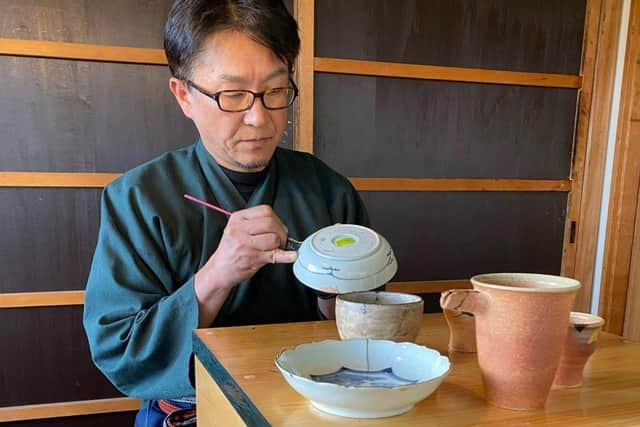
“If something like a vase, gets broken, there’s a Japanese tradition of repairing the break with gold lacquer, leaving the breakage visible, like golden scars”, I explained. "Kintsugi means golden joinery. The belief is that something is made more beautiful for being broken, because it adds history and resilience to the object. It has survived and is still usable, despite the damage.”
He gave a nod of understanding, surveyed the mask from different angles and took it upstairs for repairs. His footsteps thumped above me, the bedroom door closed. I sat in the silent kitchen with my own broken mask.
The face that hides so many scars beneath. There was a time, years ago, when I felt so shattered by life’s knocks, that I never thought I could function normally again. But looking back, I marvelled at how much I’d endured and survived, sitting in the hear-and-now, a mother.
Each scar I gathered along the way was softened by time, love, or the understanding of others who had also been broken - people whose own wounds proved that healing is possible and problems can be overcome.
Everyone we see is struggling with something; no one lives a fairytale. Many of these private battles are fought by women and men against cruel, manipulative behaviour that strips them of self-respect and leaves them feeling immobilised, emotionally up on bricks like a car that’s had its wheels stolen.
They are left wondering, - “What’s wrong with me?” and waste time and resources trying to ‘fix’ themselves. While the one who caused the damage moves on without a backward glance. Many of us try to reshape ourselves on the mandate of people who, no matter what we do, will never think we are enough.
The truth is that those people are far too good for the individual who made them doubt themselves in the first place. Those who truly care for us, will never make us feel unlovable or inferior.
It’s a fragile thing, the human heart. Sometimes a cruel word, criticism, or the implication that we’re too much or not enough, cracks us. When this happens, our instinct is to mask everything.
In a society obsessed with perfection, we often hide our physical, mental, and emotional scars.
Yet those scars deserve to be worn with pride, they are proof of survival. Each healed wound has taught us a lesson, it’s usually proved a turning point in life where we became stronger, wiser and more resilient, enabling us to meet others with greater empathy proving we are not ruined. We are just beautifully broken.