
Jackie McGregor: We usually hear of deaths in threes – a hat-trick of painful goodbyes
My mother used to say people passed away in threes — she was a cheery soul. As a child, I found it macabre, but as I got older, her words rang true: when one household name dies, two more seem to follow in close succession.
Last week, the dreadful announcement was made on 10 July that former politician, Ann Widdecombe had died. I’d been lucky enough to interview her a few years ago. She was a vibrant lady, which made the violent circumstances of her passing even more shocking.
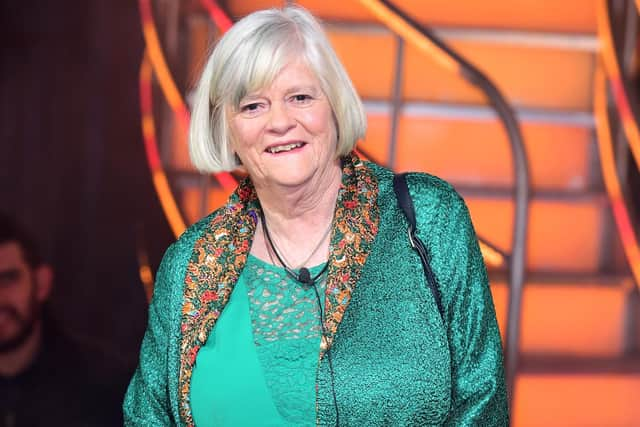

We’d talked about music we liked, and she told me she adored ‘Liberty Bell’ - better known to most of us as the theme from Monty Python’s Flying Circus.
She said: “Liberty Bell always brings back memories of my first election campaign when I was assisting Michael Ancram at Berwick and East Lothian. I drove an ancient Morris Minor through rolling Scottish countryside and dreamed of the day when I would be a candidate myself. That dream came true at the next election when I drove the same Morris Minor around Burnley blaring out the same tune.”
Anytime I heard of her after that my mind conjured up the mental image of her bombing around the hills in her little car, blasting out this jovial marching tune. If her personality could be described in music this piece would be entirely apt for her.
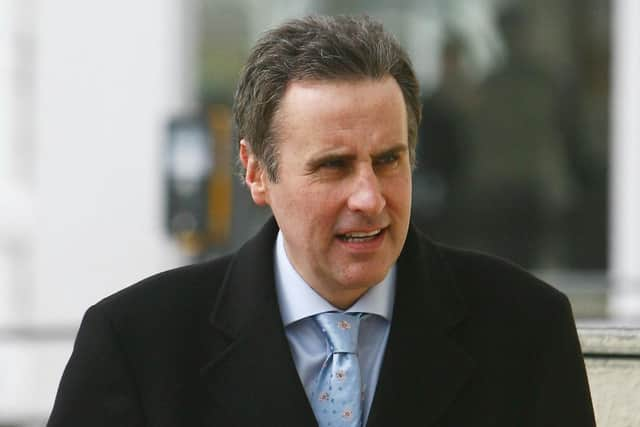
I didn’t have long to wait to hear of the next departure - Dermot Murnaghan – on 11 July. He was born in Devon but moved to Northern Ireland as a child and spent his formative years here.
I remember him best as the News at Ten anchor during the 1990s, when my mum, “had a notion of him,” and my father would get a bit prickly when he was on screen.
I generally hate talk of the Grim Reaper, but now that I’d heard of two well-known names’ demise, I couldn’t help listening out for a third.

Then, on July 13, actor Sam Neill passed away. Born in County Tyrone, he became an international movie star in films like, Jurassic Park.
It made me uncomfortable to think that familiar faces of my era, who had been in the background of my life, had begun to slip away. I became aware of my own mortality, but I could take my mind off it now.
The trilogy was complete.
So, why do we expect deaths to come in threes? Here’s the science bit: our brains are built to spot patterns and make sense of a chaotic world. The number three is deeply rooted in our culture.
Three suggests wholeness and completion, think of morning, noon and night; past, present and future. In faith, we lean on the Holy Trinity. Three helps us spot a pattern, close it, and move on. It’s a way of finding completion on tragedy and strangely, brings a sense of comfort.
Mum was right about the rule of three, my late granny believed it too. For her, one death usually meant a hat-trick and the promise of more mournful gatherings to attend.
Like most of her generation she was an avid (slightly gleeful) obituary-watcher and turned straight to the death notices of the daily paper to, as she put it, “see if anyone I know living is dead.”