
Owen Polley: Unionists must avoid any hint of adopting a Northern Ireland ‘place apart’ mentality from the rest of UK
Last week, the Labour party conference failed to boost a struggling government, or provide Northern Ireland with much reassurance about its intentions.
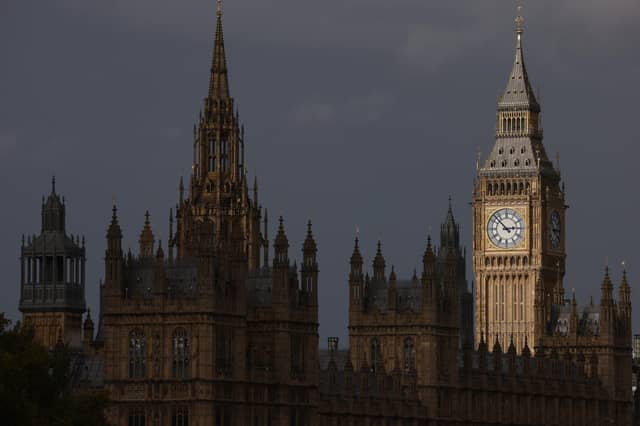

Admittedly, the leader’s speech focused on ‘patriotic renewal’ and Sir Keir Starmer talked about, “the astonishing relationship between our four nations… the solidarity of our working nations”.
This kind of language would be cheering, if it did not follow a capitulation to the Republic of Ireland on the legacy of the Troubles.
Likewise, the government failed to show much solidarity with this part of the UK on the Irish Sea border. It insists that shoving us out of the mainstream British economy, and meeting the EU’s every demand, is necessary to protect peace.
At the same time, it is more difficult to maintain that we should have the same rights, entitlements and responsibilities as the rest of the country, when even unionists in Northern Ireland sometimes seem confused on this point.
Take the row over a digital ID scheme, or ‘Brit card’ as it was christened by the media. This proposal caused controversy across the UK. Unfortunately, the emphasis here was soon on the scheme’s supposed incompatibility with the Belfast Agreement and the unique ‘complexities’ of Northern Ireland. This was absolute claptrap, relying again on misrepresenting the Good Friday deal.
There are many strong reasons to oppose a compulsory, or effectively compulsory, ID, which affects our ability to work and access services. There are also plenty of valid arguments that it would not combat illegal migration, which was the rationale Labour gave for its plans.
The problem was that the local parties’ responses were interpreted to mean that, if the digital card was introduced in Great Britain, Northern Ireland should be made an exception.
The TUV, to its credit, ruled this out immediately and explicitly, even though it opposed the concept of the ID. It explained that it did not want the scheme, but if it goes ahead Northern Ireland must be included. In contrast, the DUP and the UUP did not make this caveat plain in their initial responses.
To be fair, the DUP MP Sammy Wilson later issued a clarification, which was confirmed on Friday by the deputy first minister, Emma Little-Pengelly. The party is sceptical about digital ID, but, in Mr Wilson’s words, “The one thing we don’t want to see is yet another carve out for Northern Ireland. If this became yet another means of making NI different from the rest of the UK, we’d be opposed to it.”
This is the only sensible unionist response to the proposed scheme, if you are against it in principle.
Unfortunately, though, the initial reaction had resulted in newspaper headlines claiming all parties thought, ‘Brit cards won’t work in NI’. Likewise, the BBC took a similar line at the conference, where it quizzed Labour ministers on the possibility of an exemption for Northern Ireland.
This misrepresentation was predicted and observed by Ben Lowry, in his News Letter columns (‘Unionists are again at risk of helping nationalists achieve their goals,’ Saturday, September 27; and then ‘Unionist opposition to digital ID is being cited to justify a carve-out for NI,’ Saturday past, October 4). The confusing initial statements made it likely and raised questions about unionists’ approach to national issues.
On X (previously Twitter), the former DUP spad turned unionist-commentator, Tim Cairns, even suggested that our exclusion from an ID scheme could be depicted as Stormont ‘working’. Meanwhile, the UUP has not offered any qualification to its objections.
To be clear, I do not believe that the ‘Brit card’ idea will be implemented. The national parties almost always introduce headline-grabbing policies in the run up to their conferences, but few are put into practice.
The ID plan, though, concerns an issue that is reserved to Westminster, rather than devolved to Stormont, and it proposes a new responsibility, central to British citizenship.
The idea that Northern Ireland could opt out without weakening our bonds with the rest of the UK is naive. Any exemption has consequences, creating another difference from the British mainstream, edging us just that bit closer to a position where our constitutional status scarcely matters.
If we’re serious about the Union, unionists must certainly engage with national debates and have considered opinions on all the issues facing our country. Their responses, though, should be in a UK-wide context, and not take the form of special pleading.
Too often, strong views on national questions segue into ‘place apartism’, which is only a small step from getting domestic politics confused with the constitutional question.
After Brexit, remember, some unionists implied that a special dispensation for Northern Ireland could bring economic benefits. It was that attitude, in part, that allowed successive governments to justify a sea border and cut us off from the rest of the British economy.
The unionist parties now all want to restore our place in the UK internal market. It is easy to forget how many politicians expressed openness to gaining advantages over our fellow countrymen and women in GB, when they thought that ‘dual market access’ might achieve that.
There’s always been a division between unionists in Northern Ireland who are focused on playing as full a role as possible in the UK, and those whose views are more parochial.
With devolution firmly established as our default system of government for many policy areas, it would be tempting to portray that difference in emphasis as less important.
In fact, at a time when an economic border cuts us off from the rest of the Kingdom, it is as critical as ever that we avoid any hint of ‘place apart’ attitudes.