
Roamer: Our built environment from the past continues to inspire us
Half a century ago anyone who wanted to know about Northern Ireland turned first to a wonderful book written by local journalist and tourism guru Ernest Sandford.
Entitled ‘Discover Northern Ireland’ and billed ‘a guide to 1,000 beauty spots and places of interest’ it was regarded as an authoritative compilation of our cities, villages, towns and townlands, encompassing every significant cultural, historical and geographical highlight.

Published in the 1970s, Sandford’s book is still popular, but today the amount of information available in print and via social media about our beloved little country has become incomprehensively vast, an information explosion which is well illustrated by the forthcoming European Heritage Open Days (EHOD).
This annual event is our part in the Europe-wide celebration of local architecture, history and culture, held on the second weekend in September and coordinated here by the Department for Communities with the support of the Council of Europe and the European Commission.
Established almost 30 years ago, last year saw 75,000 people participating in EHOD’s 350 events across Ulster, close to its peak performance in 2019 when 77,000 people attended.
Generally speaking, we’ve no shortage of public events, remarkable locations or visitor attractions.
Three ‘hardy annuals’ often mentioned on this page are ongoing this weekend; the fireworks and outdoor concert prior to Ballycastle’s historic Ould Lamas Fair on Monday and Tuesday 25th and 26th; the Ulster Model Railway Club’s Belfast Model Railway Exhibition today and tomorrow in RBAI and tomorrow’s ever-spectacular Belfast Mela, the city’s annual celebration of global cultures in the Botanic Gardens.
EHOD’s entrance-free line-up for 2025 offers remarkable opportunities for local folk and visitors to attend events and explore buildings and exclusive sites on 13 and 14 September, some rarely open to the public.
The official theme is ‘Architectural Heritage - Past structures - Future Connections’, focussing on the history, design, and cultural significance of local architectural landmarks.
The organisers emphasise - our built heritage isn’t just about days of yore “it’s about the people, stories and connections that the buildings and locations continue to inspire.”
In other words, they add, “we’re celebrating how these places shape our communities and connect us across generations.”
There are over 200 locations (over 300 if you include a number of attractions in the same vicinity) some that local folk know very well, others that few people are aware of and some hidden gems or less publicised places that we never knew existed.
The awe-inspiring variety of locations open to the public in most corners of each county marvellously illustrates Northern Ireland’s action-packed industrial, political, cultural and spiritual past and present.
EHOD’s compilation of places, buildings and events vividly captures the very essence of Ulster - a special place that regularly scoops top international tourism awards.
The Department for Communities’ EHOD website (also available via many of our local tourist, council and museum websites) offers a breath-taking journey through most of the locations, each with eye-catching, on-the-spot photographs, a potted guide/history of the building and/or terrain, relevant visitor facilities, opening hours and a roadmap and directions.
Time have changed greatly since Ernest Sandford’s ‘Discover Northern Ireland’.
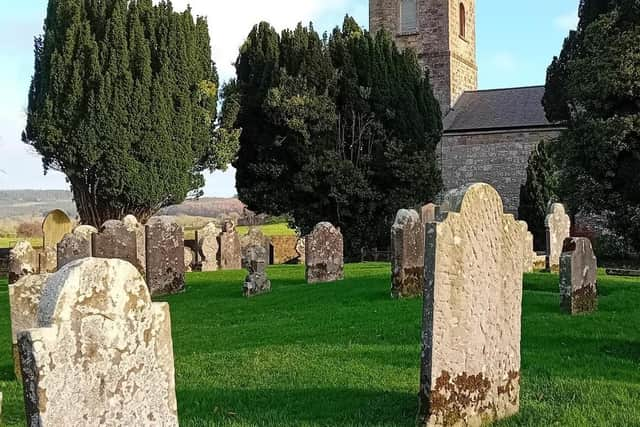
Using the website’s alphabetical search engine Roamer started with Aghavea Parish Church and Historic Graveyard between Brookeborough and Maguiresbridge in County Fermanagh where there’ll be an illustrated talk and tour, and ended at Zula's Hollow at Kilwarlin Moravian Church beside Royal Hillsborough.
Basil Patras Zula came to Kilwarlin as minister in 1834 and constructed the intriguing garden/battlefield.
“There's no other historic garden like this in the UK,” the website explains, adding, “this is the only known replica of ancient Thermopylae, the scene of the 486 BC Battle of Thermopylae.”
Apologies for the long listings, but in between ‘A’ for Aghavea and ‘Z’ for Zula are numerous other historic churches, friaries, lighthouses, workhouses, cottages and castles, old forts and stately country mansions.
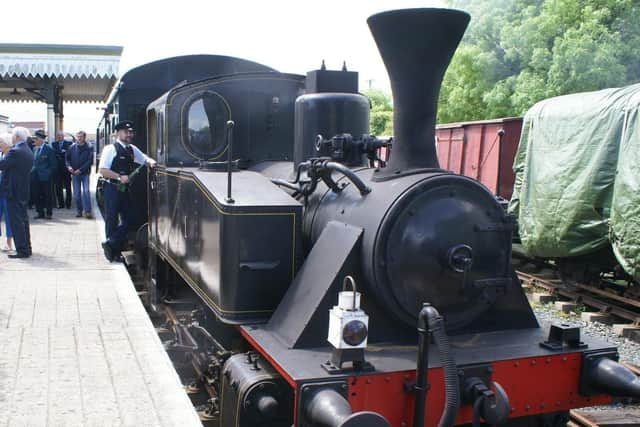
There are railway stations, nature reserves, museums and mills, often offering guided tours.
Halls are well represented including a gospel hall, and Freemason and Orange halls.
Amongst many archaeological sites are some of our stone circles, cairns and dolmens; examples of lake, lough, river, canal and seacoast communities and Ireland’s last remaining housed beam engine in Caledon.
There are wartime sites, libraries, gaols and courthouses; schools, gardens and outdoor walks; wine and whiskey establishments and shops and warehouses.
As mentioned previously, an ‘awe-inspiring variety’!
For the full programme visit European Heritage Open Day Northern Ireland.