
Letter: Crisis surrounding Andrew makes me recall the fury evoked by the MPs' expenses scandal
A letter from John Gemmell:
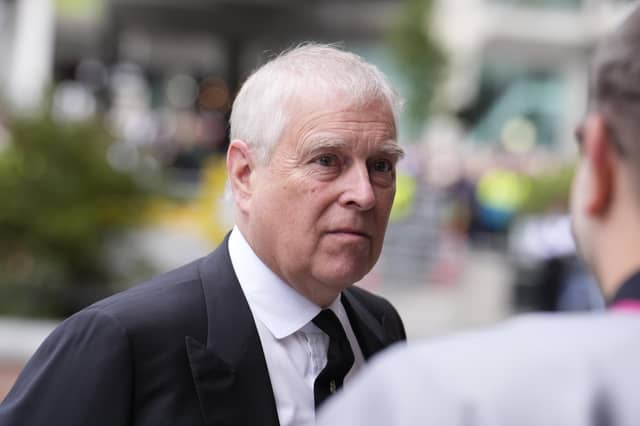

Ben Lowry is right that the crisis around the former Prince Andrew will not bring down the Monarchy (Andrew won’t fell the royals but a king like him might do, February 21).
But the London press is, almost every day, quite reasonably exploring new avenues of allegedly poor behaviour by Andrew Mountbatten-Windsor.
Obviously, we must stay away from specific legal issues, but even the broader story is likely to get worse, indeed alarmingly wider and far worse.
Why are people so furious? What can we learn from all this about ourselves, and how can the Monarchy reform to prove that it realises how serious the situation has become?
What, about this issue, is annoying former prime minister Gordon Brown, former ambassadors and former senior police officers on the one hand, and inconsequential people like me on the other?
Let me explore this by recalling the MP expenses scandal of 2009. Arrogant and greedy MPs, only a small number but enough to do damage, abused the parliamentary expenses system. Why were they not stopped sooner?
There was a small administrative unit dealing with MP expenses. They queried excessive claims but were, in return, sometimes subtly intimidated by MPs. So the administrators acquiesced and, although I dislike the phrase, gave those MPs the rope with which to hang themselves. Later, the leaks to the press about ridiculous expenses claims started. The rest is history.
We may see a similar process now with Mr Mountbatten-Windsor. People, great or humble, do not like greed, entitlement, arrogance. They do not like to be disrespected. Sooner or later a tipping point is reached.
Some unwise people, sadly, do not understand the often quoted but still sound advice - be kind to people on the way up, you may meet them again on the way down. A reckoning so often eventually comes to the unwary. People eventually speak out. Sometimes the revelations become unstoppable.
We want our royals to be grand and glorious in their public projection, but modest in their private hours. It's good to represent the splendour of the state, but it is also a gift to be simple on days off.
It's also important to be as kind as possible. Being simple and kind is, indeed, a good look for all of us. These are obvious moral virtues. We fall short but try our best.
Prince William seems to understand all this. He should take a leading role in a process of comprehensive simplification and reconnection of the Monarchy with the people.
This should start immediately, even as the scandal around Mountbatten-Windsor grows in perhaps unexpected directions.
John Gemmell, Wem, Shropshire