
Owen Polley: The Twelfth has never been more relevant to modern UK
Today, tens of thousands of people in Northern Ireland will enjoy the Twelfth celebrations in what looks likely to be glorious sunshine.
The attitude of unionists’ opponents to these festivities has often been outright hostility. Another common tactic has been to sneer at the history that the Twelfth represents.
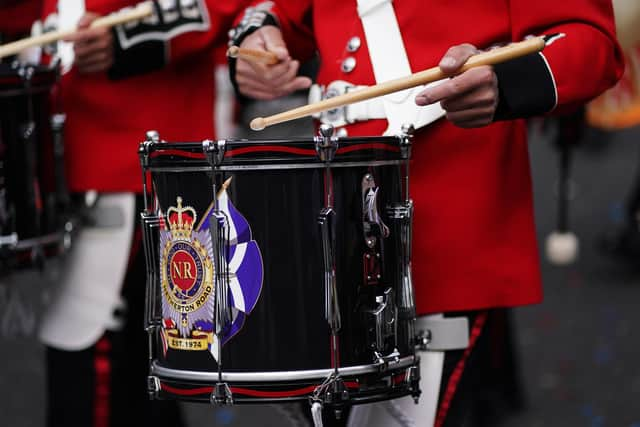

Some critics claim that the commemoration of a 17th century battle, and the Orange Order’s emphasis on the reformed faith, make people in the rest of the UK look askance at the idea of Britishness celebrated in Northern Ireland.
According to this thinking, usually voiced by Irish separatists, the rest of Britain sees Ulster unionists as strange, backward looking and vaguely embarrassing.
There are certainly ‘progressives’ who love to mock any displays of patriotism or celebrations of British history.
George Orwell summed up this tendency in his essay ‘The Lion and the Unicorn’, writing that almost any English intellectual, “would feel more ashamed of standing to attention during ‘God Save the King’ than stealing from a poor-box”.
The use of Orangeism to deride Northern Ireland’s Britishness or allege some sort of schism with the rest of the country was always silly and deliberately dishonest.
The UK includes dozens of local quirks and traditions, from the Highland Games, to cheese-rolling, to Morris dancing. People from other regions do not necessarily feel part of these, but that does not make the participants seem less British.
Indeed, events like the Last Night at the Proms or Guy Fawkes Night feature the bombastic national pride and reverence for history that is sometimes depicted as ‘triumphalism’ or ‘coat-trailing’ in Northern Ireland.
People in every part of Britain do not need to don sashes and bowler hats to make the Twelfth authentically British.
Indeed, these celebrations of identity, and their preoccupation with some of the most important events in our national story, arguably seem increasingly relevant to the modern UK.
The outgoing prime minister, Keir Starmer, suggested in a speech early in his premiership that we were becoming an ‘island of strangers’.
He was criticised severely for this intervention and later retracted it, but he was right.
There are the sharp post-Brexit political divisions that make some people feel they have little in common. There is the upsurge in separatism in Scotland and Wales, fuelled by devolution and nationalist parties that cultivate grievances against Westminster.
Perhaps most significantly, there have been unprecedented waves of immigration, which have contributed to a sense of crisis.
Much of this influx comes from countries where radical forms of Islam and hostility to western values have a strong influence.
This nation has a long tradition of welcoming people from different backgrounds and races. However, the rise and acceptance of ideas about multiculturalism means there are few requirements for newcomers to integrate, and no expectation that they should feel a sense of loyalty or belonging to Britain.
To make things worse, the long-standing fashion among many historians and journalists is to deride the UK’s history. They imply that we have nothing to be proud of, or that our contribution to the world has mainly been negative. This tendency is exacerbated by ‘woke’ theories about race and colonialism, which encourage people to identify with groups claiming a sense of victimhood.
Is it any wonder, then, that some people with a strong existing sense of identity, particularly if it goes alongside being hostile to western ideas, feel little pressure to conform?
The negativity about Britain’s past, and its depiction as some sort of global villain, is of course ridiculous.
The events that the Twelfth celebrates are just one aspect of a history that Britons should do more to remember and celebrate.
The parades recall King William’s victory over King James at the Battle of the Boyne. More significant than this particular battle, from an historical point of view, was the fact that the Williamite War entrenched the Glorious Revolution of 1688 and the Bill of Rights.
This meant that the King could not overrule parliament and it effectively established the world’s first parliamentary democracy at Westminster, as well as the first constitutional monarchy.
In other words, it was Britain that played the leading role in developing the freedoms that eventually defined ‘the West’.
There would continue to be political differences in the 18th century between those with Jacobite sympathies and the Whigs, who prioritised Protestantism and guarded the supremacy of parliament more keenly.
After the Jacobite rising of 1745, these played out at Westminster and matured into party politics. The basic principles of the Glorious Revolution were accepted as the bedrock of our constitution.
Viewed through this lens, it is not so much surprising that Orangemen look back with such intensity to this important period of Britain’s history, but that it is not celebrated more often in other parts of the country.
The role of the Westminster parliament in the development of representative democracy, and the end of autocratic rule by monarchs, is a national story that we should be proud to tell and should be a more central aspect of how we see ourselves.
Due to some of the current problems in the UK, there is increasingly a political reaction against the tendency to malign our history or be wishy-washy about the things that make up British identity.
That means that the Twelfth, and other celebrations of events like the Glorious Revolution, are more relevant than ever to modern Britain.